










































Forest Region Sustainable Community-Based Reproductive and Sexual Health Project
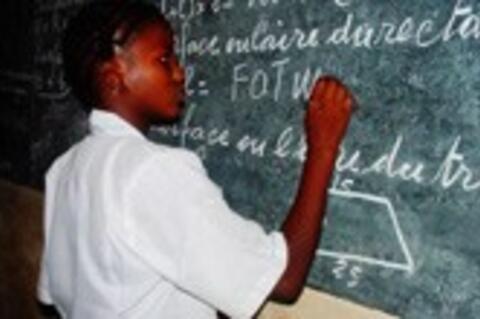
This community-based effort to reduce pregnancy among schoolgirls drew on interpersonal communication and printed materials to increase young women's reproductive health knowledge and their use of FP, and to address the knowledge and behaviour of teachers, parents, and other adult community members. Young women and men learned about abstinence from sexual relations as their first line of defense against unwanted pregnancy; information about FP and access to methods formed the second line.
Eighteen biology teachers from Yomou's 8 secondary and 2 high schools attended a 5-day training in the first quarter of 2007, where they learned about the menstrual cycle and fertile period, contraceptive methods and abstinence, and transmission and prevention of HIV/AIDS. Back in their classrooms, the biology teachers taught this information for at least an hour a week. Moreover, they transmitted the information to teachers of other subjects in their schools, thereby expanding the network of knowledgeable adults in the teens' environment.
At the same time, 10 civics teachers attended a 5-day course on child-to-child education activities, then created Children's Clubs that they supervised and that diffused reproductive and sexual health messages within and beyond the school environment.
Plan International and AGBEF also recruited 18 peer educators who learned techniques for communicating behaviour change. Equipped with this training and with visual aids, they organised discussions in their schools about pregnancy prevention. Peer educators (and teachers) referred students to Yomou Prefecture's 102 CBSAs who could respond to their FP needs, either by contraceptive provision or referral to a health centre. The peer educators had a stock of condoms they sold for a small profit.
Didactic materials included specially designed posters, two per school, with the message "Abstinence ou Contraception - a toi de Choisir" (or: "Abstinence or Contraception - It's Your Choice!"). Plan International also created and distributed about 7,000 leaflets on the dangers of unwanted pregnancies, the benefits of abstinence, and FP methods and where to procure them. Leaflets also described the social factors leading to unwanted pregnancies among teens, and the physical, social, and economic consequences of such pregnancies. Organisers also developed public awareness campaigns for adults, with a clear message of discouraging relations between schoolgirls and adult men.
Youth, Family Planning, Education, Gender.
According to organisers, women in Guinea's Forest Zone experience pregnancy early and frequently: more than 33% of teens (aged 15 through 19) had given birth or were pregnant at the time of the 2005 Demographic and Health Surveys (DHS), and the median age at first birth was 18.7 years. The total fertility rate for Guinea as a whole is 5.5 children per woman, and its annual population growth rate is 2.6%. Fully 77.5% of the women responding to the DHS had never been to school. The relatively small proportion of Guinean girls who do complete primary school and enroll in secondary school are at risk of unwanted pregnancy. Girls may engage in consensual relations with boys, but may also feel pressure to earn school fees and related expenses by engaging in sex with older men. A general taboo against frank discussion of reproductive health prevents young people from having the information they need to make healthy choices for themselves, including abstaining from sex or using contraception.
Plan International and AGBEF knew that contraceptive knowledge among women of reproductive age in the forest region was nearly universal, at 95%, yet only 5% of female respondents were using a modern method at the time of the 2005 DHS. Nationally, only 11% of sexually active girls (aged 15-19) had ever used a modern method. Some reasons for the gap between FP knowledge and use among young women were their reluctance to seek contraception at health centres for fear of stigma or breach of confidentiality, and an overall perception in this primarily Muslim country that practicing FP was not accepted.
Prior to the intervention summarised above, 1 in 11 girls in Yomou secondary schools became pregnant; in the last two school years, an average of only 1 in 40 schoolgirls did.
Plan International and AGBEF, with funding from the United States Agency for International Development (USAID).
Preventing Student Pregnancy in Guinea's Forest Region [PDF], by Sarah Castle, August 1 2009 - sent to the CORE Group listserv, August 28 2009.

- Log in to post comments