










































Exploring the Adaptation of the RED/REC Approach to Other RMNCH Areas in Haiti, Kenya, and Uganda
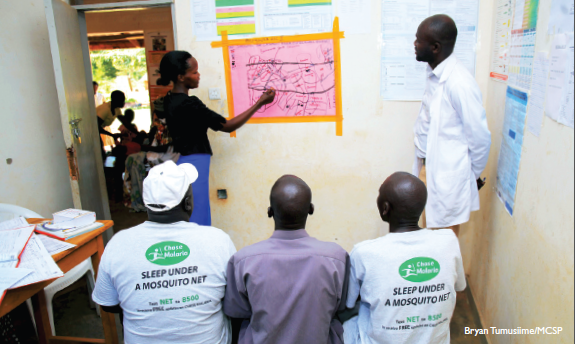
Developed by the World Health Organization (WHO) and the United Nations Children's Fund (UNICEF) in 2002 and revised in 2008, Reaching Every District/Reaching Every Community/Reaching Every Child (RED/REC) is a management approach that has been used around the world to improve immunisation coverage. In light of this track record, Maternal and Child Survival Program (MCSP) country programmes in Haiti, Kenya, Uganda, and Mozambique supported the ministries of health (MOHs) to adapt some or all of the five components of the approach at district and facility levels to improve management of other reproductive, maternal, newborn, and child health (RMNCH) interventions. This document summarises country experiences applying the approach, highlights key enablers and challenges to adaptation, and presents recommendations for countries considering adaptation of the approach in the future.
RED/REC is a flexible approach that is intended to be tailored to country, district, and facility contexts. In brief, core components of RED/REC include: (i) planning and management of resources; (ii) reaching all eligible populations; (iii) engaging with communities; (iv) providing supportive supervision; and (v) using tools and providing feedback for continuous self-assessment and improvement. (See Related Summaries, below, and Box 1 and Figure 1 in the document.)
To better understand the successes, lessons, and challenges countries faced in adapting the RED/REC approach to support other RMNCH interventions, MCSP conducted an online survey and in-depth interviews with its country teams. Findings in brief:
- Haiti: The MCSP Services de Santé de Qualité pour Haiti (SSQH) project supported application of some core components of the RED/REC approach to maternal health, family planning (FP), child health, and community health services in hard-to-reach communities. (See Table 2 in the document.) One finding: Overall, from 2016 to 2017 (October-September timeframe), the average monthly number of antenatal care (ANC) visits increased from 936 to 1,196, and the rate of institutional delivery increased by 19%, following the adaptation of approaches to maternal health. Lessons learned centre on fostering buy-in and commitment at all levels and building capacity to implement RED/REC through supportive supervision and on-the-job mentoring.
- Kenya: MCSP piloted an adaptation of the RED/REC approach to improve the coverage of oral rehydration solution (ORS) and zinc in treatment of child diarrhoea in high-burden catchment areas in focus subcounties. (See Table 3 in the document.) An example of an activity: MCSP facilitated dialogue days with the community, which was found to be an important component to ensure high-quality implementation. Reflecting on the 8-month implementation period, the team remarked that the use of RED/REC for child diarrhoea interventions is particularly effective in an environment with a strong community services platform (e.g., one featuring frequent home visits).
- Uganda: MCSP collaborated with the MOH Child Health Division and Regional Health Integration to Enhance Services (RHITES) implementing partners to facilitate adaptation of RED/REC for application to other child health interventions. (See Table 5 in the document.) One finding: The number of children reached with vitamin A supplementation (VAS) and deworming increased across four demonstration districts, with the largest gains in districts that held more village health team (VHT) meetings and supported more VHT activities. The positive subnational experience informed the drafting of a national guide on using catchment area mapping, planning, and action for RMNCAH services. Furthermore, the MOH has engaged UNICEF for support to use this approach to improve the reach and expected outputs of Family Connect, a mobile technology platform used for registering and sending targeted health education messages to pregnant women and lactating mothers.
- Mozambique: MCSP helped the MOH to train 146 healthcare workers to apply the RED/REC microplanning approach to extend outreach services and target hard-to-reach populations with VAS in Nampula and Sofala provinces. (See Box 2 in the document.) Applying microplanning to VAS, in addition to strengthened nutrition implementation in Mozambique, resulted in the supplementation of 1,007,569 children with vitamin A in the second half of programme year 2 (PY2). One finding: The involvement of community nutrition activists and volunteers played a critical role in mobilising for VAS uptake alongside other community-based nutrition interventions.
Enabling factors for applying the RED/REC approach:
- Fostering buy-in at all levels of the health system by engaging relevant stakeholders in participation, consensus building, and regular monitoring meetings.
- Supporting healthcare providers through frequent, one-on-one coaching, mentorship, and supportive supervision.
- Engaging communities, which can result in collection of more accurate mapping and beneficiary data, increased care seeking for health services, and strengthened linkages between communities and facilities.
- Using data to improve planning and targeting of beneficiaries so as to create a culture of data use, with health facility staff who are comfortable with and value the tracking of data and feel empowered to use it in decision-making.
Challenges to implementation included poor data quality and timeliness of reporting, as well as difficulties in ensuring the strength of the community engagement component of the RED/REC approach, which is "vital".
Recommendations for MOHs and their implementing partners:
- Undertake targeted orientation of stakeholders in advance so they have the opportunity to explore and identify what may be applicable or useful to their context.
- Allow for time and adequate support to help shift the mindset of health workers from viewing themselves as accountable only to those children and their caregivers who come for facility- and outreach-based services to being accountable for every child in the catchment area.
- Engage community health workers (CHWs) to capture community-level needs and identify the intended population.
- Structure any external funding for community engagement in a way that enhances, rather than replaces, the proper and effective use of local resources allocated for this purpose.
- Allocate sufficient time and support to develop a data use culture that encourages health managers to use catchment area and service delivery data to improve coverage.
- Address broader health systems issues, such as lack of commodities, lack of or failure to allocate resources, and frequent health worker strikes, at a sectorwide management level.
In concluding, the document provides examples of areas for further learning, such as understanding how to both share and interpret data across programmes involved in the adaptation of RED/REC. "Overall, the experiences documented in MCSP-supported areas highlight the potential use of the RED/REC approach to strengthen district management planning for RMNCH, identify and reach underserved populations, and reduce missed opportunities for accessing RMNCH services and information."
Email from Kate Bagshaw to The Communication Initiative on November 1 2019. Image credit: Bryan Tumusiime/MCSP
- Log in to post comments