










































Emergency Appeal for Journalism and Media Support
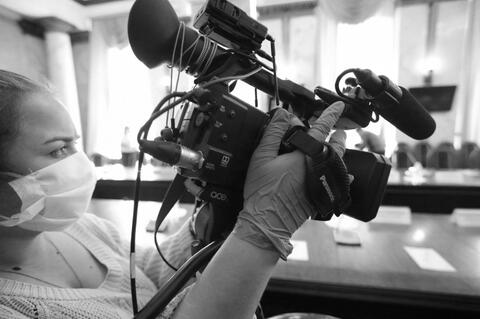
"The solidarity, innovation and collaboration that we are seeing during this crisis must outlive this [COVID-19] emergency and help us address the long-term sustainability and press freedom issues facing journalism around the world." - Mira Milosevic, GFMD's Executive Director
To mark World Press Freedom Day (WPFD) on May 3 2020, the Global Forum for Media Development (GFMD), the Safety of Journalists (SoJ) Coalition, and numerous GFMD members, partners, and affiliate networks launched a global emergency appeal for journalism and media support in response to the COVID-19 crisis.
This initiative involves a collaborative coming together of media development organisations to communicate the importance - and vulnerability - of this industry to all those who rely on reliable, fact-based journalism to stay informed during the pandemic. By amplifying their plea for help using social media, the organisations involved are working to raise information about the dire situation the industry finds itself in and to galvanise support.
Specifically, the press freedom, media development, and journalism support communities call for action from 6 groups:
- Governments are asked to respect the rights of press freedom, rule of law, digital rights, access to information, and freedom of expression. Suggested actions include, where appropriate, designating journalists and media workers as "essential workers", and being responsive to the demands of the press freedom community, including calls to release imprisoned journalists. States are asked to work with journalism and media associations to assess the damage that COVID-19 is inflicting on public-interest reporting and the sustainability of news organisations. They are asked to devise mechanisms to provide financial support to public-interest journalism through a variety of means while ensuring that any interventions are just and transparent and do not undermine editorial independence or distort the marketplace.
- Journalism and media development donors and funders are asked to: expedite, increase, and scale-up journalism support; coordinate and pool emergency resources; establish an emergency fund to help public-interest media survive; and allocate resources to address journalism's longer-term sustainability problems.
- Journalism and media organisations are asked to: find ways to serve their audiences and fight disinformation and misinformation; protect jobs; and show a duty of care to those they employ, both physically in terms of equipment and training, and in terms of their working conditions and mental health. Media are asked to pool resources and collaborate whenever possible, as well as ensure they serve all segments of their communities.
- Technology, telecommunication companies, and internet intermediaries are asked to: create free and safe digital spaces for journalists and professional media; ensure algorithms recognise, promote, and reward credible, independent, trustworthy journalism; responsibly manage the use of blacklist technology, and prevent automated takedowns of journalistic content related to COVID-19; increase and expedite funding of independent public-interest journalism, fact-checking, and other measures to counter disinformation and misinformation; take stronger action against malicious actors; lower the cost of internet connectivity, especially in emerging and developing markets to aid access to information; and step up efforts to respect fundamental human rights online.
- Advertisers are asked to: stop blacklisting journalistic content related to COVID-19 pandemic and other critical health and social issues online; review how they measure engagement and impact; and use existing mechanisms to advertise through trusted media.
- Audiences are asked to find ways to support journalism if they can.
Media Development
According to GFMD, independent media faced an "unprecedented existential challenge" due to the swirl of disinformation and misinformation around COVID-19, repression of critical voices in many countries, and disruption caused by social distancing and financial stability related to the pandemic, "the situation facing journalism and news media is dire. Revenues for these institutions are collapsing, and funding is decreasing just when we need it most. The consequences will be felt globally, but the information crisis and the health crisis is certain to be most acute in resource-poor communities."
Learn more, and participate:
- Click here to view the full statement on the GFMD website, with the list of signatories.
- If your organisation would like to sign the statement, you can apply to do so using this form.
- If you would like to translate the statement into another language, please contact Jordan Higgins jhiggins@gfmd.info
- Suggested hashtags for sharing: #WorldPressFreedomDay #WPFD2020 #DefendMediaFreedom #PressFreedom #JournalismIsNotACrime #NoImpunity #ThankAJournalist #MediaDev [Twitter thread]
- Other social media: Facebook post; LinkedIn post.
- You can download social media banners and images related to the appeal here.
GFMD and the SoJ Coalition. As of May 5 2020, 139 organisations and individuals had signed the appeal.
GFMD press release, May 4 2020 - accessed on May 5 2020. Image credit: Vyacheslav Madievskyi/ Ukrinform/Barcroft Media via Getty Images [and via International Media Support (IMS)]
- Log in to post comments