










































Educating Girls: Creating a Foundation for Positive Sexual and Reproductive Health Behaviors
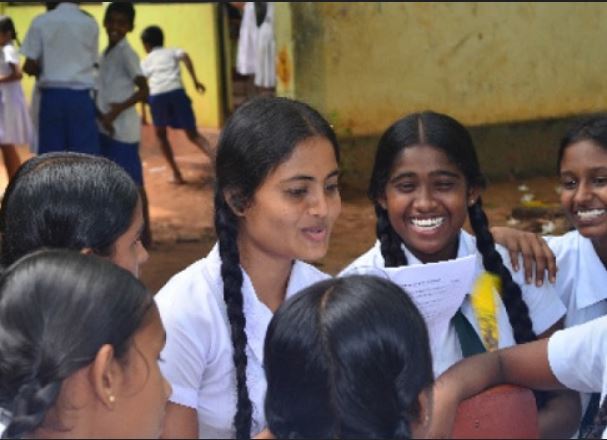
"Investments that promote keeping girls in school, particularly in secondary school, have far-reaching and long-term health and development benefits for individuals, families, and communities." This 8-page brief discusses the relationship between girls' education, family planning and reproductive health, highlighting evidence-based practices that increase girls' enrolment, retention, and participation in school. It also offers recommendations for how the health sector can support keeping girls in school. The brief was published as part of a series that focus on high-impact practices (HIPs) in family planning identified by a technical advisory group of international experts. HIP collaborating partners have developed these briefs that synthesise the evidence and provide recommendations on how to implement selected HIPs.
The brief first outlines the impact of girls' education on reproductive behaviour, noting that "educated women are more likely to delay marriage and first births as well as engage in other protective health behaviors", and "women's education is associated with a wide range of positive child health outcomes." The brief also looks at what works to keep girls in school. Along with improving the quality of the school environment and possibly providing economic incentives, the importance of engaging communities to change social norms that devalue girls and their education is also noted. This would include community engagement approaches that address barriers by "emphasizing the value of girls and the benefits of girls' education; promoting a gender-equitable distribution of household work; engaging parents, girls, and communities to ensure girls' safety; and providing a support structure for girls to pursue education."
The final section of the brief presents a number of approaches the health sector can support to keep girls in school:
- "Collaborative efforts to keep girls in school should collect key information on inputs, outcomes, and cost-effectiveness for both education and sexual and reproductive health."
- Community engagement interventions are most effective when they engage a wide range of stakeholders, including teachers, supervisors, students, ministry officials, and parents/guardians. The health sector can use existing community structures, such as community-based distribution agents and community health workers, to strengthen social and behaviour change communication strategies to address community perceptions of school quality and safety as well as gender roles. "These strategies should coordinate messaging and link messages on the mutual benefits of education on health, including sexual and reproductive health, and vice versa."
- The health sector has an important role to play in creating a policy environment that is supportive of girls' education, including advocating for gender-equitable universal education policies and removing policy barriers that prevent girls from returning to school after dropout, marriage, or pregnancy.
- The health sector can contribute to an improved learning environment in collaboration with the education sector by helping to reduce gender-based violence in schools, train teachers in gender-equitable teaching methods, and supporting programmes that promote teachers and women as mentors.
- Coupling health interventions with school-based programs may help improve girls' attendance and participation in schools.
- Cross-sectoral programs need to provide more robust evidence that these programs contribute to improved health outcomes as well as health knowledge and behaviors.
Click here to download the French version of this brief in PDF format. Click here to download the Spanish version of this brief in PDF format.
- Log in to post comments