










































Comparative Analysis of Civil Society, Media and Conflict
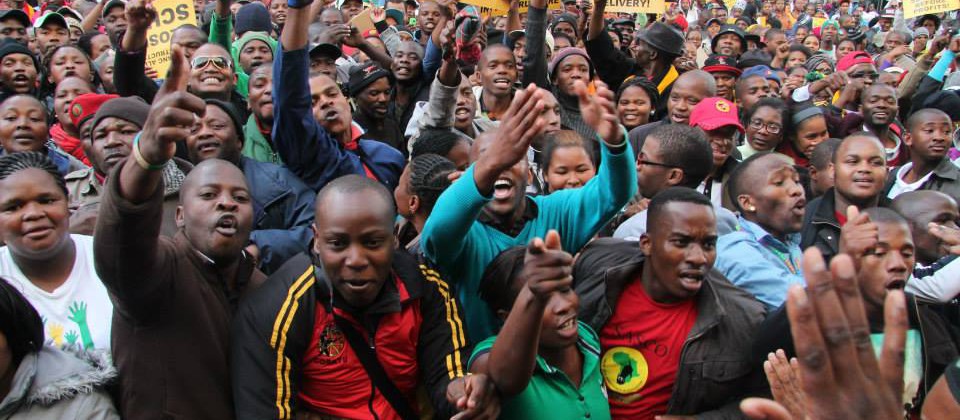
““The focus on the media’s relationship with civil society in democratisation conflicts rests on the notion that contemporary conflicts are increasingly mediatised events” (Cottle 2006)
This working paper examines how civil society organizations [CSOs] in Egypt, Kenya, Serbia, and South Africa use communications and relationships with media to engage in democratic contestation. It questions the idea that media is central to the “democratic public sphere” and deliberative democratic debate.
This research on CSOs’ communications practices, use of media, and representation in the media forms part of MeCoDem’s broader research on the conditions, scope, and consequences of mediatised politics in transitional societies. MeCoDem suggests that transitions from authoritarian rule to more democratic government can trigger conflict, and under certain circumstances the media can be an obstructive force that sharpens such conflicts and might trigger violence. The research is intended to contribute to a better understanding of the role of media in these conflicts and to developing effective communication interventions for conflict prevention and management.
Interviews with 91 activists who participated in selected democratisation conflicts in the four study countries between 2001 and 2005 explored their perceptions of:
- Democracy in general and how the conflicts relate to their country’s democratic dispensations
- The importance of the media
- Efforts to get media coverage of the conflict
- Quality of media coverage
- The media’s role in alleviating or enflaming conflict
- The importance of social media in their activism around the conflicts
In addition, the paper discusses CSOs’:
- communications practices, particularly those focused on internal and external mobilisation;
- their representation in the media; and
- their use of media to achieve their goals.
The researchers focus on country-level communication practices and perceptions of the media rather than on individual conflicts. They also explore definitions of civil and “uncivil” society, social and political activism and their intersections, and the role of media in democracies and the mediatisation of conflict.
The research found that participating CSOs in all countries used a wide range of mainstream media contact and self-made communications approaches in various mediums to support external communication to build their organisations, attract members and supporters, and redistribute power from governments to civil society. The report describes specific uses of the internal and external communications tools and approaches used by activists to mobilise CSO members and the public during the conflicts. Commonalities and differences across the countries and important factors in their implementation and effectiveness are discussed. The report also presents the interviewees’ experience with the benefits and pitfalls of using social media to mobilise people, contact journalists, build or destroy organisations, share information and ideas, and build relationships.
The report states that the Egyptian, Serbian, and South African activists identified distribution and control of power as a key source of conflict, and placed significant importance on networked civil society; therefore, communications among members and with the outside world was perceived as key to redistributing power. In Kenya, on the other hand, CSOs saw the ability to build health relationships between different groups of people as the key to their power; therefore their primary communication activities centred on citizen education. Egyptian, Kenyan, and Serbian activists suggested that regular elections are a key marker of democracy and that the media correctly focused on those issues, whereas the South African activists suggested that the media focussed too much attention on elections and not enough on local participatory mechanisms for listening to citizens. CSOs in all four countries indicated that media attention was focussed more on elites than on examining the important work CSOs were doing to create peaceful and equitable societies, and that the media often played a detrimental role in democracy. Therefore CSOs’ communication and other activities could be seen as contesting the media, as well as contesting identity and citizenship, and contesting the state.
MeCoDem website on June 14 2017.
- Log in to post comments