










































Communication for Development (C4D) Workshop: Pacific Media Assistance Program (PACMAS)
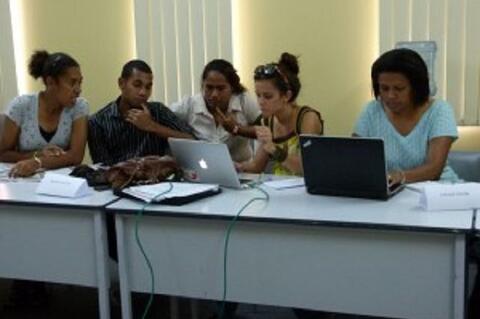
In March 2012, the Pacific Media Assistance Program (PACMAS) held a workshop in Suva, Fiji, on communication for development (C4D) with 20 students from technical and vocational education (TVET) institutions around the Pacific. The students produced radio and TV stories linked to the Millennium Development Goals (MDGs). The goals were to: foster good or better governance in the region; focus on media development and outcomes; facilitate media content (e.g., on the MDGs); and spark media capacity development (upgrading knowledge in areas of research and/or the MDGs).
Participants in the in-person workshop (8 from the region and 12 from Fiji) discussed the meaning of C4D and explored the importance the role research plays in developing content that is relevant to the audience. They also explored the MDGs and the role the media plays in supporting the realisation of those goals. Specifically, on the first day, four guest speakers presented on different areas of C4D, including the MDGs, and production in community radio, television, and print. On the second day, students visited the office of the Bureau of Statistics. One of the senior statisticians there gave a presentation on the process and importance of conducting research, with a focus on use of quantitative and statistical information for reporting.
Participants were then grouped into teams and together compiled a short radio or television production. The participant on the team who produced the video that may be viewed below explained: "Our group did a television story on a female taxi driver to promote MDG 3: Women's Empowerment and Gender Equality. We believe this story can empower young females in their career path choices and contribute to achievement of MDG 2 - quality education for all children (including females!). The obvious is, the number of female cab drivers in Fiji is disproportionately low. We wanted to find out why this is so and actually hear from a female cab driver share her experience and challenges working in a male-dominant sector." Groups like that one went to different parts of Suva to interview ordinary people and seek out relevant information for their stories.
The resource persons for this workshop were at that time currently engaged in development assistance work in the Pacific. They were assisted by their local counterparts at the Pacific Community's Media Centre, who brought with them local knowledge and a network of contacts in the region.
The participants' television and radio features were screened during the Pacific Island News Association's conference (Pacific Media Summit) - see Key Points, below. These features were also made freely available to all radio and television stations.
Media Development, MDGs.
The workshop was held in the days before the Pacific Island News Association's conference (Pacific Media Summit), which brings together media practitioners, academics, and representatives of non-governmental organisations (NGOs), development partners, and governments. The theme of the 2012 conference was "Building a Healthy and Responsible Pacific Media Culture". It aimed to: review the present status and trends in media development; identify and address emerging issues in media development; assess opportunities and challenges for future media development; and build consensus on the way forward for the sector as a regional, sustainable, and competitive sector, contributing to media freedom, professionalism, and cooperation.
PACMAS is a 10-year commitment by AusAID to contribute to the development of media in the Pacific region. The goal of PACMAS is to support better governance in the Pacific. PACMAS seeks to achieve this by supporting the development of diverse, independent, and professional media that promote informed and meaningful public discourse throughout the region. According to PACMAS, "[a] free, well functioning and independent media sector is widely recognised as being critical to promoting better governance which in turn can improve the quality of development outcomes."
PACMAS website, June 21 2012.