










































Communicating During Disasters: Examining the Relationship between Humanitarian Organizations and Local Media
"When disaster strikes, humanitarian aid organizations often play a pivotal role in relief efforts. Communicating with affected populations is one of the many challenges these groups face during a response operation."
This Internews report in collaboration with Columbia University's School of International and Public Affairs (SIPA) examines the relationship between humanitarian aid organisations and local media from the perspective of the aid providers in order to identify ways in which these relationships can be improved to better serve the needs of communities affected by disasters.
As part of a capstone project commissioned by Internews, SIPA students asked representatives of major humanitarian aid organisations to reflect on how their operations in the field communicate with disaster-affected communities.
Between January and March 2013, the project team interviewed 34 public information and media officers from humanitarian organisations and donor officials around the world. Interview subjects were specifically asked about "two-way communication", in which the potential beneficiaries of humanitarian aid are not simply reached with messaging and information, but are also able to respond and convey their own messages or feedback to organisations providing aid.
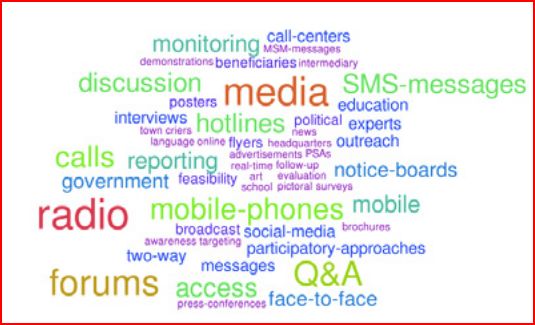
As reported here, how organisations actually make contact with local communities depends on available funding and the type of emergency. Mechanisms for communication include radio, flyers, notice boards, focus group discussions, meetings with government or community leaders, and increasingly, text (SMS) messages. Many organisations are now looking at soliciting information and feedback through call centres and suggestion boxes. How organisations contact local communities "depends on the context and also the stage of the disaster. In the immediate aftermath of a major emergency...the aim is to reach as many people as possible, as fast as possible...however as an operation moves into recovery, the room and need for two-way communication becomes very important."
Also noted: To address the problem of access, particularly when it comes to reaching vulnerable groups such as the disabled and women and children, organisations typically seek partners in the field to help them channel key messages and network. "One respondent expressed hesitation about relying on community leaders to convey vital information. Although they see the value in consulting with local authorities for input on community needs and selection criteria for distributing assistance, they believe authority figures should be bypassed because of potential conflicts of interest."
In general, most of the officials interviewed for this research project acknowledged that two-way communication does not receive the attention it should in humanitarian relief efforts. The majority also recognised that local media outlets have the potential to play a key role in bridging this communication gap. Although many organisations are able to share success stories in which they overcame issues of distrust or miscommunication to partner effectively with local media, few organisations have been able to institutionalise these efforts to ensure that two-way communication with affected communities is prioritised across all regions or projects.
As detailed in the document, there are two primary areas in which progress is critical, and the recommendations provided by interviewees and the project team fit into one of these broad categories:
- Improving the relationship between humanitarian organisations and local media.
- "Local media must understand how humanitarian organizations function, and especially the difference between disaster response versus everyday aid work.
- Humanitarian organizations must understand how local media operate and how norms or constraints may vary across different regions or countries. This type of media landscaping can help aid organizations identify local media partners and how to best work with them to reach disaster-affected communities.
- Greater contact between humanitarian organizations and local media before disasters strike is essential. Regional meetings or workshops could help establish these relationships pre-disaster.
- Humanitarian organizations cannot expect other organizations or local media to handle two-way communication with local populations for them. Intermediary organizations may be a helpful support tool, but aid organizations must be proactive in utilizing all possible resources to get the job done."
- Transforming the way in which humanitarian organisations approach two-way communication.
- "Grappling with large volumes of information is an ongoing challenge. With the spread of mobile technology and social media, responders in the field cannot control information coming from disaster areas or claim to have the latest news. Humanitarian organizations must address the challenges and opportunities of new technology.
- Humanitarian organizations must work together during disasters in order to better communicate with disaster-affected communities. Failure to coordinate leads to inefficiency and duplication of efforts.
- Aid organizations must plan in advance how they will get feedback from affected communities and how they will incorporate feedback they do receive. Who takes ownership of suggestions and how they are incorporated into an organization's policies and practices is crucial.
- Donor agencies must focus more attention and resources on two-way communication to enable implementing partners to better accomplish this task. This may include funding specifically for communication initiatives, or greater emphasis on two-way communication as a high-priority deliverable within funded projects.
- How we discuss this problem matters. When we say 'communication' many people think of public relations rather than dialogue between a humanitarian organization and a community in crisis. A typical communications or press officer has a different focus and skill set than what would be required of someone working to improve two-way communication with affected communities. Humanitarian organizations and donors should be aware of this difference and allocate staff and resources accordingly.
- Training is essential in order to effect lasting change, whether educating staff on the importance of two-way communication, how to use new technologies and social media, or how to understand and effectively work with local media."
Emails from Internews and Jacobo Quintanilla to The Communication Initiative on October 22 2013 and April 1 2014, respectively.
- Log in to post comments