










































Briefing Paper: Freedom of Expression Concerns Related to Myanmar's COVID-19 Response
"...during the pandemic, the government of Myanmar has continued its attack on freedom of expression. It has advanced legislation and measures that will unnecessarily close civic space."
This briefing paper explores concerns relating to freedom of expression and civic space that have emerged during the COVID-19 pandemic in Myanmar, addressing 4 main topics: (i) prosecution of those exercising their right to freedom of expression, (ii) "hate speech", (iii) access to information, and (iv) emergency measures. It examines government action against international human rights law and standards and provides recommendations that Myanmar can take forward to continue to suppress transmission of COVID-19 without suppressing expression.
The paper was published by ARTICLE 19 as part of the PROTECT programme, a partnership for knowledge and learning in Kenya, Malawi, and Myanmar aimed at countering shrinking civic space, easing pressure on independent media and infomediaries, and enhancing transparency through empowered, independent, and informed individuals and communities who demand that governments uphold their obligations in a protective and enabling environment.
ARTICLE 19 stresses that, while the right to freedom of expression is fundamental, it is not absolute. The United Nations (UN) Human Rights Committee has stated that any restriction must be: (i)provided for by law; (ii) in pursuit of a legitimate aim; and (iii) necessary and proportionate.
As these organisations outline through various examples, the Myanmar government's response to the COVID-19 pandemic has exacerbated pre-existing threats to freedom of expression in the country. Authorities have used the pandemic as a pretext for silencing critical voices and have adopted new forms of repression. They have prosecuted journalists, human rights defenders, and others who have challenged the government's narrative concerning the pandemic. The 2-year prison sentence handed to Dae Pyaw news agency editor Zaw Min Oo, also known as Zaw Ye Htet, for allegedly reporting false information about the virus is disproportionate and has a chilling effect on COVID-19 reporting, according to Matthew Bugher, ARTICLE 19's Head of Asia Programme, who said, "It's difficult to imagine anyone voicing concerns about the government's COVID-19 response without fear of retaliation." A proposed amendment to Myanmar's communicable diseases law would provide another tool to criminally penalise those who speak, write, or share information about contagious diseases.
At the onset of the COVID-19 pandemic, Myanmar adopted emergency measures to slow the transmission of the virus. Concerns have been raised about the discriminatory implementation of these measures, to the detriment of Myanmar's ethnic and religious minorities. During the pandemic, "hate speech" has been directed at Rohingya, Muslims, and Christians, as well as migrant workers and refugees returning from abroad. While the government has taken some steps to encourage the public to refrain from engaging in "hate speech", ARTICLE 19 is concerned that repressive legislation being developed by the Myanmar government would nullify those gains and could backfire, potentially exacerbating the root causes of intolerance.
Furthermore, the government has blocked access to ethnic media websites based on what is described here as the inaccurate claim that they have spread "false news" about the pandemic. While 2G internet service in Rakhine and Chin States has been restored after being blocked for more than a year, 3G and 4G services remain blocked. Connections are reportedly so slow that mobile users are unable to load webpages or use apps, calling into question the significance of the government's change in policy.
Although the government now maintains a publicly available dashboard on COVID-19 cases and deaths, transparency is lacking around economic programmes and other remedial measures. Further, the government has failed to publish all minutes of official meetings, working documents, or expert advice provided to the government - documents that would better allow the public to assess the efficacy of its response.
ARTICLE 19 argues that the Myanmar government must prepare to address the ongoing dangers presented by the pandemic without trampling on human rights, including the rights to freedom of expression and access to information. They recommend:
- Cease the prosecution of journalists, human rights defenders, and others exercising their right to freedom of expression, including by speaking out about topics relating to COVID-19.
- Adopt a national action plan to combat "hate speech" and intolerance consistent with international human rights standards and best practices.
- Refrain from passing the proposed anti-"hate speech" legislation.
- Proactively publish information relating to the pandemic.
- Remove Section 20 from the proposed Prevention and Control of Communicable Diseases Bill, which would empower the Ministry of Health to delegate authority to local officials to prohibit speaking, writing, receiving, or publishing news on contagious and communicable diseases that could "cause panic".
- Adopt right to information legislation in line with international standards.
- Enact whistleblower protection legislation.
- End all mobile internet restrictions in Rakhine and Chin States, and repeal section 77 of the Telecommunications Law, which gives the Ministry of Transport and Communications (MOTC) wide discretion to direct a licence holder to intercept communications when it is in the public interest and with the approval of the government.
- Cease the censorship of ethnic news websites.
- Reverse requirements to register subscriber identification module (SIM) cards, which have exacerbated concerns around access to online information.
- Subject emergency measures to parliamentary oversight.
- Cease the discriminatory application of emergency measures, and consider non-custodial sentences to enforce the measures.
In conclusion: "As Myanmar continues to combat COVID-19 transmission, it should modify its approach to ensure respect for human rights."
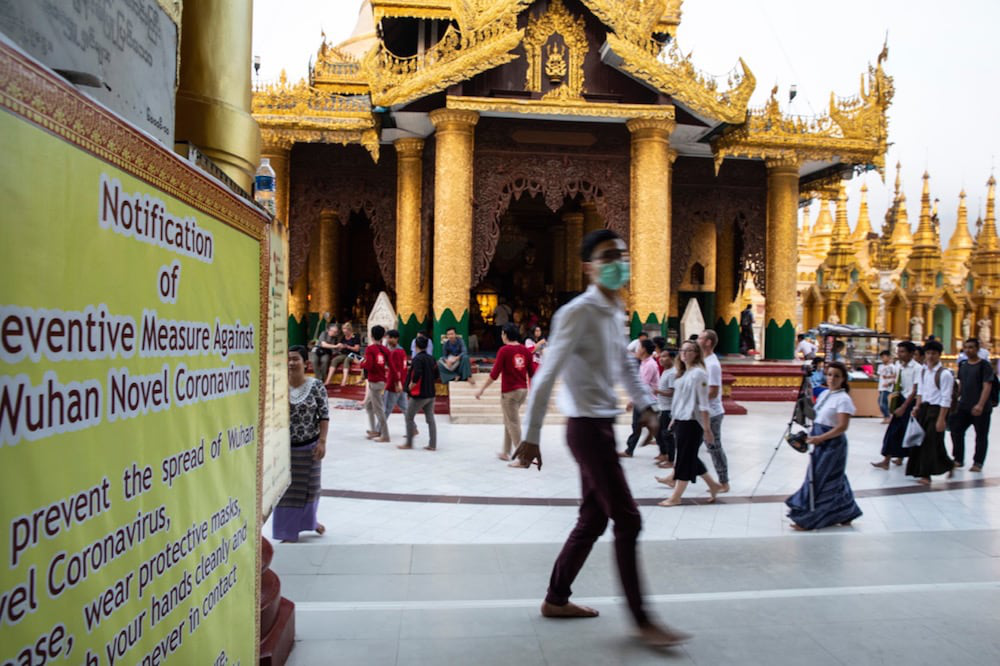
"Myanmar: Restriction on Expression in Communicable Diseases Bill Would Undermine COVID-19 Response", ARTICLE 19, May 12 2020; "Myanmar: ARTICLE 19 Briefing Highlights Freedom of Expression Concerns amid the COVID-19 Pandemic Response", ARTICLE 19, August 31 2020 - both accessed on September 21 2020; and email from Matthew Bugher to The Communication Initiative on September 22 2020. Image credit: Paula Bronstein/Getty Images
- Log in to post comments