










































Afghan Woman's Hour (AWH)

AWH's gender-related radio programming is a communication tool leveraged within a context where women may be denied access to information. Organisers envision that offering Afghan women a radio programme they enjoy, as well as one that offers them potential solutions to the challenges they face, can result in gains in their confidence in the ability to participate fully in society. To build a framework for developing AWH's communication strategy, the project team reportedly conducted an extensive review of literature and research reports to identify and adapt from among various theoretical models for empowerment. In addition, a research trip to Afghanistan helped the BBC WST team determine that the language should be simple, and that programming should highlight issues that touch Afghan women's lives and give practical advice.
What resulted is a weekly magazine show broadcast in Dari and Pashto on FM frequencies on the Afghan stream of BBC World Service radio, which are repeated on different days and at different times to allow as many women as possible to listen. One hundred programmes per year are produced. The Afghan refugee communities of Pakistan and Iran can also receive the programme, and listeners elsewhere around the world may access it online here and/or here.
AWH includes regular segments on women's health, education, and working lives - together with items on cooking, nutrition, literature, culture, and music. There is also a regular storytelling slot, including inspiring stories presenting Afghan and non-Afghan women around the globe as role models. BBC World Service Trust Country Director for Afghanistan, Shirazuddin Siddiqi, says "Research findings have suggested that the programme is not only popular among women but a lot of men listen to it too. What makes this exciting is that this makes it possible for men and women to discuss the content of the programme. For women to be able to implement change in the context of the Afghan society, they need the support of decision makers in their families."
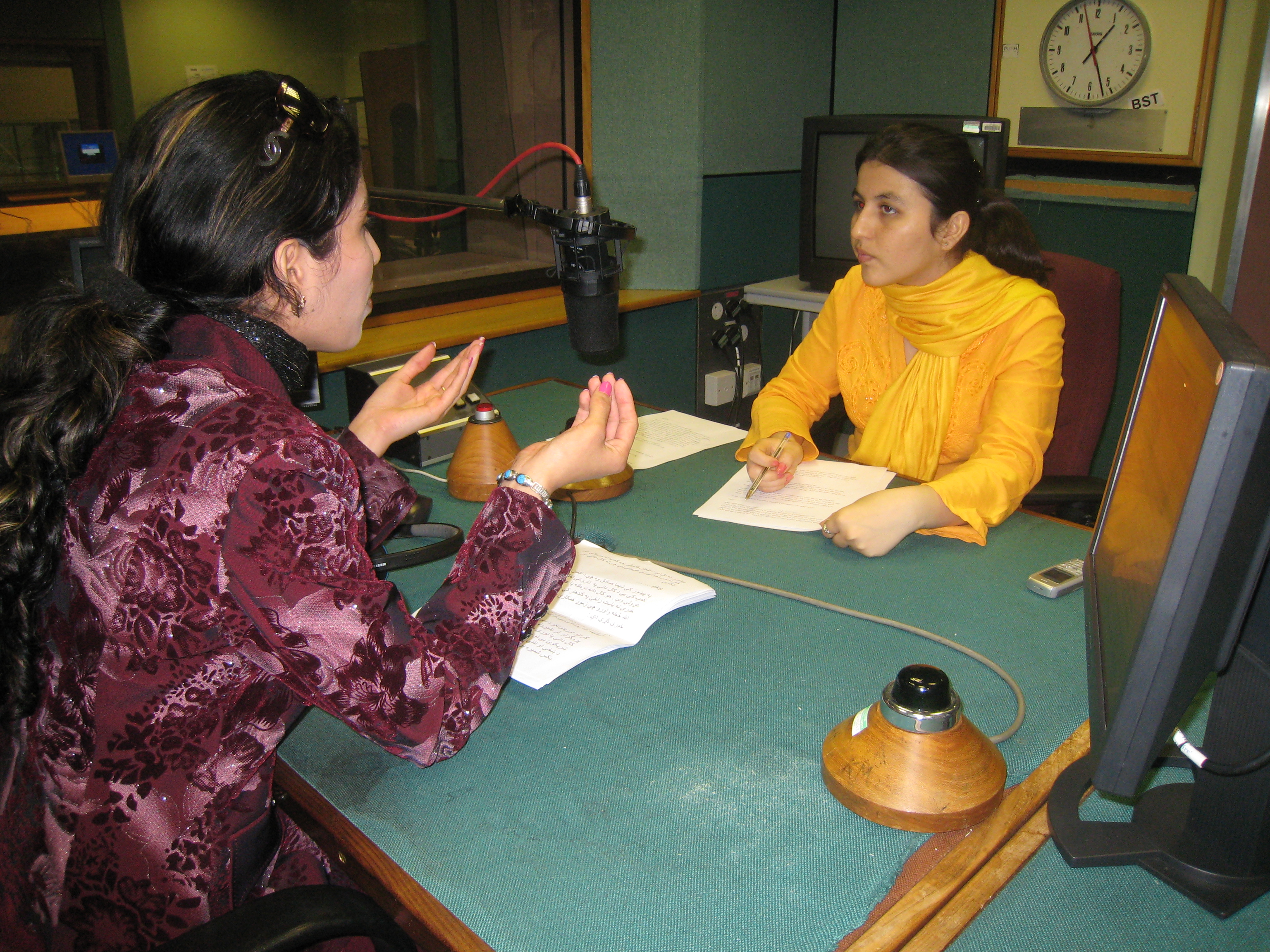
To make this programming possible, a group of 20 female journalists from all over Afghanistan gather original stories, conduct interviews, and record folkloric songs. One of the criteria for selecting reporters for AWH is that they are regular listeners to the programme. The BBC WST's training features more experienced members of the AWH team sharing their skills with new reporters - one as young as 17 years of age. Once trained, the reporters approach women in rural areas and the cities, speaking to economically poor and vulnerable women, women from nomadic tribes, illiterate and educated women, as well as girls and men. One focus is on generating communication in the form of advice and experience that can help less empowered women change their lives for the better. The reporters sometimes bring female experts to the BBC studios in Kabul so that they can take part in discussions. The reporters then use laptops to edit their stories at home, finally sending audio files to London, United Kingdom (UK) [where the BBC WST is based].
The BBC WST provides ongoing training to these reporters so that they can work for other media organisations in the future.
Women.
According to BBC WST, violence against women and girls, and other violations of their rights, in Afghanistan have been widely reported by media and non-governmental organisations (NGOs) in the last three decades. A report by Amnesty International highlights the fact that Afghan women and girls live with the risk of abduction and rape by armed individuals, forced marriage, being traded for settling disputes and debts, and daily discrimination.
The very first AWH reporter is now a member of the Afghan Parliament. She contested the election and won a seat. Another AWH reporter is at the helm of a community radio and television channel in Kandahar.
Funded by the Global Conflict Prevention Pool of the British government.
BBC WST website, accessed November 3 2009; and "The Impact of the BBC World Service Trust's Afghan Woman's Hour – Results from a National Survey in Afghanistan" [PDF], by Andy Bhanot and Emily LeRoux-Rutledge, October 2009 - sent from Emily LeRoux-Rutledge to The Communication Initiative on November 3 2009.

- Log in to post comments