










































Use of Digital Media for Family Planning Information by Women and Their Social Networks in Kenya: A Qualitative Study in Peri-urban Nairobi
London School of Hygiene and Tropical Medicine (Zinke-Allmang, Bhatia, Cislaghi); University of Nairobi (Hassan); Busara Center for Behavioral Economics (Gorur, Shipow, Ogolla); Harvard University (Shirley); University of Groningen (Keizer)
"She is my fellow woman. It could be she has passed through the same things as I am. We could be having different experiences and different doctors....She could be having different information from me which I can exchange. I could also share with her something she doesn't know."
Studies in Kenya point to the role of healthcare providers and key influencers, such as close family and friends, as trusted sources of family planning (FP) information. As more young people have access to the internet, digital media, and technology in Kenya, healthcare providers have turned to digital media to develop new ways of sharing credible FP information. The COVID-19 pandemic reduced access to FP services for women and drew further attention to how FP information can be accessed and exchanged, including peer to peer, through digital media. To contribute to the literature on the opportunities and limits of using digital media to improve access to FP information, this paper draws on social norms theory to explore how young Kenyan women and their social networks use and navigate digital media spaces to find FP information.
Data for this study come from a larger study on the potential of online networks to initiate social norms change on offline networks, where the initial analyses of these data suggest that the COVID-19 pandemic changed the normative influence of FP and limited access to women's social network and affected how they negotiated FP use within homes. For the present study, qualitative phone interviews were conducted in November 2020 with 40 participants - young women, their partners and key influencers - in seven peri-urban wards in Nairobi. The median age of women interviewed was 23 years. Due to safety considerations of remote data collection during COVID-19, women had to have their own (not shared) smartphone to participate in the study and were briefed to use a safe word if the interview were no longer private.
Most women and their key influencers reported using digital media regularly, especially social media apps such as Facebook and WhatsApp. Participants described social media apps as private, secure, and cost-effective ways of connecting with social networks in lieu of being able to connect in-person, especially during COVID-19 lockdowns. Social media channels provided avenues to access information about FP from various sources, where young women, their partners, and key influencers found most of their information through casual online conversations or through social media posts about FP in both private and group conversations. Specifically (as illustrated by quotations from study participants in the article):
- Informal networks were common ways young women, their partners, and key influencers shared and found FP information through friends and family over private messages. In fact, communicating online with informal networks allowed for discreet ways to share FP information that otherwise might not be shared by speaking face to face due to stigma or shyness. Thus, participants identified online platforms as safe spaces for FP discussions because their identities were not known by others.
- Despite finding in-person FP information delivered by healthcare providers or other FP organisations valuable, participants struggled to access this advice during the pandemic and more often sought FP information through medical websites or their informal networks. Participants trusted information from formal healthcare providers to provide accurate information about FP, noting the risk of receiving misinformation about FP from other sources online.
- Women, their partners, and key influencers navigated digital media group spaces differently depending on the gender of group members, which influenced how comfortable they felt sharing information or experiences with others online. Although there is concern that strangers online might react poorly to FP information being shared, participants were still keen to share information for the purpose of spreading good information about FP among others. Women found speaking with other women online the most comfortable and said that it was important to inform other women about their FP options as a matter of improving the lives of women in their communities. In contrast, some men felt uncomfortable sharing or discussing FP information online with their male friends, since starting such a conversation about FP is not common in person either. Yet a few participants said connecting with men online about FP is important so "they [men] do not leave the family planning issues to women alone".
The researchers note that young women and their networks interviewed were aware that others in their communities may not have access to digital media and technology due to financial and/or connectivity issues. However, for those who had access to digital media during COVID-19, this meant that even in the context of large disruptions in in-person service delivery, people were not cut off from sexual and reproductive health information. The findings reveal that women and their social networks preferred to access information from healthcare providers online compared to information from their peers and found that this was an acceptable way of accessing trusted information when in-person services were not accessible during COVID-19.
Implications for interventions and research to emerge from the study include:
- FP organisations should leverage digital media channels to reach young people with youth-friendly FP content that is supported by trusted healthcare providers. Such services could complement in-person health services, or encourage young people to seek health services.
- It is important to include FP information in digital media spaces that is targeted toward men, as well as to adopt appropriate strategies to engage men in FP conversations. The discordance between women's comfort in discussing FP online with other women and men's discomfort discussing FP experiences with other men influences the dynamics between women and their partners when making decisions about FP use. Engaging men online in FP communication is a key strategy for reducing barriers women, in turn, face in accessing FP information and methods.
- To date, much digital media research has focused on how information is disseminated through online platforms and the potential of digital information to shift behaviour. The researchers suggest that future research should focus on exploring processes through which individuals seek FP information online and their preferences of how to access trusted FP information.
- Further studies could focus on how social norms around sharing and accessing sensitive information online shift from online to offline settings and could test digital interventions to improve access to FP information.
In conclusion, this study: "highlight[s] the importance of digital media in disseminating FP information among young women and their networks, the differences in norms governing the acceptability to talk about FP online vs. in-person and the significance of targeting misinformation about FP in digital media spaces."
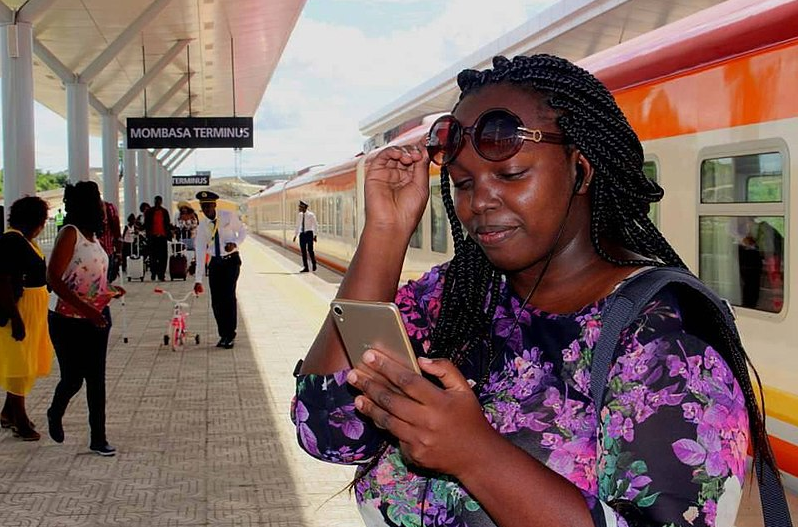
Frontiers in Sociology; and email from Anja Zinke-Allmang to The Communication Initiative on October 10 2022. 7:886548. doi: 10.3389/fsoc.2022.886548. Image credit: Kemuntobear via Wikimedia (CC BY-SA 4.0)
- Log in to post comments