










































Pathways to Modern Family Planning: A Longitudinal Study on Social Influence among Men and Women in Benin
Institute for Reproductive Health (IRH), Georgetown University (Igras, Diakité); Camber Collective (Burgess); independent consultant (Chantelois-Kashal); Johns Hopkins Bloomberg School of Public Health (Giuffrida); University of California, San Diego (Lundgren)
"As efforts to achieve the Sustainable Development Goals gain momentum, better understanding of underlying social and individual factors that influence unmet need could improve social and behavior change efforts."
Women and men in low- and middle-income countries (LMICs) face complex and multifaceted obstacles in managing their fertility. For instance, gender role expectations and other social factors related to family planning (FP) communication and decision-making play roles in method adoption and continuation. Research indicates that unmet need for FP in West Africa continues to grow. This longitudinal, qualitative cohort study investigates the processes involved in FP behaviour change among women and men in southwest Benin, leading to a typology of FP users based on FP need, attitudes, and behaviours, as well as the role of enabling factors and barriers, such as social and gender norms.
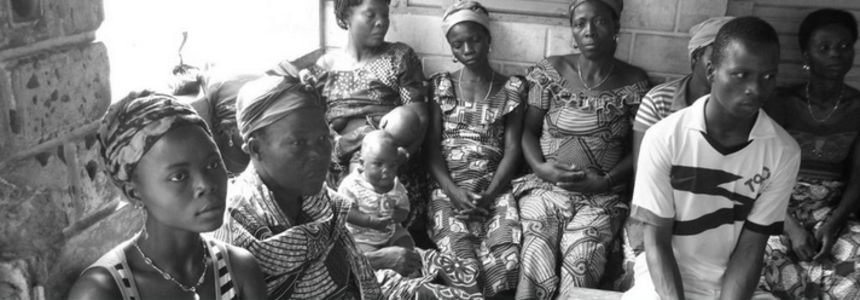
The cohort study was a complement to implementation research on a social network intervention, Tékponon Jikuagou (see Related Summaries, below), to reduce unmet need for FP. Although the study was exploratory and not intended to evaluate the intervention, it did occur in intervention villages where the project increased the exposure of many participants to FP information.
Participants in this study, who were identified without consideration of whether they were engaged in Tékponon Jikuagou, included 25 women and 25 men representing differing social network influence and FP need status. They participated in three rounds of in-depth interviews over 18 months, which were conducted by interviewers of the same gender to facilitate dialogue. Analyses used a social network influence lens consisting of three phases: (i) coding to identify essential factors related to unmet need that changed over the course of the study; (ii) matrix analysis to examine the dynamics of unmet need; and (iii) grounded theory and content analysis to organise respondents into pathways leading to met/unmet need and to understand commonalities within identified pathways.
The analysis indicated that study participants required a strong foundation to obtain FP information and services and use a method correctly over time. Six building blocks of FP met need emerged that encompass individual, interpersonal, structural, and community dimensions. They include: (i) fertility and FP intentions; (ii) FP attitudes; (iii) FP knowledge; (iv) couple dynamics; (v) access to services; and (vi) social influence. The blocks are mutually reinforcing, with alignment usually required for a person to meet their FP need. The blocks often changed direction (enabling/barrier) over the 18 months of the study, influencing consistent and correct use of contraception over time.
The study also revealed that women and men commonly follow five pathways as they seek to fulfill their FP need. By study end, two of the pathways achieve met need (determined users, quick converters), one does not (side effect avoiders), and two do not lead to consistent FP outcomes (male-priority decision makers, gender-egalitarian decision makers). To analyse the pathways, the researchers asked: What was each pathway's openness to uptake of modern contraception? Who influenced FP decisions? How did the configurations of the six building blocks and other factors enable FP use or create barriers in different pathways?
Determined users include women and men who tend to have positive FP attitudes and intentions, strong proactiveness, and an ability to address challenges, including, for four women, covert method use. At the beginning of the study, positive individual fertility and FP intentions, FP attitudes, and social network support (social influence)provided an enabling foundation for FP use. (Analysis of determined users' social networks identifies parents of both spouses (but especially the husband), the husband's brother, and friends as promising/viable network actors to positively influence determined users.) However, determined users also noted weaknesses in their own and their social networks' knowledge and attitudes, and service access. By the end of the study, participants had overcome those weaknesses and described a supportive or neutral FP foundation across building blocks.
Quick converters demonstrate rapid adoption of modern methods of FP once minor barriers are addressed. These participants began with strong FP attitudes and, by the end of the study, had overcome small barriers in FP knowledge and social network support. Though they sometimes confronted FP stigma and myths/beliefs about methods, quick converters also developed active and often positive social network engagement over time that helped address concerns about FP. All quick converters played an active role in the Tékponon Jikaugou programme, either as participants or group discussion leaders. Health workers and village extension agents, religious leaders, and parents, siblings, and friends of both spouses were identified as people with whom they spoke about FP or who influenced FP decisions and who could be mobilised as influencers in future programming.
Side effect avoiders demonstrate a FP pathway dominated by difficult-to-address fears and experiences around side effects. Although FP attitudes improved for half of the women and men in this pathway over 18 months, challenges persisted in access to services, couple dynamics, FP knowledge, and social network attitudes, all serving as barriers to modern method use. Participants on this pathway were likely to say they had not discussed FP with any community leader or health professional; in fact, most said they had discussed such issues with no one. None were using modern contraception by study end.
Male-priority decision makers experienced a FP pathway most profoundly influenced by the husband's power over fertility and FP decision-making. Women and men in this pathway began the study with ambiguous fertility intentions and strong FP attitudes. Over the study period, their social network support improved, while FP knowledge, couple dynamics, and, for some, service access, were persistent challenges. For example, one male participant invoked traditional gender norms, where women without strong, masculine male protectors are susceptible to infidelity or sex work. By study end, participants showed a mix of FP endpoints, with some using and some not using modern contraception.
Gender-egalitarian decision makers demonstrate couple collaboration and mutual respect in FP decision-making. Men and women in this pathway described their spouse as able to influence their opinions, engage in dialogue, and withhold agreement until both were satisfied with the final decision. These participants began the study with strong fertility and FP intentions and positive couple dynamics. Their FP attitudes, knowledge, and social network support improved over the study period, while service access and social network attitudes were persistent barriers, and they rarely discussed FP with others. As with male-priority decision makers, by study end, a mix of endpoints was seen.
Several factors emerged that contributed to the complexity of meeting FP need: Fears about side effects, for example, were central in all six building blocks (see (i)-(vi) above). Couple relations - particularly the desire to create peaceful homes - helped shape four blocks: fertility intentions, FP attitudes, access to services, and social influence. Finally, stigma played a notable role in couple dynamics and social network influence.
Findings suggest that social and behaviour change programmes could benefit from tailoring strategies and materials to support the needs of each group. For example, quick converters are already highly open to change, and programmes might focus on building knowledge and self-efficacy to facilitate FP method uptake. Reaching out to male-priority decision makers is more challenging, given high levels of in-group diversity and the range of barriers to FP uptake. Programmes might need to challenge harmful models of masculinity that position control over fertility as important for social status and standing. It might be fruitful to focus on strengthening fertility and FP intentions, enhancing couple communication, highlighting the benefits of FP for the couple and the family, emphasising men's positive roles and rewards in using FP, and increasing and clarifying the range of available FP methods and service access options.
Notably, the two gendered pathways were the most divergent and the least predictable in achieving met need for FP, suggesting that, "on its own, positive couple communication is not enough to create an enabling FP foundation, and other factors such as discussions with peers and family are needed to help even collaborative couples to meet their FP needs."
In conclusion: "Recognizing the dynamic, contextualized nature of unmet need can help programs address unmet need, gender, and other sociocultural considerations, while also providing accessible, high-quality FP information and services."
Studies in Family Planning https://doi.org/10.1111/sifp.12145; and email from Susan Igras to The Communication Initiative on April 29 2021. Image credit: Tékponon Jikuagou Orientation (Day 1), published by Hubert Howard
- Log in to post comments