











































Root Causes of Low Vaccination Coverage and Under-Immunisation in Sub-Saharan Africa
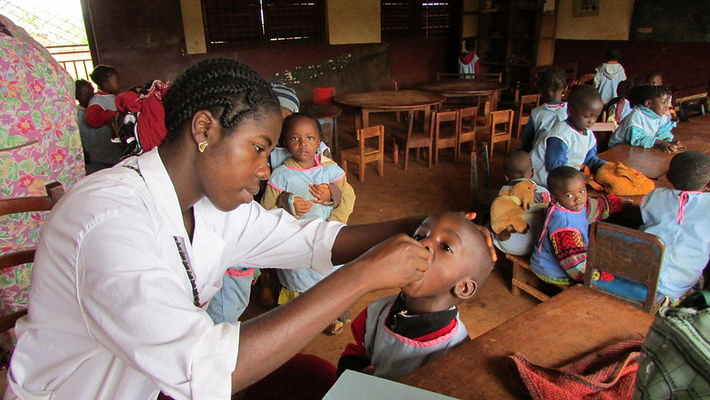
"The identified strategies to address these challenges (including increasing access to accurate information, building trust, and removing barriers to accessing reliable immunisation services) centre on national political commitment and ownership of the immunisation programme."
Despite concerted efforts of immunisation stakeholders, low vaccination coverage and under-immunisation are issues plaguing Sub-Saharan Africa (SSA). SSA is home to countries categorised as low-income, a rapidly growing population with low levels of education, a significant burden of displaced persons, and a weak healthcare system. This consensus study from the Academy of Science of South Africa (ASSAf) and the Uganda National Academy of Sciences (UNAS) elucidates how these and other characteristics contribute to the region's lagging immunisation indicators and makes recommendations to address the bottlenecks so that every child can be reached with all the recommended vaccines.
Sharing data on vaccination under-performance in SSA, the report notes that the findings are not uniform across countries in the region, or across time. Some countries have stood out as having high immunisation coverage, and some previously poor-performing countries have made significant improvements in the last 10 years. These patterns provide a launching point for peer examination and learning.
ASSAf, together with UNAS, followed a modified consensus study model that allowed for the study experts to receive input and feedback from diverse stakeholders. An 11-member committee of trans-disciplinary experts was drawn from 6 SSA countries representative of the different geographical and relevant expertise categories and was tasked to deliberate on the available scientific evidence (published and grey literature). The experts use a Theory of Change (ToC) approach to summarise the root causes of low coverage and under-immunisation in SSA under 4 interrelated sub-themes:
Knowledge
- Findings:
- Lack of knowledge regarding the benefits of immunisation and the prevalence of misconceptions about vaccination effects among caregivers and community leaders are among the root causes of low coverage and under-immunisation in SSA.
- This ignorance is commonly found in underprivileged community groups, including younger mothers, illiterate and unschooled caregivers, people living in disadvantaged regions within a country, people with no history of contact with health facilities, and members of migrant and refugee communities, among others.
- Vaccine hesitancy is a growing trend in SSA and is driven by fears of side effects fueled by ignorance and false information circulated in the media. Region-specific studies on interventions against vaccine hesitancy are lacking.
- Healthcare workers (HCWs) are key resources for immunisation service provision and accurate immunisation information. However, the capacity of HCWs to effectively deliver on these mandates is, in many instances, limited by their own knowledge deficiencies regarding vaccines and vaccine effects, immunisation policies, identification of un- and under-immunised children, social mobilisation and counselling skills, and data management. This limitation is attributed to a lack of adequate pre- and in-service training underpinned by limited political investment in this area.
- Various communication and social mobilisation strategies have been deployed to encourage immunisation uptake in SSA with various degrees of success (see the full report for examples). However, these efforts are mostly focused around supplemental immunisation campaigns and are under- prioritised in routine immunisation budgets.
- Recommendations ("Communication interventions are the primary strategy to address knowledge deficiencies and inaccuracies regarding immunisation."):
- Funders and managers of immunisation programmes should empower HCWs to tailor appropriate communication and social mobilisation strategies to address knowledge deficiencies and inaccuracies among caregivers and community leaders.
- Researchers in SSA should address evidence gaps by producing impact evaluations of the various communication and social mobilisation techniques employed to address knowledge deficiencies and inaccuracies regarding immunisation. Special consideration should be given to Central African countries, where evidence gaps are pervasive.
Trust ("Trust is important when there is an implicit imbalance of power due to a high level of information asymmetry, where trusting individuals accept a vulnerable position in relation to a trusted party. In the context of vaccine decisions, one chooses to trust another to help make a risk/benefit-based decision about which one has incomplete information.")
- Findings:
- Trust in the overall healthcare system directly impacts on the trust in the immunisation programme in SSA. The conduct of HCWs during health-seeking visits and the community's perceptions of political and socio-economic climates affect individual and community group trust relationships, respectively, with the healthcare system.
- Socio-cultural ties and influences, including religion, play a significant role in decisions regarding uptake of vaccinations and are primary causes of hesitancy in SSA.
- While some measures of success have been demonstrated in the application of various trust-building strategies - including training HCWs, using community change agents, building alliances and partnerships in a contextualised approach, and establishing National Immunisation Technical Advisory Groups (NITAGs) - there is a consistent lack of a systematic evaluation of the impact of these approaches on the uptake of immunisation in SSA.
- Recommendations:
- Political and socio-economic leaders should be cognisant in their actions of the sensitivity of the immunisation programme to overall confidence in the healthcare system. Actions that engender trust and confidence in the healthcare systems should be promoted.
- Researchers should conduct longitudinal studies evaluating the impact of different trust-building interventions on the uptake of immunisation in SSA over time, using defined and uniform indicators in order to ease comparability. These data would guide policy creation based on sound scientific evidence.
Convenience - access and reliability
- Findings:
- Pysical barriers that create longer travel times from communities to health facilities make it inconvenient for communities to access immunisation services and for HCWs to deliver these services to underserved communities. Socio-economic barriers, including heavy workloads and inflexible working environments, make it difficult for caregivers to take time off to access immunisation services. Displaced persons with no family support face additional challenges.
- Poor service delivery is linked to systemic challenges such as heavy healthcare workloads due to low HCW-to-population ratios, lack of motivation, poor remuneration and resulting high staff turnover, and limitations within the immunisation supply chain.
- Strategies deployed aimed at bringing immunisation services closer to communities through establishment of more community-based immunisation posts, task shifting, outreach and use of community-based HCWs have shown anecdotal improvements in immunisation coverage.
- Interventions aimed at improving vaccine security have been shown to have positive impacts on immunisation coverage, but a lack of comprehensive information on the part of the manufacturing industry has been identified as a challenge to the sustained implementation and scalability of these interventions.
- Recommendations:
- District-level leadership should own and support the implementation of the World Health Organization (WHO)/United Nations Children's Fund (UNICEF)-designed Reaching Every District/Reaching Every Child (RED/REC) strategy by lobbying for sufficient funds, monitoring progress, and supporting community engagement.
- National-level immunisation sector leadership should ensure that HCWs at service delivery points are sufficient (based on task requirements and populations served) and well-motivated. Innovations such as task shifting should be encouraged and supported at district levels.
- Regional-level leadership should encourage national leaders to commit to the long-term vision of local vaccine manufacturing as a means to ensure sustainable vaccine supply for the region.
- Immunisation development partners and civil society organisations (CSOs) should incentivise and lobby for greater transparency from industry partners.
- Researchers should further study and evaluate impacts of innovations aimed at securing vaccine supply.
Political ownership
- Findings:
- The immunisation programme in SSA is still largely dependent on external funding for its operations, putting the programme in a risky and unsustainable position.
- CSOs are key interlocutors in facilitating ownership at the national level by holding governments accountable to their mandates and at the community level by fostering participatory inclusion and accountability of sub-national governments and the populace.
- SSA has been historically vulnerable to disruptive environmental forces such as political and civil unrest, natural disasters, and disease outbreaks. These negative environmental events are disruptive to the region's fragile health systems and especially to the immunisation programme.
- Recommendations:
- National governments, being held accountable by regional bodies and national institutions such as the African Union and national parliaments, should increase their budgetary allocations to immunisation and provide the requisite oversight.
- National and sub-national immunisation programme managers, with the support of CSOs, should provide the enabling financing advocacy and decision support frameworks.
- National political leaders should be cognisant of the inevitable intertwining of political and health security agendas and should thus ensure peaceful and secure communities through application of democratic principles of governance and equitable share of national resources.
- The Africa Centres for Disease Control and Prevention should provide evidence-based technical tools and measures that can be adapted to ensure that the contextual dynamics in individual African countries are taken into account in all disease pandemic mitigation responses in order to minimise adverse effects on healthcare programmes, including immunisation.
In conclusion: "Whilst the study identified some significant shortages in empirical research evidence, particularly in the area of effectiveness of strategies deployed to respond to identified root causes for low coverage and under-immunisation in SSA, the lack of such evidence should not be used as a defence for inaction. Where contextualised anecdotal evidence exists, this should continue to inform decision makers as researchers conduct more systematic studies that will inform scaling initiatives."
ASSAf website, November 2 2021. Image credit: Louie Rosencrans/CDC via Flickr (CC BY 2.0)
- Log in to post comments