










































A novel approach to maternal health in Nigeria
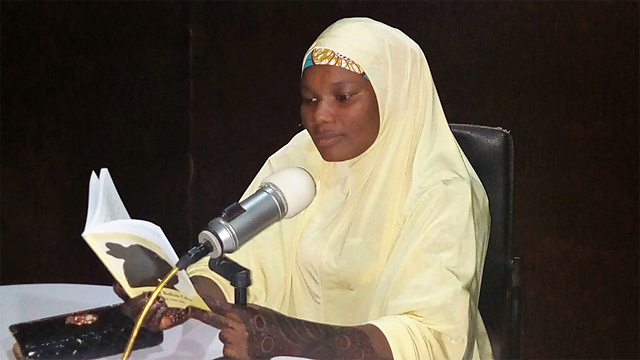
Author: Producer Trainer for BBC Media Action in Nigeria Akile Gojo, originally posted December 5 2017 - Earlier this year, after a day of training producers at one of our partner radio stations in Gombe state, I was eating dinner in a nearby restaurant. In the background, a radio was playing, and, as I sat there, I realised that all the women - and some men as well - were listening intently to a novel being read aloud on air.
I knew listening to romance novels on the radio - especially those written by local authors - has been growing in popularity with women and girls in Northern Nigeria. They often go to the market to buy copies of their favourites to read again at home with family.
Gombe has one of the highest rates of maternal and neo-natal mortality in Nigeria. And I’d been working with the radio producers to help increase knowledge around maternal and child health as part of our Bill and Melinda Gates Foundation funded project in partnership with Society for Family Health.
So I wondered - could a romance novel with a twist help save lives?
Local authors, local story
We brought together seven authors based in Gombe to collaborate on a romance novel that would captivate the audience – both on the radio and in print. The task was to craft a compelling story, but one that would encourage practices such as attending antenatal checkups, or could change perceptions about cultural practices that contribute to mother and child deaths.
BBC Media Action gave editorial guidance and a local mid-wife provided medical expertise, whilst the authors poured in their creativity. It was an exciting combination.
Azizah Idris, one of the writers said "It inspired a new wave of thought on how to shape my storyline without losing the romance. I never thought about educating the reader on a specific issue – such as attending antenatal care and giving birth in a health facility in the presence of a skilled birth attendant."
Another writer, Yakubu Modibbo, said "I never knew we men have a strong role to play in helping overcome some behaviours that contribute to maternal and neonatal deaths in our society."
Amina’s story
The finished novel, Ranar Bakin Ciki (A Day of Sadness) tells the story of a young woman named Amina. Amina’s life isn’t easy. Growing up, her stepmother stops her going to school and becoming a nurse.
When Amina meets and marries Kabiru, the love of her life, the future looks brighter. But she clashes with her mother-in-law, who decides that pregnant Amina shouldn’t attend antenatal visits and insists she give birth at home instead of at a health facility. This almost costs Amina her life, until the local village head intervenes.
Amina eventually gets the medical attention she needs and gives birth to a healthy baby boy named Muhammadu. And her relationship with her mother-in-law improves.
Amina’s story mirrors reality for many women in Northeast Nigeria, except that some aren’t always as lucky in the end.
Out loud
We sent the book to radio stations in Gombe and across states in Northern Nigeria for presenters to read on air. And we’ve recieved feedback from radio stations in 5 states so far.
A listener Shugaba Zala Mailemu, told Musa Jafaru, the presenter at Yobe Radio in Damaturu, "Ranar Bakin Ciki captures the problem our women face. I can’t stop thinking about it." Another listener, Fatima Mohammed said "the book educates us".
At Fombina FM in Yola, Adamawa state, presenter Jamila Adamu gave copies of the novel to listeners who called in and shared how the story touched their lives. People phoning in said they’d learned about the importance of attending antenatal checkups and that mothers-in-laws should treat their daughter-in-laws better.
At Taraba Radio in Jalingo, Taraba state, and other stations too, listeners are calling in asking where they can get their own copies for re-reading at home.
I’m happy that the novel continues to be so well received. It’s an exciting new chapter for us.
Click here to access this BBC Media Action blog.
Image credit: BBC Media Action
Contact:
BBC Media Action
BBC Media Centre, MC3A, 201 Wood Lane
London
W12 7TQ
United Kingdom (UK)
Phone: 44 (0) 20 8008 0001
Fax: 44 (0) 20 8008 5970
Media.action@bbc.co.uk
Comments

Improving Family Planning utilization through integration
Working with unique audiences at their work places in Police, Private security guards, hotels and wildlife authority in Uganda exposed the limited SRH services these key populations have access to.The USAID/Uganda HIV/Health Initiatives in Workplaces Activity embarked on increasing access to SRH services using Family planning as a proxy, this was done through integration of SRH services at all service delivery points within the 18 facilities which serve these populations. This initiative has increased the demand for, and use of, modern family planning methods among this population.
Intervention:The project adopted a 10-session behavior change communication series methodology called Stepping Stones Methodology (SSM). SSM promotes sexual health, improves psychological well-being and prevents HIV through addressing topics of gender, family planning, HIV/AIDS, gender based violence, communication and relationship skills. HIWA integrated counseling for family planning services at 25 health facilities and 58 service delivery points at PMTCT, ART, and pre- and post-natal clinics including community outreaches. Messages on dual protection (preventing HIV/STIs and unwanted pregnancies) were provided to the women and their spouses. The prenatal care package included family planning counselling and services, immunizations, and vitamin A supplements, among others.
Results and Lessons Learned: In FY17, 13,271 women were supported to use contraceptive methods compared to 5,479 women in FY16. Due to the increased uptake of contraceptives, there was a marked increment in the couple years of protection from 2264.23 in FY16 to 4522.82 in FY17. The contraceptive prevalence rate increased from 45% in FY16 to 47.6% in FY17 at the HIWA-supported workplaces. Of the family planning commodities distributed, 92% (14,756) were modern contraceptives (including condoms) which is attributed to the increased community awareness, accessibility, availability and acceptability of the contraceptive methods. A total of 6,636 mothers received prenatal services by a skilled health personnel and received family planning counselling. At the service delivery points, family planning education, assessment, counseling, provision of modern contraceptives and referrals were provided.
The increase in uptake of family planning methods is attributed to intensive health education, capacity building (training and mentorship) provided to health workers, increased access by the beneficiaries to family planning services which was created by increasing service delivery points (integrated services at the health facilities, outreach sites & community-based family program), and the robust behavioral change interventions using the peer-to-peer and Stepping Stones behavior change methodologies.
Discussion/implications for the field: There are various points to reach men and women with family planning information and services by organizing and integrating health services so that people get the care they need, when they need it, in ways that are user-friendly and can minimize the number of visits to different health facilities for different services. HIWA should continue to provide training and information dissemination through behavior change communication methodologies and integrate FP counseling and services at all care points in HIWA-support facilities and outreaches.
- Log in to post comments