










































Special Issue on a Family Systems Approach to Promote Maternal and Child Nutrition
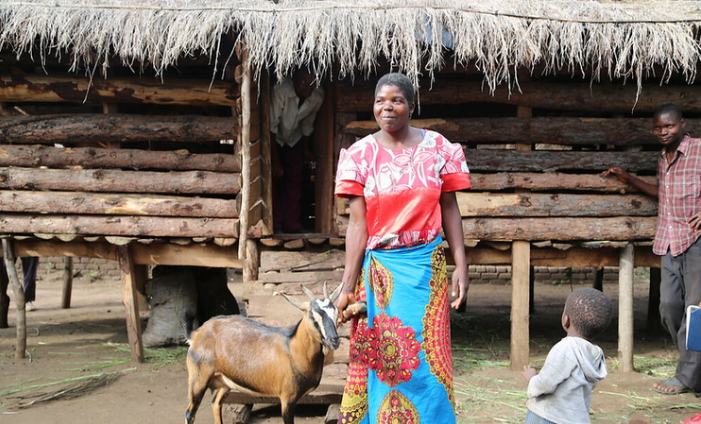
"Future maternal and child nutrition research and interventions can be strengthened by systems thinking that acknowledges that individuals are situated within family and community systems."
Many maternal and child nutrition (MCN) research and interventions in low- and middle-income countries (LMICs) assume universality of the nuclear family structure. However, especially in non-western societies, MCN norms and practices are shaped not only by the biological parents but also by other influential family members. This special issue of the journal Maternal & Child Nutrition (volume 17, issue S1) presents examples of research from a variety of settings that employed an ecological, family systems approach either to investigate maternal, child, or adolescent nutrition issues or to design interventions that engaged various actors within family settings. Following an introduction by the issue's editors, it includes 11 articles that support the relevance of a wider family systems perspective for nutrition research and interventions.
Five themes across studies include:
- The limitations of using a nuclear family model for research and intervention design;
- The need for formative research that comprehensively explores family systems;
- The importance of engaging men in culturally appropriate ways based on community dialogue and women's perspectives;
- The increasing recognition of the extensive involvement and support provided by grandmothers; and
- The imperative of understanding the roles, relationships, strategies, and constraints within family systems in efforts to strengthen cooperative childrearing strategies to ensure optimal MCN.
Main articles, with brief summaries, include:
- Grandmothers: Central Scaffolding Sources Impacting Maternal and Infant Feeding Practices in Colombia, by Natalia Concha and Sandra Jovchelovitch - underlines the relevance of a family systems approach to investigation of MCN issues in Colombian contexts, where many families are mono-parental, where men are generally not involved in MCHN issues, and where extended family members, especially grandmothers, provide support, including informational and emotional support.
- Addressing Anaemia in Pregnancy in Rural Plains Nepal: A Qualitative, Formative Study, by Joanna Morrison, Romi Giri, Abriti Arjyal, Chandani Kharel, Helen Harris-Fry, Philip James, Sushil Baral, Naomi Saville, and Sara Hillman - based on formative research in rural Nepal based on a socio-ecological framework, suggests that efforts to decrease maternal anaemia should not only provide information to pregnant women but should involve other family members, especially powerful mothers-in-law and men - with the caveat that programmes should be developed in consultation with community members so they do not clash with valued cultural patterns.
- Do Non-maternal Adult Female Household Members Influence Child Nutrition? Empirical Evidence from Ethiopia, by Muhammed Abdella Usman PhD, Lukas Kornher PhD, and Tekalign Gutu Sakketa PhD - uses multivariate regression analysis to test whether young children living in households with their mothers and other non-maternal adult female kin or non-kin members (AFHM) have better nutritional status, concluding that "having additional AFHM is positively and strongly associated with improved height-for-age and weight-for-age and a lower prevalence of severe stunting among children 6-59 months."
- Grandparent Caregiving in Cambodian Skip-generation Households: Roles and Impact on Child Nutrition, by Mira Leonie Schneiders, Maly Phou, Vira Tun, Maureen Kelley, Michael Parker, and Claudia Turner - inspired by the Household Production of Health (HPH) framework, argues that the role of grandmothers in rural Cambodia to support their adult children by participating in childcare has been intensified with the migration of one or both parents.
- Family Influences on Health and Nutrition Practices of Pregnant Adolescents in Bangladesh, by Vanessa Pike, Abigail Kaplan Ramage, Anjali Bhardwaj, Jennifer Busch-Hallen, and Marion Leslie Roche - drawing on qualitative research in both urban and rural Bangladesh, concludes that interventions dealing with adolescent girls' nutrition should intentionally involve mothers and mothers-in-law and should identify culturally sensitive approaches that do not trigger community rejection.
- Father Involvement, Maternal Depression and Child Nutritional Outcomes in Soweto, South Africa, by Roisin E. Drysdale, Wiedaad Slemming, Tawanda Makusha, and Linda M. Richter - finds that father involvement after pregnancy in Soweto, South Africa, was positively associated with women's postnatal mental health but was not associated with birthweight or breastfeeding outcomes
- Relationships Between Paternal Attitudes, Paternal Involvement, and Infant-Feeding Outcomes: Mixed-methods Findings from a Global On-line Survey of English-speaking Fathers, by Lydia Atkinson, Sergio A. Silverio, Debra Bick, and Victoria Fallon - cites the results of a global online survey the authors conducted showing that fathers' equitable attitudes towards parenting were positively associated with attitudes towards breastfeeding and involvement with their infant (though not infant feeding practices) and that, similar to other articles in this special issue, fathers reported wanting to participate in childcare and to develop a strong bond with their infant.
- Engaging Fathers to Improve Complementary Feeding is Acceptable and Feasible in the Lake Zone, Tanzania, by Stephanie L. Martin, Cynthia R. Matare, Rosemary A. Kayanda, Ibukun Owoputi, Aidan Kazoba, Rachel Bezner Kerr, Luitfrid Nnally, Maliha Khan, Kamryn H. Locklear, Kirk A. Dearden, and Katherine L. Dickin - finds that, after receiving targeted counselling, Tanzania fathers reported increased involvement in complementary feeding and were also pleased to be more involved in infant feeding, despite traditional gender roles.
- Associations Between Parents' Exposure to a Multisectoral Programme and Infant and Young Child Feeding Practices in Nepal, by Kenda Cunningham, Devin Nagle, Poonam Gupta, Ramesh Prasad Adhikari, and Sujata Singh - describes exposure to the Suaahara II project, which expanded its interpersonal communication and mass media activities to include all family members and not only the mother-child dyad.
- Fathers and Grandmothers Experiences Participating in Nutrition Peer Dialogue Groups in Vihiga County, Kenya, by Faith Thuita, Altrena Mukuria, Teresia Muhomah, Kamryn Locklear, Samantha Grounds, and Stephanie L. Martin - shares a qualitative process evaluation of the experiences of fathers and grandmothers who participated in peer dialogue groups in rural Western Kenyanutrition and facilitation skills.
- Engaging Family Members in Maternal, Infant and Young Child Nutrition Activities in Low- and Middle-Income Countries: A Systematic Scoping Review, by Stephanie L. Martin, Juliet K. McCann, Emily Gascoigne, Diana Allotey, Dadirai Fundira, and Katherine L. Dickin - provides a scoping review to identify literature on interventions that engaged family members in MCN (indicating a substantial increase in the number of such studies since 2010) and suggests that future research should collect data from all family members.
"Introduction: A Family Systems Approach to Promote Maternal, Child and Adolescent Nutrition", by Judi Aubel, Stephanie L. Martin, and Kenda Cunningham, Maternal & Child Nutrition, volume 17, issue S1, e13228 - sent from Judi Aubel to The Communication Initiative on July 31 2021. Image credit: Jonathan Odhong'/IITA (CC BY-NC-SA 2.0)
- Log in to post comments