










































Building Community Ownership of Maternal and Child Health Interventions in Rural Nigeria: A Community-Based Participatory Approach
Women's Health and Action Research Centre - WHARC (Ntoimo, Brian, Ekwo, Imongan, Okonofua); Federal University Oye Ekiti (Ntoimo); University of Ottawa (Yaya); University of Oxford (Yaya); University of Benin (Okonofua); University of Benin Teaching Hospital (Okonofua)
"[T]he use of a community-based participatory research approach enhanced the effectiveness and promoted the attainment of positive outcomes for a project designed to improve the use of skilled pregnancy care in rural Nigeria."
In 2019, Nigeria and India accounted for almost a third of all under-five deaths in the world. Many previous studies show that community-led approaches to increasing access to and low utilisation of maternal and child health (MCH) services are more productive and sustainable than strategies that engage communities as mere beneficiaries of interventions. This paper details the methods of engagement used in a community-based participatory project that was designed to increase women's use of primary health centres (PHCs) for skilled pregnancy and child health care in Edo State in Nigeria.
Starting in 2015, the Women's Health and Action Research Centre (WHARC), a Nigerian non-governmental organisation (NGO), collaborated with the University of Ottawa under the Innovating for Maternal and Child Health in Africa (IMCHA) initiative to understand barriers and facilitators to the use of skilled pregnancy care in 20 rural communities in Edo State. Every step of the research process was co-designed by community members, technical experts, and policymakers. The role of the technical experts was mainly to ensure compliance of the methods and processes with scientific norms, rather than to drive an outsider agenda.
Specifically, the project included comprehensive formative research, multi-stakeholder discussion of the results, and interactions with the project communities, resulting in the co-design of the interventions with the community stakeholders, constituents, and policymakers. The co-designed interventions included a community health fund (a form of community health insurance), rapid SMS (Text4Life), community health education, a memorandum of understanding with transporters, staffing, retooling and retraining for PHC providers, and advocacy.
The intervention activities were solely led by community members. Some of the strategies for achieving community ownership of the project included:
- Advocacy activities and engagement with community stakeholders: An advocacy team led by the Executive Director of WHARC, who was a former Commissioner for Health in Edo State, was constituted to engage the project communities and policymakers for support and direct involvement. Community-level advocacy began with the engagement of gatekeepers who organised meetings with traditional rulers and community conversations with elders. For example, observing the traditional rites with regard to gifts of wine, kola nut, etc., the research team introduced the project to traditional rulers and chiefs by presenting the challenge of MCH and then explaining the project goals. Two traditional rulers pledged their support and buy-in and promised to engage their networks with the local and state government to make the project a success. Advocacy activities continued all through the project.
- Community conversations: The team asked the community leaders to tell them how the issue of women's access to skilled pregnancy care in PHCs can be addressed. By guiding them to come up with specific answers and solutions, the burden was put on them to commit them to lead the solution.
- Identification and training of ward development committees (WDCs): All intervention activities were implemented through WDCs, with the chairmen of the WDCs acting as the main link between the implementing team and the community. WDC members, who are known within the communities, also undertook house-to-house sensitisation on the need to use skilled maternal and child care in the project PHCs. They ensured that all pregnant women were registered and that they attended antenatal, delivery, and postnatal clinics; they also followed up with the women after delivery to ensure that the babies are fully immunised at the PHCs.
- Engagement of health providers in the project PHCs: The nurses/midwives received several refresher training during the project and participated in all the planning and implementation meetings in the communities and at WHARC. The nurses taught women and their companions how to use Text4Life when they come for antenatal care and other services. They were tasked with keeping a record of the project outcome indicators.
- Community sensitisation workshops: Held every 3 months in the project communities throughout the project lifecycle, workshops were organised to build community awareness about the project and to raise consciousness about the need for women to use PHCs for pregnancy and child health care. The workshops brought all community stakeholders together to a central location within the village (the village square), where presentations were given on project methods, processes, and expected outcomes. The participants included all community chiefs led by the village heads (kings), community elders, women leaders, pregnant women and their families, policymakers, and civil society organisations (CSOs) working in the communities. More affluent community members who lived in cities were invited from various parts of the country to participate in the workshops, some of whom provided donations to support the project activities.
The project was implemented over three years (November 2017 to October 2020), followed by an evaluation that compared results obtained from a household survey conducted before the intervention and after the intervention among ever-married women age 15-45. Four indicators of MCH services utilisation were compared. Key informant interviews were conducted.
Quoted in the article are the words of community stakeholders (traditional rulers and WDC chairmen) indicating how and why they supported the project and the benefits it brought to their communities. The community members and the health providers in the PHCs were of the opinion that the attitude of women and their husbands towards the use of the project's PHCs for MCH - and actual utilisation - improved due to the intervention. According to the participants, women who benefited from the intervention became campaign agents for the project in their communities. The researchers "believe strongly that these results are attributable to the ownership of the project and the interventions by the communities, enabling elements of co-funding and sustainability planning by the communities."
Reflecting on the factors that contributed to the interventions's success, the researchers point to the direct engagement with community chiefs and leaders, as well as the coordination of the project by WDCs rather than by external experts. Those interviewed particularly appreciated the recognition given to the community members in decision-making, the elimination of costs through the health insurance scheme, the transparency and accountability embedded in the project implementation, and the absence of adverse MCH outcomes during the project implementation. Other factors, as identified by community members, include:
- Participatory community engagement right from the beginning of the project and throughout the project cycle;
- The ownership and direct supervision of the project activities by community members;
- Multi-stakeholder involvement on the part of policymakers, technical experts, and CSOs; and
- The use of a bottom-to-the-top decision-making process informed by the knowledge and cultural preference of the local communities.
Based on this experience, the researchers offer lessons learned and policy implications, including:
- The provision of PHCs is not sufficient. Governments and policymakers should investigate community concerns and preferences in the design and management of the PHCs in ways that are acceptable to communities.
- Communities should be engaged in co-owning and managing the health facilities, which may help engender the sustainable use of these facilities over time.
- There is a need to address the desires of communities in specific terms. In this project, not only did the researchers understand that cost of services was a barrier to use of services, but they offered a health insurance scheme as part of the intervention package that addressed this challenge.
- This research highlights key steps in community engagement through a systematic action learning process. The researchers obtained the support of key decision-making processes in the communities by first recognising the most important community leaders and then working with them to identify members of the WDCs, who reported to community leaders. Trust, integrity, and accountability became central elements that underpinned the project delivery and that ensured the active participation of all stakeholders in the community. Even after the study ended, these elements of the project ensured the continuation and sustainable delivery of project activities.
The researchers believe that the community-led approach will be useful in scaling up and sustaining the use and adoption of PHCs for skilled pregnancy care, especially in rural and suburban parts of the country. Furthermore: "The widespread use and scaling of this approach have the potential to increase and scale the use of PHCs for skilled pregnancy care in...similar contexts in other parts of the world."
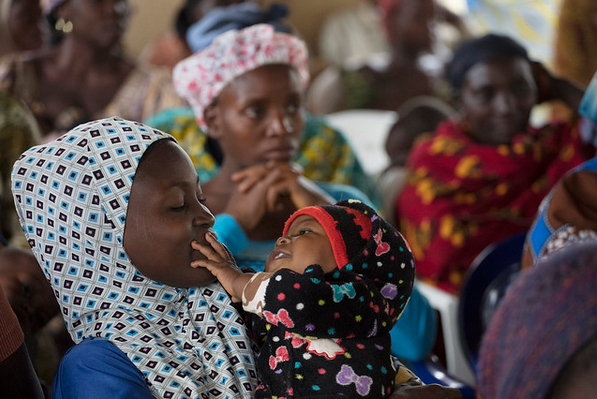
African Journal of Reproductive Health June 2021; 25 (3s):43. DOI: 10.29063/ajrh2021/v25i3s.5. Image credit: © Dominic Chavez/The Global Financing Facility via Flickr (CC BY-NC-ND 2.0)
- Log in to post comments