










































Solar Radios for Women in South Kivu
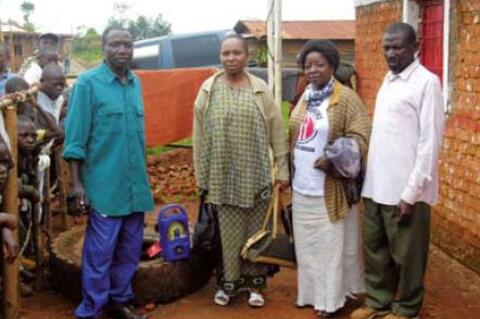
The solar radio project involved training listener's clubs and women's groups on the technical aspects of using the solar radios – how to tune them, adjust the volume, and change the frequency, as well as how to charge them, either with solar power or with a mechanical crank.
Each of the groups rotates the radio amongst its members so that each member has the opportunity to use the radio and listen with their family, friends, and communities. According to the organisers, the availability of radios and the fact that women are in charge has made a significant difference in the lives of women and men in these communities. The reasons are as follows:
Gender balance - Previously in the area, men generally had control of the radios, and did not give women or young people access to them. With the solar radios given specifically to women and women's groups, the project intends to develop women's ownership of the radios, giving them the opportunity to decide what to listen to, when to listen, and with whom to listen.
Knowledge sharing - Having radios in the community gives individual women as well as listening groups access to existing radio programmes on agriculture and community development. According to the organisers, many of the groups and individuals have started up their own small-scale farming or micro-finance projects based on knowledge gained from radio programmes.
Breaking the silence around sensitive issues - According to the organisers, members have been able to use the radios to broach sensitive or difficult-to-talk-about topics such as HIV within their families. One member reported being able to bring the radio home and tune in to a programme on HIV. After listening to the programme, her family was able to discuss the issue more comfortably than if she had tried to bring up the subject on her own.
Gender, Agriculture, HIV/AIDS
Launched in 2002, SAMWAKI is a women's organisation active in the rural areas of South Kivu. Its mission is to ensure that rural women are empowered through access to information, training, and communication. SAMWAKI is a founding member of the Network of Community Radios and Television of Congo and the Association of Community Radios of Congo.
SAMWAKI, Dimitra (FAO), King Baudouin Foundation.
Dimitra Newsletter [PDF], Issue 14, March 2008 (available in French (PDF) by clicking here); and email from Maartje Houbrechts to The Communication Initiative on September 8 2008.
- Log in to post comments