










































Reasons Given for Non-Vaccination and Under-Vaccination of Children and Adolescents in Sub-Saharan Africa: A Systematic Review
VITROME, Campus IRD-UCAD (Périères); Aix Marseille University, IRD, AP-HM, SSA, VITROME (Séror, Sokhna, Peretti-Watel); IHU-Méditerranée Infection (Séror, Peretti-Watel); Aix Marseille University, INSERM, IRD, SESSTIM, Sciences Économiques & Sociales de la Santé & Traitement de l'Information Médicale, ISSPAM (Boyer); ORS PACA, Observatoire régional de la santé Provence-Alpes-Côte d'Azur (Peretti-Watel)
"Interventions need to be locally adapted, depending on the knowledge, perceptions, and social norms around vaccination."
Although political commitment to improve vaccination coverage in Africa and reduce vaccine-preventable diseases has increased in recent years, overall coverage rates remain below expected targets. This systematic literature review aims to identify the reasons given by community members for the non-vaccination and under-vaccination of children and adolescents in sub-Saharan Africa.
A search of PubMed, Web of Science, PsycINFO, African Index Medicus, and African Journals Online databases was carried out in 2020 to identify articles published between 2010 and 2020. A total of 37 articles describing studies conducted in 11 different countries were included. All studies were cross-sectional. Reasons for non-vaccination and under-vaccination were identified using quantitative methods in 25 studies, using qualitative methods in eight studies, and using both methods in four studies.
As 17 studies did not report the reasons for non-vaccination and under-vaccination separately, the researchers considered these two outcomes as "incomplete vaccination". The most frequently mentioned reasons for incomplete vaccination were related to:
- Time constraints: caregivers were unavailable, waiting times at vaccination centres were too long, and/or vaccination times were inconvenient.
- Lack of knowledge regarding vaccinations - e.g., not knowing about the vaccine or vaccination in general, not knowing the benefits or understanding the need for vaccination, and not knowing the vaccination schedule
- The unavailability of vaccines/personnel in healthcare facilities
- Missed opportunities for vaccination, mostly due to wrong contraindications and the child's absence during vaccination times
- Fear of minor side effects
- Poor access to vaccination services
- Beliefs about vaccination - e.g., participants thought that vaccines could cause infertility, had heard myths and rumours about the negative consequences of vaccines on health, and did not trust the government.
- Poor relationship with healthcare providers due to vaccinators' attitudes (e.g., unkind, disrespectful, rude, unfriendly)
- Social or cultural pressure against vaccination - e.g., women needed their husband's consent to immunise their child and feared going against their husband's will.
- Cost related to vaccination
In response to the findings, the researchers identified two types of interventions to address most barriers to vaccination:
- Improving and reinforcing communication around vaccines: Health education programmes geared toward those responsible for vaccination could strengthen their understanding of the purposes and benefits of vaccination, vaccination schedules, and the organisation of vaccination services. Whether delivered in healthcare services or community settings, these interventions need to be grounded in an understanding of the concerns and points of view of communities regarding vaccination and should involve the entire community in the response,including men, religious leaders, and community leaders. Improved communication within healthcare services is also necessary. For instance, interventions include improving the treatment of staff and providing supportive supervision, providing training on vaccination, and ensuring that all health staff knows and accepts the national contraindications policy.
- Improving the organisation of vaccination services: For example, to reduce waiting times at vaccination services, vaccination sessions could be regularly organised at times where most caregivers are available, and/or employers could be encouraged to allow caregivers to attend vaccination services during working hours.
In conclusion: "This systematic review highlights the multiplicity of reasons given by community members for the incomplete vaccination of children and adolescents in sub-Saharan Africa, showing the diverse range of barriers that need to be considered when attempting to understand reasons for non- and/or under-vaccination."
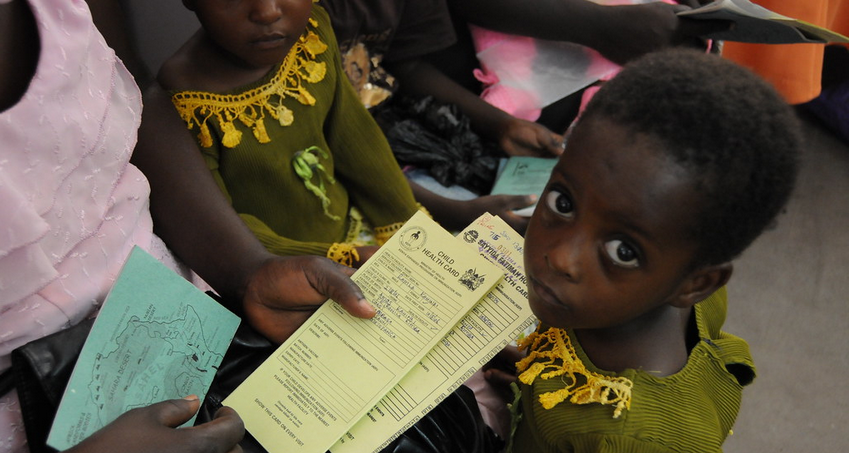
Human Vaccines & Immunotherapeutics, DOI: 10.1080/21645515.2022.2076524. Image credit: USAID/Wendy Stone via Flickr (CC BY-NC 2.0)
- Log in to post comments