










































World Cup in My Village
The public viewing areas were mounted using inflatable air screens and satellite dishes, often in locations with no electricity, in football pitches, open fields, community schools, and refugee settlements. In Zambia, the screens were moved around each night and, according to organisers, viewings attracted 12,000 people. Earlier viewings took place in community schools and later screenings took place at a United Nations High Commission for Refugees (UNHCR) refugee settlement 8 hours away from Lusaka, the capital city of Zambia. The public viewing spaces were also used for community events such as youth football games and educational activities on HIV/AIDS awareness and prevention. According to UNICEF, 20,000 people in Rwanda who are living in isolated communities and are cut off from mainstream sources of information, made use of the public viewing areas in their communities.
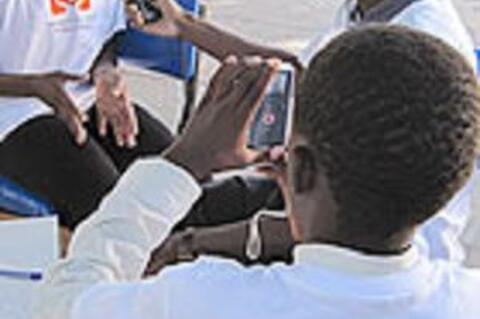
As part of this initiative, the Children's Radio Foundation trained groups of young people in each country as youth journalists. In the radio and video workshops, young people learned about interviewing techniques, how to express their opinion clearly, and production of media pieces. Using audio recorders, cameras, and flip video cameras, young people were encouraged to report on issues affecting young people in their communities and to share their experiences and concerns with the rest of the world.
The youth-produced pieces were broadcast and live talk shows held during half-time at the public viewings, complemented by public service announcements on education, child rights, health, and other issues. Programmes were also broadcast on local, national, and international radio stations, and content was posted on the CRF website and disseminated via other social media platforms.
Following the conclusion of the World Cup, the young journalists in Zambia have arranged to work with reporters at a local community radio station to create regular youth programming and to host a talk show for young people in their communities. Acting as peer leaders, they are engaging young people from their communities in the programme. Many of the young journalists have also taken on the role of climate ambassadors, advocating for responsible environmental behaviour in their communities.
The inflatable screens and projectors will also be used by UNICEF Country Offices for future community activities. The project's community partner in Rwanda, Vision Jeunesse Nouvelle, is discussing the possibility of starting a youth radio station based on the philosophy "radio for young people, by young people" with the core group of newly trained youth reporters.
Children, Education, Environment, HIV/AIDS, Rights.
World Cup in My Village was created as a part of UNICEF's support of the 1 Goal campaign, which is designed to get every child into primary school by 2015. The majority of media pieces produced by young people were about how education or the lack of it had affected their lives.
Many young people in Zambia who were interviewed by the youth journalists remarked that they had only ever heard football games on the radio and that it was the first time they had actually seen the players they had heard so much about.
United Nation's Children's Fund (UNICEF), Children's Radio Foundation, Vision Jeunesse Nouvelle (Rwanda), Grassroots Soccer (Zambia), and United Nations High Commissioner for Refugees (UNHCR).
CRF website and UNICEF website on September 10 2010.

- Log in to post comments