










































We Control Malaria: Participatory Learning and Action Planning
Image
Subtitle
Facilitator's Guide
SummaryText
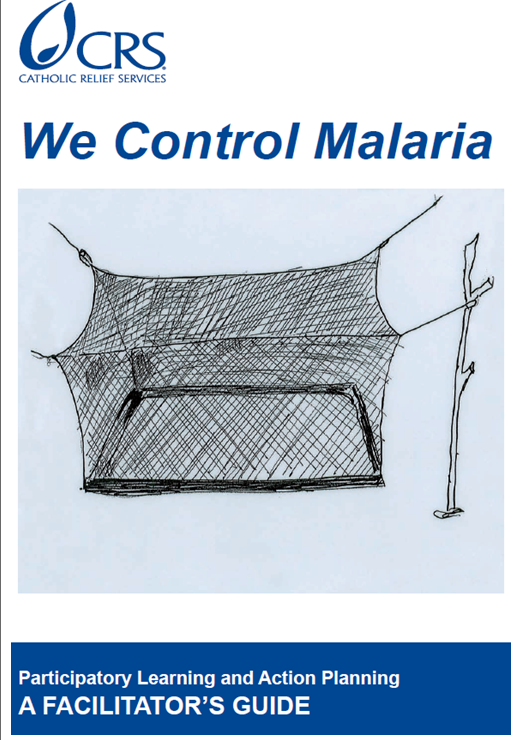
The We Control Malaria facilitators’ guide is designed to assist community facilitators to use participatory methodologies to help community groups to learn more about malaria, its prevention, and treatment, as well as make a community plan to control the disease. Published by Catholic Relief Services (CRS) Ethiopia office and its partners, with guidance from the CRS East Africa Regional office, the guide was originally developed for communities in Ethiopia, where it was field tested on 30 community groups (about 600 community members) between the end of 2006 and 2008. Publishers say that all of these community groups developed action plans as part of the process and most have begun implementing them.
The guide is designed to be used with community groups of about 24 people over a series of meetings, taking a total of five to six hours. Authors suggest that facilitators include people in the community who are trained in malaria control, perhaps government malaria agents, as they can share their knowledge and training with the group. They also mention that it is also good to include community leaders, as they might be the most likely candidates to take forward any community plan for the control of malaria that comes out of the group discussions, as well as community members, because they may know less about malaria and therefore will raise questions and misconceptions that are valuable to discuss. Authors say that the guide is not based on a message-giving methodology, but rather the belief that . people learn by doing participatory activities.
We Control Malaria is based upon a basic behaviour change methodology called SARAR (Self-esteem; Associative strength; Resourcefulness; Action planning; Responsibility) The publication explains that . through group work using this methodology, the self-esteem of individuals and the group is raised. People realise that individually each knows something and together they know a lot. By sharing and pooling their knowledge, they have associative strength. With this strength, they realise they can change their circumstances. The methodology also encourages the group to be resourceful to find solutions to their problems. Then it encourages action planning to bring about change. At the end, because they have created the action plan themselves, they feel a sense of responsibility for carrying it out.
The guide is designed to be used with community groups of about 24 people over a series of meetings, taking a total of five to six hours. Authors suggest that facilitators include people in the community who are trained in malaria control, perhaps government malaria agents, as they can share their knowledge and training with the group. They also mention that it is also good to include community leaders, as they might be the most likely candidates to take forward any community plan for the control of malaria that comes out of the group discussions, as well as community members, because they may know less about malaria and therefore will raise questions and misconceptions that are valuable to discuss. Authors say that the guide is not based on a message-giving methodology, but rather the belief that . people learn by doing participatory activities.
We Control Malaria is based upon a basic behaviour change methodology called SARAR (Self-esteem; Associative strength; Resourcefulness; Action planning; Responsibility) The publication explains that . through group work using this methodology, the self-esteem of individuals and the group is raised. People realise that individually each knows something and together they know a lot. By sharing and pooling their knowledge, they have associative strength. With this strength, they realise they can change their circumstances. The methodology also encourages the group to be resourceful to find solutions to their problems. Then it encourages action planning to bring about change. At the end, because they have created the action plan themselves, they feel a sense of responsibility for carrying it out.
Publication Date
Languages
English
Number of Pages
62
Source
Voices for a Malaria free Future website on May 23 2011.
- Log in to post comments