










































Soka Uncobe Male Circumcision Campaign
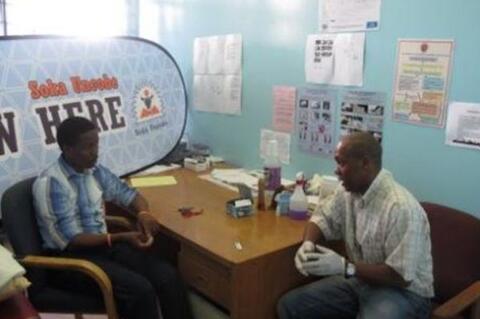
Soka Uncobe - which translates to "circumcise and conquer" - is a social and behaviour change communication (SBCC) campaign in Swaziland designed to achieve 80% coverage of voluntary medical male circumcision in the adult male population within a one year period. The overall approach is based upon understanding existing perceptions, identifying motivators, and eliminating barriers. The campaign conducted awareness and advocacy with royalty, traditional leaders, unions, businesses, religious groups, schools, and government to create awareness of and understanding of MC, using interpersonal communications, mass media, especially radio, and educational print materials. The project was a collaboration between the Ministry of Health (MOH), Swaziland National AIDS Program (SNAP), National Emergency Council for HIV/AIDS (NERCHA), Population Services international, and Pulse.
The overall approach of Soka Uncobe was based on understanding existing perceptions, identifying motivators, and eliminating barriers relating to male circumcision and HIV in Swaziland. Within the programme, the communications team worked to build awareness about male circumcision (MC) and improve access to services throughout the country.
Soka Uncobe implemented three focused initiatives, as guided by a communications consultation in April 2011 and documented in their SBCC Field Guide.
- The first was a partnership with the Public Sector HIV/AIDS Coordinating Committee (PSHACC) to develop and implement action plans on MC for each ministry within the Government of the Kingdom of Swaziland (GKOS). Ministries implemented their work plans with support from Soka Uncobe.
- The second initiative was the Back To School campaign, a partnership with the Ministry of Education (MOE) to focus on school aged boys for circumcision. In mid-August 2011, schools in Swaziland went for a Term Two break. With guidance from the MOE, Soka Uncobe launched a sensitisation, advocacy, and messaging workshop series for all four regions. Workshops in each region started with the 1) Regional Education Officers, followed with 2) Head Teachers and the chairpersons of school committees (parent representatives) and completed with the training of the 3) Career Guidance teachers. The guidance teachers, with the help of head teachers, led the messaging with the students and were responsible for the registration of male students for circumcision for the Soka Uncobe school campaign in July and August. During the campaign, mass media produced targeted information, education and communications (IEC) materials highlighting the clinics supporting the campaign. These were distributed prior and during the period of the school break. Radio spots highlighted teachers and students who were engaged with Soka Uncobe, mothers voicing protection for their sons, and leadership encouragement. A press conference between the MOH and MOE was held to further motivate the community to engage in male circumcision services during this campaign.
- The third initiative was the regional waves, which followed the endorsement of male circumcision by His Majesty King Mswati III on July 15, 2011. Following the Soka Uncobe launch by King Mswati III, a follow up meeting was held with the Regional Administrators for the four regions. The Regional Administrators directed the Soka Uncobe team to connect with the chiefs directly. Soka Uncobe put together Advocacy Response Teams, consisting of a nurse, counsellor, interpersonal communications agent and promoter, and a driver to meet with chiefs and their chiefdoms in structured community engagements.
Beyond the three initiatives, the Soka Uncobe team focused on mass media to increase awareness, advocacy to engage different Swaziland sectors, and interpersonal communications to provide a platform for individuals to ask questions about and engage personally around MC with knowledgeable individuals. In April 2011, billboards were unveiled and awareness efforts deployed, including radio, television, newspapers, and IEC materials. The previously established 977 emergency line was strengthened to provide clinical and emergency support and provide information on site locations and transportation to the public.
Interpersonal communications (IPC) agents provided on-the-ground support through door-to-door activities, taxi rank outreach, and other events. These teams served as a link between those expressing interest in male circumcision and accessing services. In addition, Change Agents - members of the community identified as champions in advocacy work - were engaged to support specific sites with focused interpersonal communications.
As awareness increased across the country, Soka Uncobe sought to identify and address barriers. A triangulation research effort took place, including IPC Agent feedback through a journaling activity, video ethnography on barriers, and a national pulse-taking quantitative household survey. The triangulation research informed the way forward for activities in the last quarter of the Soka Uncobe campaign. Over the course of six months, 54 different radio testimonials were aired. The variety of those speakers included: police officers, members of parliament, soccer players, poets, fathers, mothers, girlfriends/wives, students, Change Agents, and teachers. From here, the campaign identified ambassadors that would serve as representatives to motivate. For example, Msandi Kababa, King Mswati III’s royal praiser, underwent MC. His experience was videotaped as part of a short documentary and public service announcement. His experiences were also captured in a comic book. Additionally, one of the Mr. Swaziland contestant's experiences were captured and broadcast nationally.
HIV
According to the project organisers, Swaziland provides a unique context for MC, the country is characterised as having non-circumcising cultural practices and high HIV prevalence within a hyper-endemic region. The project is the first time an entire country has undertaken the rapid scale-up of MC for HIV prevention.
Ministry of Health (MOH), Swaziland National AIDS Program (SNAP), National Emergency Council for HIV/AIDS (NERCHA), Population Services International , and Pulse.
C-Hubonline website and K4health website on October 30 2013.
- Log in to post comments