










































Sexism's Toll on Journalism
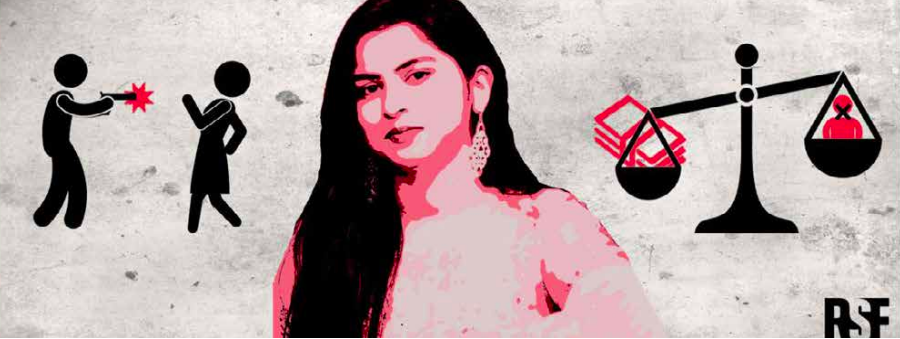
"We have a pressing obligation to defend journalism with all our strength against the many dangers that threaten it, of which gender-based and sexual bullying and attacks are a part." - Christophe Deloire, secretary-general, Reporters without Borders
This report shares the results of a survey conducted by Reporters without Borders (RSF) to assess the level of sexism in the media and the damaging effect it has on the diversity of news and information. By sexism, RSF means all forms of gender-based violence, including discrimination, insults, sexual harassment, unwanted touching, verbal and physical sexual assaults, threats of rape, and even rape itself. In addition to the results, the report highlights high-profile cases of sexual assault on journalists, as well as some of the media's responses.
The report is based mainly on the assessment of responses to a questionnaire sent to 150 people in 120 countries across all continents. The questionnaire, which consisted of a list of 30 questions in French, English, and Spanish, was sent to RSF correspondents worldwide, as well as to journalists who write about gender issues. The research was conducted between July and October 2020.
The first section of the report looks at the danger zones, which include the field, the online environment, and the newsroom. The results confirm the trends already detected by RSF's staff, including the fact that the internet has now become the most dangerous place for women journalists (reported by 73% of the respondents). One of the examples cited is that of Rana Ayyub, a well-known Indian columnist and investigative reporter, who receives constant rape threats and death threats on social media.
Following the internet, it is the workplace that the most respondents (58%) identified as the location "where sexist violence has been perpetrated". The report highlights a number of cases, including the case of Sofie Linde, the host of a popular TV show in Denmark, who announced publicly at an awards ceremony that she had been the victim of sexual harassment by a senior public broadcasting official. The report also looks at the perpetrators of sexual violence, with superiors ranking highest among them.
Looking at who the most vulnerable are to sexual harassment and assault, the results showed that among women journalists, those who specialise in covering women's rights, sports, or politics are particularly exposed to violence. They include Nouf Abdulaziz al-Jerawi, a Saudi journalist who was tortured, subjected to electric shocks, and sexually molested during detention after being arrested for denouncing the system of male guardianship that women must endure in her country. In Brazil, the journalist Patricia Campos Mello, who was investigating the use of illegal funding for social media disinformation during Jair Bolsonaro's presidential election campaign in 2018, was subjected to an extremely violent cyber-harassment campaign after the president and his sons accused her of having "extracted" this information in exchange for sexual favours. Aggravating circumstances, such as being a member of a minority, constitute an additional risk for women journalists. Lesbian, bisexual, and trans journalists are among the most vulnerable to violence. Journalists who are mothers are also in the firing line.
In terms of responses to sexual violence, 50 women journalists in Brazil specialising in covering sport launched the #DeixaElaTrabalhar ("Let Her Work") movement to denounce the frequency with which they are forcibly kissed by team supporters while providing live coverage of sports events. In France, nearly 40 women journalists working for the French sports daily L'Equipe issued a joint statement condemning the harassment to which female journalists are subjected within news media sports departments.
The report also examines the impact of this violence on journalism and how trauma often ends up reducing its victims to silence and decreasing pluralism within the media. In addition to causing stress, anxiety, and fear, this kind of violence may induce the targeted women journalists to close their social media accounts temporarily or permanently (according to 43% of the respondents), to censor themselves (48%), to switch to another speciality (21%), or even to resign (21%).
Looking at what is being done to protect journalists from harassment, the survey showed that 61% of respondents said the violence did not lead to any specific measure within the news organisation. In addition, 85% of the respondents felt that impunity prevails, that acts of sexist violence could be repeated, and that another woman journalist could fall victim to the same perpetrator.
To combat sexist and sexual violence, RSF concludes the report with a series of detailed recommendations for news organisations, women journalists, governments, platforms, and advertisers. For example:
- For news organisations, one recommendation related to content is to make space for stories and investigative reports about women's rights, gender minority rights, and gender-linked violence, and to do this all the time, not just on international days or big events dedicated to these issues. In terms of working conditions, news organisations should ensure that management and editorial staff are aware of these issues and create internal emergency mechanisms and alert systems for supporting and protecting women journalists who are the victims of harassment or any kind of sexist or sexual violence. Organisations should also train staff members occupying management positions in order to facilitate the detection of violence and to help women who are victims.
- For women journalists, one recommendation is to always gather, print, and keep all evidence, including screen grabs, of harassment, insults, threats, or attacks on personal or work messaging services and on social media.
- For government and authorities, one recommendation cited calls for them to recognise that threats and other forms of online abuse against women journalists and media workers constitute a direct attack on freedom of expression and media freedom.
- Platforms should, among other things, create an emergency alert mechanism in order to make it easier for the victims of online threats and attacks, especially women journalists, to report violence.
- One recommendation for advertisers is to refuse to advertise on sites that help spread sexist prejudices or encourage sexist violence.
RSF website on June 17 2022. Image credit: Daniel Bastard / RSF
- Log in to post comments