










































The Emotional Toll on Journalists Covering the Refugee Crisis
University of Toronto and Sunnybrook Health Science Centre (Feinstein); International News Safety Institute (Storm)
"We hope that the media will see our study as a first step in understanding and addressing a different kind of injury as they look out for the welfare of the men and women working on stories that can prove stressful and emotionally distressing."
This Reuters Institute for the Study of Journalism report examines the emotional toll experienced by journalists covering the refugee crisis. The study is based on a survey of 80 journalists from nine American and British media organisations and a series of interviews with journalists and news managers. Taken together, these two strands of information allowed the researchers to formulate a set of suggestions for news organisations, geared towards promoting mental health and resilience in the workforce. While the findings have been derived from a study of the migration crisis, the conclusions are in principle applicable to other news content as well - for example, domestic terror threats, stories in challenging but non-conflict areas, or locations of post-conflict or humanitarian crisis, particularly where journalists may be covering a story local to them.
Rather than post-traumatic stress disorder (PTSD) or depression among journalists, the report finds that the most common issue was the experience of "moral injury", a term often connected with military service. Moral injury is defined in the report as "the injury done to a person's conscience or moral compass by perpetrating, witnessing, or failing to prevent acts that transgress personal moral and ethical values or codes of conduct". The report acknowledges that, while the experiences of the journalists are not in any way comparable to the traumas of the refugees themselves - and, importantly, moral injury is not considered a mental illness - being exposed to a humanitarian crisis first-hand can still have serious consequences. The journalists particularly at risk of moral injury included those with higher workloads, those working alone, those not receiving organisational support, those who had not previously covered conflicts, and those with children of their own.
In some instances, the experience of moral injury can lead to journalists abandoning the role as passive, neutral observers. The data revealed a complex triad of guilt, moral injury, and behaviour that entailed journalists stepping out their media role to provide direct assistance to migrants. Aris Messinis, the chief photographer at Agence France-Presse (AFP) in Athens, Greece, became a story in his own right when he was photographed carrying a Syrian child from the water in Lesbos. Writing in a blog, he explains his decision to get involved: "But here, there are no dangers for you. That's why there are many times when I drop my camera and I help people. Because you need to." This type of behaviour is described in the report as coming with a risk of further moral injury. "This is not to say that journalists should be dispassionate bystanders in the face of a humanitarian crisis, but their passion and commitment should be channelled primarily into their work. This does not deprive them of their humanity."
In January 2017, a cross-industry meeting took place to discuss the initial findings of the research. This experience is described as "a first positive step in promoting a culture of being able to speak out and not shame those who do, recognising that there is still progress to be made in encouraging journalists to come forward and talk freely on the subject of their own emotions." Among the recommendations that emerged from that meeting: Education with respect to moral injury and other potential emotional challenges that come with this work should begin before journalists head out into the field. Journalists need to understand that it is normal and appropriate to feel emotional distress in response to situations like the migration crisis. Senior journalists and managers need to lead by example and to have conversations with their staff about their experiences and what the expectations are. Educational material should also be made available to help individuals increase awareness of the emotional consequences of their work; furthermore, "much work remains in reducing the stigma attached to psychological issues". Journalists may find it difficult to reintegrate after a deployment, and it is described here as imperative they, their families, and their organisations recognise this. Journalists should be made aware of what is available if they need help.
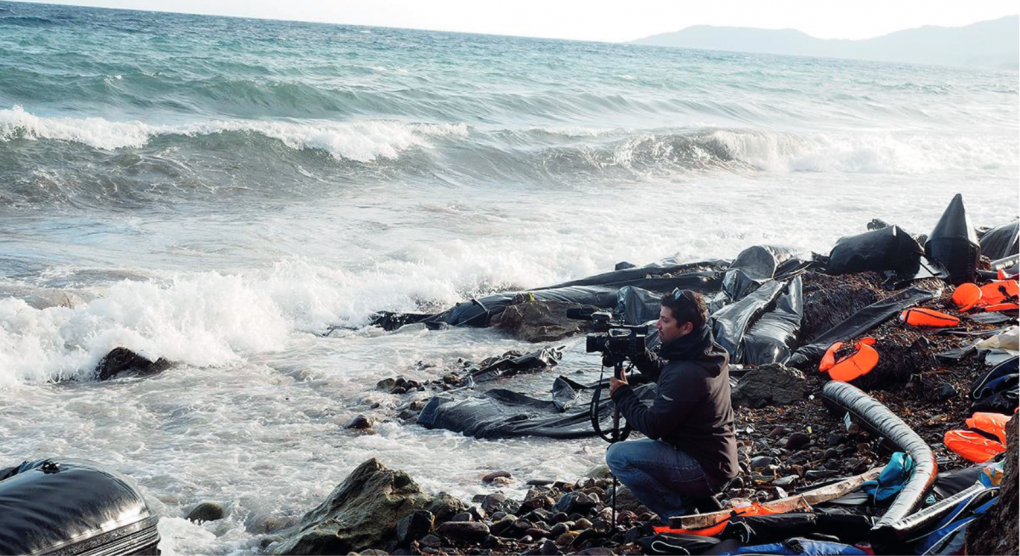
"Reporting the refugee and migration crisis", by Jon Eilenberg, Humanitarian News Research Network, July 11 2017. Image caption/credit: Will Vassilopoulos, a freelance journalist covering the refugee crisis for AFP. © Enri Canaj
- Log in to post comments