











































A Qualitative Study of Stakeholder and Researcher Perspectives of Community Engagement Practices for HIV Vaccine Clinical Trials in South Africa
University of the Witwatersrand (Dietrich, Tshabalala, Makhale, Hornschuh, Mulaudzi, Laher); South African Medical Research Council (Dietrich); Ohio State University College of Medicine (Munoz); Loma Linda University Medical Center (Munoz); Fred Hutchinson Cancer Center (Rentas, Andrasik)
Community engagement is "an ongoing constant effort to find the best ways to reach people and that's never a one-off answer. There's a different answer for every person so it's really like a constant sort of space to innovate ways of fostering connections." - in-depth interview participant
Effective community engagement, including facilitating ongoing discourse between researchers and community stakeholders, has been shown to enhance community trust in research in vulnerable communities and reduce misconceptions. For a trial to test a vaccine for safety, immunogenicity, and efficacy, community members need to be willing to participate, which requires education about the research before and throughout implementation. Guidelines such as Good Participatory Practice (GPP) have been developed to facilitate stakeholder involvement for the ethical conduct of biomedical HIV prevention trials. This paper explores researcher and stakeholder perspectives of the HIV Vaccine Trials Network (HVTN) community engagement practices used in the Gauteng province of South Africa. It presents practical implications and recommendations for community engagement for future HIV vaccine clinical trials.
As detailed here, the HVTN model of community engagement is rooted in GPP and is informed by community-based participatory research approaches that include community input throughout the research process - from trial design and implementation to results dissemination. Volunteer-based Community Advisory Boards (CABs), which exist at all HVTN clinical research sites, are essential to these efforts. The goals of the CAB are to: advise researchers about community norms, expectations, and concerns regarding research; disseminate information to the community about HIV and HIV research activities; assist in creating a supportive community environment for trial participants and their families; review and revise participant information leaflets and informed consent documents; and inform potential and current trial participants about their rights during research participation.
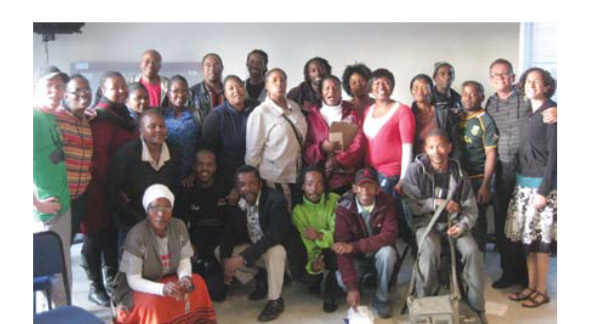
In 2017, the researchers facilitated two group discussions (GDs) with CAB members (n=13), and 14 in‐depth interviews (IDIs) with HVTN‐affiliated employees (n=8 in South Africa and n=6 in the United States). Overall, study participants ranged in age from 32-54 years, and 74% (n=20) were female. Three main community engagement themes, which are illustrated in paper by quotations from participants in the GDs and IDIs, emerged:
- Community engagement as an ongoing iterative relationship between the researchers and the community - Key subthemes included: (a) ensuring community involvement in research design and implementation, (b) creating community awareness of new and ongoing research developments, and c) building and fostering relationships.
- Methods of community engagement - Participants deemed the following community engagement methods to be important: (a) educating people in the community about research studies by linking with external stakeholders, (b) educating the community through awareness campaigns, (c) working with communities to develop recruitment messages, and (d) working with CABs as the link to the communities.
- Strategies to improve community engagement - Key subthemes included: (a) using simplified language to explain research terms, (b) linking with religious leaders and traditional healers, and (c) using media as a method of sharing and educating the community about HIV research.
In short, the "data reemphasize prominent and accepted methods of community engagement in South Africa and provide suggestions for strategies to improve community engagement for clinical trials. Methods for nurturing community engagement for HIV vaccine clinical trials included fostering partnerships with trusted and respected community and external stakeholders, capacity building of research staff and community representatives, education through community meetings and awareness campaigns and working with the CAB as the direct community link."
Conducted before the COVID-19 pandemic, this study highlights the value of in-person community engagement strategies. South African participants emphasised creating and maintaining relationships through mass events and in-person meetings with stakeholders such as community-based organisations and key opinion leaders such as religious leaders and traditional healers. The authors note that these same strategies may be ill-advised due to public health concerns during an airborne viral pandemic. Even though online and remote community engagement strategies have shown to be effective during the pandemic, the authors stress the importance of employing hybrid approaches to ensure accessibility in engagement for marginalised populations, those who are geographically isolated, and those with limited access to the internet.
Among the practical implications of the study for the South African context:
- Researchers need to engage communities continuously - for example, by working with CABs to understand community needs and by collaborating with community stakeholders to deliver tailored messages to address recruitment needs and trial challenges and to educate people on myths and misconceptions.
- In designing community engagement materials, awareness campaigns, and consent forms, researchers should simplify the English language to not more than an eighth-grade reading level and provide translation to the main local languages. In addition, research staff need to receive continued and adequate training on how to disseminate and address relevant information appropriately to the local communities and to conduct the consent process in a meaningful way, while being able to address language barriers for complex content.
- The simplified language, translated materials, and communication processes should be reviewed by CAB members and potential participants to ensure adequate levels of literacy. Furthermore, trial teams should ensure that staff from the local communities are employed that speak the main local languages.
- Community engagement practices and processes should be formally evaluated for empirically peer-reviewed publications.
In conclusion, this study has explored "ways for researchers to engage communities by understanding local needs, strengthening collaborations, and tailoring communication strategies...for HIV vaccine clinical trials."
Journal of Community Psychology 2022; 1-18. https://doi.org/10.1002/jcop.22951. Image credit: HVTN
- Log in to post comments