










































Clinical Trials in Low-Resource Settings: The Perspectives of Caregivers of Paediatric Participants from Uganda, Tanzania and Kenya
University of Zurich (van den Berg, Biller-Andorno); Swiss Tropical and Public Health Institute (van den Berg, Merten, Tanner); University of Basel (van den Berg, Merten, Tanner); Kenya Medical Research Institute (Ogutu); Strathmore University (Ogutu); Makerere University (Sewankambo)
"While community engagement has been recognised as necessary in ethical transnational research, there is no clear consensus as to its definitive application in different community contexts..."
This study investigates the community context, communication needs, and decision-making processes of the caregivers of participants in a phase II and phase III paediatric malaria vaccine clinical trial. Each of these trials operated in low-resource settings in multiple African countries.
As the researchers explain, vaccine clinical trials in such settings present ethical and other concerns. Context may influence the ways in which participants perceive benefits and risks, particularly where structural and financial inequities influence decision-making. Because protecting child and caregiver autonomy to participate in research can be a challenge, understanding the contextual factors - e.g., local systems and cultures - is necessary.
Between March 2017 and March 2018, the researchers interviewed 78 caregivers of paediatric participants previously enrolled in a phase II or III malaria vaccine clinical trial in Uganda, Tanzania, and Kenya.
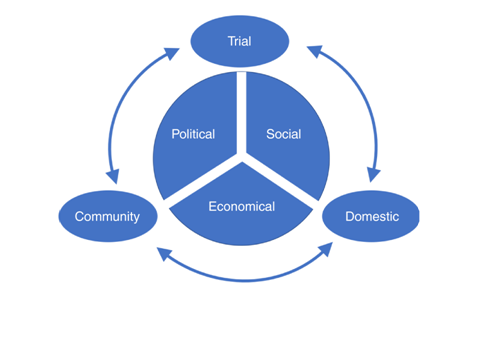
As illustrated by quotations included in the article, the interviews revealed that the caregivers made the decision to enrol their child in the trial based on economic, social, and political factors that extended beyond the trial into the community and the home. The provision of free, high-quality medical care for their child was the dominant reason for participation; beyond the individual, the provision of accessible medical care was also highlighted as the trial component most highly valued by the community.
Caregiver decision-making was also tied to their relationship with others in their domestic and/or community circles. Many respondents who were mothers elucidated the role the father had in motivation and consent to join or to withdrawal from the study. When the local leader is trusted by the community members and this individual approves of the trial, then the study participants report being more comfortable. A few outliers noted the impact rumours had on the way the study was perceived and reported cases where community members challenged the clinical trial and those enrolling their children. In some exceptional cases, participation in the trial could lead to problems in the spousal relationship.
Reflecting on the findings, the researchers note: "Having a powerful motivating factor, such as the provision of [free medical] care in this context, prevalent across all themes, is indicative of local structural constraints....Failing to balance the provision of care with concise communication around trial proceedings to the caregiver can lead to an 'empty choice' where structural factors around health care eliminate an autonomous decision....A caregiver of a participant will be limited in his or her autonomy when faced with the decision to enrol when it is the only means to ensure their child's health."
They also reflect on the fact that decision to participate in research extended beyond individual consent and was embedded in community and domestic hierarchies. "The provision of health care within the community context in combination with the structural constraints impacts decision-making structures in clinical trials and provides challenges for the consent process..."
In light of the findings, the researchers stress the need to make the community central to the research, which "can be achieved through stronger engagement with local stakeholders and health systems....The active involvement of both community and local leadership can support the disentanglement of comprehension barriers while still allowing for 'benefit-sharing'. An iterative process executed by the clinical trial team that engages the community and works closely with local leadership will foster research communication and thereby participant choice."
In conclusion: "Researchers conducting clinical trial studies in low-resource settings can integrate the findings of this study to protect participant autonomy through integrating them into the communication of trial procedures." Future research could assess other contexts to determine how the choice to participate in research is affected when free medical care is offered.
Tropical Medicine & International Health 2019 Aug;24(8):1023-30. https://doi.org/10.1111/tmi.13281
- Log in to post comments