










































Promoting Constructive Male Engagement to Increase Use of PMTCT Services
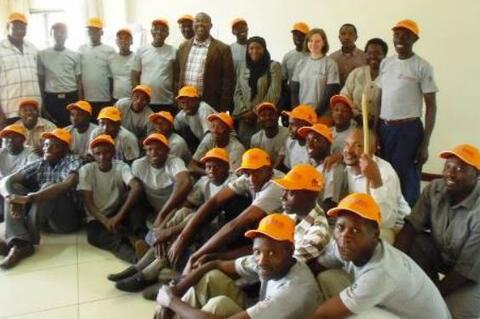
Since August 2012, the Elizabeth Glaser Pediatric AIDS Foundation (EGPAF) has partnered with FHI 360 to engage men in the prevention of mother-to-child transmission (PMTCT) of HIV and other family planning services in Uganda. The Promoting Constructive Male Engagement to Increase Use of PMTCT Services project is working to educate male partners about HIV in general and how it is transmitted as well as encourage clients to seek HIV/AIDS care and treatment services at eight health facilities in the Kabale District of Uganda.
To encourage male involvement, team members from EGPAF and FHI 360 consulted with leaders in the Kabale district, including district health officials, civic leaders, religious leaders, politicians, and community groups to discuss matters related to gender and HIV and family planning. The community leaders then nominated well-respected men from their community to serve as champions (called "Emanzi" in the local language) and role models for their peers and to lead discussions on gender and health issues in their communities.
Experts from EGPAF and FHI 360 led training sessions for the Emanzi. Leaders discovered that open conversations about gender roles and male involvement were new concepts; approximately 90% of the participants had not had any previous training on this topic. The workshop’s goal was to prepare the Emanzi to form community-based groups of men to participate in a 10-week course of discussions on gender topics.
Starting in February 2013, the Emanzi training sessions, together with community leaders, recruited men to join support groups and participate in workshops focused on PMTCT and other family planning services in order to prevent HIV transmission. In total, more than 1,900 men were recruited to join the workshops and were divided into 96 different groups for meetings.
The project also involved revising training curriculum on family planning for health workers at HIV treatment clinics. The health workers in Kabale were trained on how to provide family planning counselling specific to HIV-positive clients (both men and women) and how to manage side effects and concerns of women who are also taking ARVs. This training was designed to increase the health worker's comfort level and confidence in serving their clients in a comprehensive manner.
EGPAF also provided mentorship visits to assist health workers after the initial training and to give additional support as they implemented male-friendly family planning services. The mentors spend an entire day at the health facility shadowing the health workers and offering assistance to ensure they are comfortable providing family planning counseling, including explaining the importance of PMTCT to men. These mentorship opportunities are still ongoing throughout clinics in the district to ensure adoption of the new programme.
PMTCT, HIV
Studies have shown that male involvement in PMTCT and other family planning activities can reduce the risks of vertical HIV transmission (mother-to-child) and infant mortality by more than 40%. A 2008 study by the University of North Carolina at Chapel Hill and South Africa's University of KwaZulu Natal found that male involvement in PMTCT was linked to more people taking advantage of HIV testing, antiretroviral treatment, condoms, and support for infant feeding choices. What's more, some women say they need their partner's support in order to access HIV prevention, care, and treatment services, including PMTCT.
According to EGPAF, since its inception, many male participants reported that the sessions have been helpful in changing their perspective on gender roles and in understanding a man's role in the family planning process. This includes treating their female partners as household equals and sharing chores such as cooking, cleaning, and childcare.
Elizabeth Glaser Pediatric AIDS Foundation (EGPAF), FHI 360
FHI360 website on October 25 2013.
- Log in to post comments