











































An Outbreak of Online Learning in the COVID-19 Outbreak in Sub-Saharan Africa: Prospects and Challenges
Southwest University
"The COVID-19 pandemic...can be an impetus for digitalization of education in Sub-Saharan Africa."
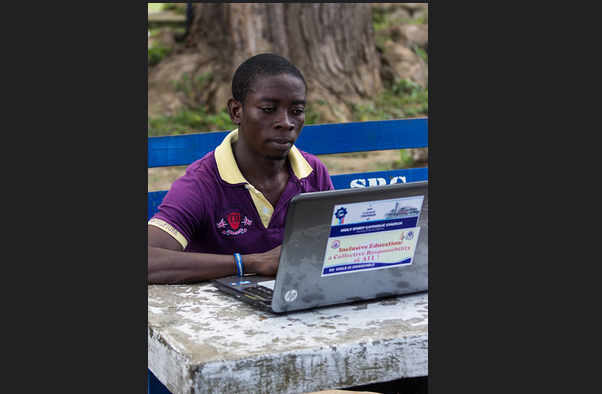
Online learning has the potential to ensure learners from all geographical regions have access to education, thereby addressing issues of inequalities and contributing toward Sustainable Development Goal (SDG) 4. The COVID-19 outbreak stimulated an outbreak of online learning in many institutions in Sub-Saharan Africa. However, disparities in the access to digital infrastructure had a negative impact, with many teachers suffering from burnout and students lamenting limited information and communication technology (ICT) resources, inadequate access to affordable and reliable internet, power outages, and anxiety over academic outcomes. Despite the challenges, many institutions have developed novel technological innovations and inventions to bridge the digital divide in Sub-Saharan Africa. The review gives an overview of the challenges, prospects, and practical implications of online learning in the region in order to inform policymakers, educators, and researchers about the future of education in Sub-Saharan Africa.
In providing context for the discussion, Michael Agyemang Adarkwah cites data indicating that the sudden closure of schools in 188 countries worldwide necessitated by the COVID-19 pandemic impacted over 91% of the student population in the world (United Nations Educational, Scientific and Cultural Organization (UNESCO), 2020). Considering that only one-third of the population in Africa have access to broadband connectivity, the movement to online learning has left many learners behind. For example, universities in Africa face challenges such as the provision of gadgets/services (laptops and internet access) to learners who lack ICT resources, resistance to online learning by students and academic staff, and lack of ICT skills of users.
Adarkwah reviews the history of online learning in Africa, noting that the only fully online universities in Sub-Saharan Africa today are African Virtual University (AVU), Kenyatta Digital School of Virtual Learning, and University of Rwanda's e-learning platform. He explores online learning during COVID-19 specifically, providing several examples (including by country) of modes of instruction. Adarkwah provides an overview of studies on specific difficulties associated with online learning during COVID-19 in selected Sub-Saharan African countries, such as issues around ICT infrastructure/tools, funding, internet access, electricity, acceptance and adoption, and supervision.
That said, Adarkwah indicates that the COVID-19 crisis has sparked technological and academic innovations in some higher educational institutions in Africa. For example, while many schools used established applications such as Google Classroom and Zoom, Ghana's Valley View University (VVU) established their own server called the "BigBlueButton" for online instruction. The server application enabled students to access educational content without a cost to them in terms of data bundling while at the same time keeping a storage archive of all live videos and study materials for the perusal of students. This innovation attracted media attention, such as an invitation by a national television station (TV3) to recount how they were able to provide "non-stop learning" to their students at a cheaper rate.
Based on this analysis, Adarkwah recommends, for example:
- Policymakers in education and governments in Sub-Saharan Africa should partner with international bodies like UNESCO to address the digital divide, which serves as a barrier to e-learning.
- In light of the fact that female students' household obligations/chores can be a barrier to them during digital/online instruction, educators should ensure adequate supervision of the online instruction to involve all students, irrespective of gender.
- It behooves parents to liaise with their children's schools to ensure smooth delivery of online courses.
- Schools should partner with the government to supply ICT tools/devices to both staff and learners, including considering establishment of e-learning centres that charge a minimum fee for the functioning of learning management systems (LMS) and other components of online learning.
- The additional pressures on teachers and students as a result of COVID-19 serve as an indicator for educators to address issues related to psychological health.
- Additional research focused on stakeholder/organisational experiences with online learning in Sub-Saharan Africa should be conducted so as to support future evidence-based action to meet SDG4 and ensure equity in online education.
In conclusion, educators, curriculum experts, researchers, governments, parents, and students should all work in unison to transform the education system so as to keep Sub-Saharan Africa on par with advanced countries across the globe.
Global Journal of Computer Science and Technology: Information & Technology, vol. 21 no. 2 - sent from Michael Agyemang Adarkwah to The Communication Initiative on April 21 2021. Image credit: Open Educational Resources (OER) Africa via Flickr
- Log in to post comments