










































Our Tukul and Life in Lulu Radio Programmes
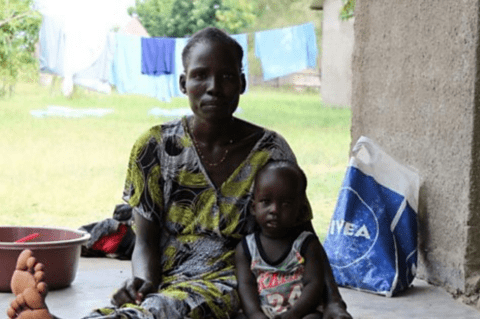
The Our Tukul radio magazine and Life in Lulu radio drama, both produced by BBC Media Action in South Sudan, are working to address reproductive, maternal, neonatal and child health. The programmes are broadcast across the country, and the production is accompanied by capacity building for local production teams. Life In Lulu and Our Tukul are made with funding from the United Kingdom Department for International Development and supported by the Ministry of Health, South Sudan.
According to BBC Media Action, both men and women in South Sudan lack basic knowledge of the benefits of health facilities, and there are widespread misconceptions about the value of practices such as breastfeeding babies immediately after birth, attending antenatal care check-ups, and using modern contraception. The Our Tukul radio magazine packages interviews, opinion, and expert advice from around the country into an entertaining and interactive radio magazine programme broadcast nationally in all 10 states in South Sudan. A tukul is a traditional circular mud dwelling with a thatched roof - the kind of home that is recognisable across the country. Partner radio stations from the Catholic Radio Network are trained to conduct field interviews and feed these back into the programme.
Launched in April 2013, Life in Lulu is a companion radio drama that takes the audience to Lulu, a fictional village where residents deal with the same health challenges that face people all around the country. Characters include: Malish, the opinionated blacksmith with his blind faith in traditional practices; Faida, the humble and hard-working village brewer; Nyamal, a jealous and suspicious first wife, and Veronica, Lulu's self-important traditional healer. Life In Lulu explores what happens when people make good (and bad) decisions about their health and focuses on the welfare of Lulu's women and babies.
Based on BBC Media Action's formative research, Life In Lulu explores people's beliefs about pregnancy, childbirth, death, and child-rearing. For example, the research revealed that many women felt they would be criticised as bad mothers if they decided to breastfeed their babies without giving them any other food or water for six months - or that a woman only has a complicated pregnancy or painful delivery if she has been unfaithful. Tackling such beliefs, Life In Lulu dramatises what happens when characters make - or fail to make - healthy choices such as exclusively breastfeeding their babies or giving birth in a health facility with the help of a trained birth attendant.
Recognising the lack of radio drama experience in South Sudan, BBC Media Action worked in partnership with a local group called Woyee Film and Theatre Industry to help build their skills so they can branch out into radio drama production. In addition, BBC Media Action found that the lack of a single national language presents challenges to using media to reach people in South Sudan. Over 60 different languages are spoken around the country. English is used officially, but it is mainly the language of the educated and urban areas. A simplified version of pidgin Arabic is the most widely understood. This is sometimes referred to as Simple Arabic and is different from Juba Arabic, spoken and understood primarily in the southern states. Our Tukul recognises this range in languages by being produced in English and a mix of Simple and Juba Arabic, while partner stations are supported to create spin-off discussion programmes in local languages. Both programmes are broadcast nationally in South Sudan through partnerships with 16 radio stations.
Reproductive, maternal, and child health
South Sudan’s two devastating civil wars ended in 2005 with the Comprehensive Peace Agreement. At Independence on July 9 2011, it was one of the world’s economically poorest countries, where 80% of the population live under US$1 a day. According to the United Nations Population Fund, "a 15-year-old girl in South Sudan has a greater chance of dying in childbirth than of finishing school." Maternal mortality is the highest in the world: 2,054 maternal deaths for every 100,000 live births. Research carried out by BBC Media Action also highlighted the societal pressures for families to have as many children as possible. A health worker in Western Equatorial State repeated what she had often heard in the community, “We died during the civil war...we want to produce more.”
BBC Media Action, United Kingdom Department for International Development, Ministry of Health, South Sudan.
Our Tukul on BBC Media Action website and Life in Lulu on BBC Media Action website on July 31 2013. Image credit: International Red Cross (IRC)
- Log in to post comments