










































Our Media, Our Principles: Building Codes of Practice for Community Radio in India
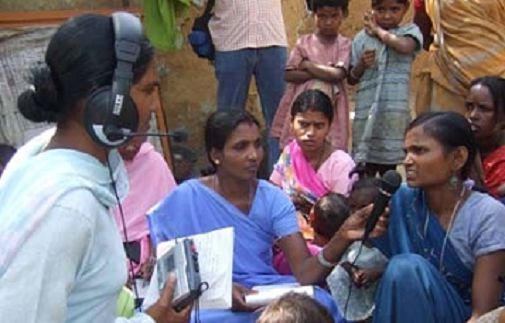
"As India witnesses an endeavour to erect a nationwide network of thousands of autonomous, locally orientated community radio stations, it becomes necessary to build a set of codes of practice for this third tier of broadcasting so that it does not become a clone of mainstream media."
This paper looks at some of these principles that participants in the community radio (CR) sector in India can consider as they hope to strengthen civil society, journalism practices, and democracy in India - especially by encouraging marginalised voices and novel perspectives to be articulated and heard in both information-based and cultural productions. Author Kanchan K. Malik describes the overarching philosophy of CR, worldwide, as a tool for social justice and a platform for community voices, narratives, and expression. "The codes of practice profiled and recommended in this paper seek to identify self-defined acceptable norms for CR practitioners, a framework for professional conduct and responsibility with the purpose of upholding the sacrosanct ideals that characterize this sector."
As Malik explains in canvassing the CR landscape in India: several awareness and capacity-sharing workshops have been organised in different regions; national and international consultations have been held to enable policy reforms through advocacy and dialogue; technological possibilities are being researched; financial and social sustainability studies are exploring options for setting up viable and effective CR stations; and there have been on-going endeavours to carry out research on practices in the country that could serve as models for upcoming CR stations.
The 13 possible codes of practice were synthesised and put together through an analysis of:
- "Policy Guidelines for Setting Up Community Radio Stations in India" (2006);
- Characteristics of CR as recognised by the World Association of Community Radio Broadcasters (AMARC): a global network of stations, federations and community media stakeholders, the United Nations Educational, Scientific and Cultural Organization (UNESCO), and other multilateral agencies;
- Codes of conduct/practice being followed in various countries (desk-based review of the international codes of practice instruments of countries such as Nigeria, Australia, Canada, Nepal, and Thailand, and, selectively, South Africa, Ireland, the United Kingdom, and the United States) that have a durable and entrenched CR sector; and
- Academic discourses surrounding CR globally.
Following are the recommended codes of practice for CR in India:
- Ensure community ownership and management - e.g., (footnote numbers have been removed throughout): "Community broadcasting should be, in the words of the African Charter on Broadcasting, 'broadcasting which is for, by and about the community, whose ownership and management is representative of the community, which pursues a social development agenda, and which is nonprofit'."
- Serve a recognisable community and be not-for-profit - e.g., "For the purpose of ascertaining whether stations are providing community broadcasting services for the benefit of the community and their operations are not commercially driven, a mechanism must be designed to receive feedback on a continuous basis from different groups within the community and public hearings or social audits may also be performed."
- Reflect diversity and sensitivity in programming content - e.g., "This calls for working towards a variety of programming choices as well as formats produced so that they can cater to a listenership that may be diverse in ethnicity, culture, gender, language, sexual orientation, age, and physical and mental ability.".
- Reinforce content development leading to social change - e.g., "CR stations must give highest priority to programmes that encourage the empowerment ofcommunities through appropriation of CR for progressive social change and sustainable, democratic and participatory community development.".
- Enhance community participation - e.g., "All international policies and codes advocate that effort to enhance participation of volunteers must be backed by principles that oppose and break down prejudice on the basis of ethnicity, race, language, gender, sexuality, age, physical or mental ability, occupation, religious, cultural or political beliefs."
- Strengthen capacity building/training opportunities - e.g., "For the CR sector to prosper, CR stations must offer the opportunity to any member of the community to initiate communication and participate in programme making, content production and evaluation. This is possible if models of training and mentoring are developed that will enable participation in the station tasks at a variety of levels."
- Protect and augment cultural and linguistic diversity - e.g., "Encouraging local creative talent, local language and fostering local traditions makes the programmes geographically and culturally more intimate to the lives of the communities."
- Provide voice to the voiceless and encourage inclusivity - e.g., "In contrast to mainstream media's liberal democratic ideal of the informed citizenry, alternative media promote the participatory democratic ideal of the mobilized citizenry."
- Promote right to communicate and contribute to democratic communication - e.g., "Organizing regular group listening sessions to elicit feedback would give people an opportunity to analyse their problems collectively, decide on the changes that affect their lives and become active in implementing these changes. Such an interactive process prompts people to express their viewpoints, share their knowledge and also moves them to participate in programmes."
- Espouse self-sustainability mechanisms - e.g., "The CR stations run by larger, well-endowed non-governmental organizations (NGOs) may manage to draw parts of their cost from the organization's funds, but are then obliged to reflect the NGO’s programmatic agenda in their broadcasts. Such vulnerability to NGO-ization must be avoided by exploring new ways to generate revenue and seek neutral funding to accomplish self-sustainability."
- Exercise editorial independence - e.g., "The guidelines of the Community Radio Coalition, Nigeria specify that CR stations should be guaranteed management and editorial independence and be subject to better public oversight."
- Advocate for an enabling policy environment - e.g., "Efforts must be put in place to address the barriers that hamper access to communications infrastructure by citizens and communities such as: insufficient or inappropriate spectrum allocation; market failure to deliver new systems based on appropriate technology at affordable costs; unreasonable processing levies; socio-cultural barriers to access; and unfriendly public policy frameworks. There should be incentives by the government that support local expertise in the production of broadcasting equipment and software.
- Facilitate adherence to codes of practice - e.g., "[T]he CR stations could formulate specific internal policies about content aimed at children; related to portrayal of women; concerning the kinds of advertising the station will broadcast; in matters that affect health; or those that pertain to environmental issues to facilitate decision making by the staff in these matters. The CR stations ought to put in place a system to ensure that their staff and volunteers are aware of all codes and legal requirements that must be respected within the station."
In conclusion, Malik notes that "self-regulation is about safe-guarding ones freedom; it is not censorship and not even self-censorship. It is about establishing minimum principles on ethics, accuracy, personal rights and so on, while fully preserving editorial freedom on what to report and what opinions to express."
Journalism Studies, Vol. 16, Issue 5, pages 750-764 - sent via email from Kanchan K. Malik to The Communication Initiative on August 19 2015. Image credit: Youth Ki Awaaz
- Log in to post comments