










































Network of Climate Change Journalists of the Greater Horn of Africa (NECJOGHA)
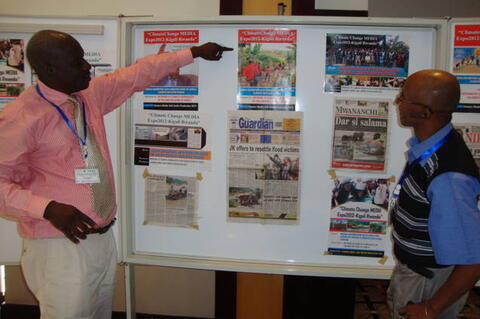
NECJOGHA seeks to promote and coordinate the transmission of climate-related information in the GHA. It collaborates with National Meteorological Services and other specialised climate institutions of the region in order to synthesise scientific information for different sectors, e.g. health, agriculture, environment, hydrology, power, and industry.
It also strives to provide timely climate information to members in the GHA for rapid dissemination to the public. This information originates from National Meteorological Services in each respective country and such specialised agencies as the World Meteorological Organisation (WMO) and Drought Monitoring Centre Nairobi (DMCN).
Climate media associations in each country provide the focal points, which coordinate national activities. NECJOGHA members from these national associations range from practicing media professionals to weather/climate experts.
The network also strives to build capacity and create awareness in member countries in the region. In addition, it seeks to advise and provide guidance to specialised climate institutions on media matters and the public.
Climate Change
Among the key problems identified by NECJOGHA that impede the use of climate information by the general public are the following: too often the language used is too difficult for most users to understand; outlooks are presented in jargon; user-specific products are often unavailable; and users are often unaware of the availability and potential use of climate products.
NECJOGHA website, July 27 2011 and October 16 2012.
- Log in to post comments