










































National Human Rights Institutions and Journalist Safety: Bridging Civil Society and Government to Promote Media Freedom in Four Asian Countries
Date
Summary
"...the establishment and operationalisation of independent multi-stakeholder mechanisms for journalist safety are vital steps for democracies because they ensure the free flow of information by protecting journalists, media professionals and human rights defenders."
This report, published by International Media Support (IMS), explores the role of national human rights institutions (NHRIs) in four South and Southeast Asian countries - Nepal, the Philippines, Indonesia, and Pakistan - and looks at how their engagement in supporting national protection mechanisms for journalists can contribute to upholding their mandate of promoting human rights for all. By examining the progress and methods of each country in establishing a multistakeholder journalist safety mechanism, it is hoped that the publication will inspire ideas for anchoring and developing journalist protection mechanisms that assign a key role to NHRIs.
The report holds "that journalists reporting in the public interest are indeed human rights defenders and it is an NHRI's responsibility to protect these journalists. NHRIs are institutions with high integrity, statutory independence from government interference and have strong mandates to protect human rights." As part of independent multistakeholder mechanisms, they therefore contribute state authority and international credibility, while journalists and civil society groups bring expertise on advocacy, coalition building, and media.
As explained in the report, the inspiration for the publication draws from the completion of prior work for the establishment of the Nepal Safety Mechanism for Protecting Freedom of Expression that sits within the Nepal Human Rights Commission (NHRC). "Towards the end of 2019, after seven years of efforts through international missions by IMS and other press freedom organisations to support and engage the NHRC, a breakthrough materialised that led to approval of a directive on the formation of this independent safety mechanism and next steps. This experience in Nepal provides a roadmap example of how a longterm view for development and persistent dialogue can lead to tangible success." The other countries studied in this report - Indonesia, Pakistan, and the Philippines - were selected because of IMS' programmatic presence in these countries and interest to keep focus in Asia for the promotion of best practice sharing in the region.
Each country case study in the report discusses the various approaches underway and progress made in terms of partnership and collaboration. They also highlight the extent of violence against journalists, the nature of the NHRI in the country, and existing journalism safety frameworks and mechanisms and how they work. When looking at journalism safety, the report makes a point to emphasise the need for gender-sensitive protection mechanisms. For each country, the report also outlines a way forward that could help in making progress in the setting up of independent mechanisms on the safety of journalists.
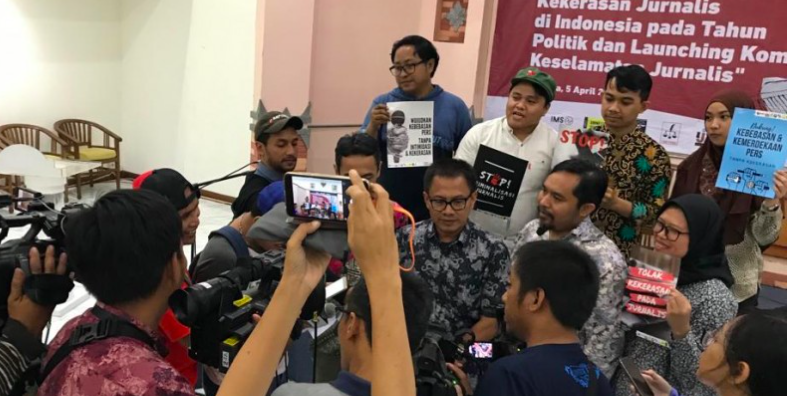
As shown in the case studies, three of four countries covered in this research - Indonesia, Nepal, and the Philippines - have begun to collaborate with their NHRIs to address the safety of journalists and to challenge the culture of impunity for violations against them. One country - Pakistan - has opted for legislation to form a commission to promote journalist safety, though presently with no role for its NHRI. Nepal is the closest to a multistakeholder mechanism since the adoption by the Nepal Human Rights Commission in 2019 of a directive to form a journalism safety mechanism (mentioned above). In Indonesia, the journalists' associations that pioneered advocacy on safety are collaborating with civil society groups, the Press Council, and the NHRI towards an independent multistakeholder safety mechanism. The development of a mutually acceptable institution in Indonesia has therefore taken the first steps.
Pakistan has also taken steps towards addressing the high number of journalists being killed and the impunity for those responsible. The federal government and Sindh province (one of four in the country) have enacted a law to address this, but, according to the report, enforcement may take time. Nonetheless, these positive moves could reduce the high rate of attacks against press freedom. The report looks at the overall challenges to journalists' safety and how Pakistan's NHRI could have a role in both the Sindh province law and the federal legislation. In the Philippines, journalists' associations and civil society groups have begun working with the NHRI, and the Philippine Plan of Action on the Safety of Journalists (PPASJ) is being implemented with support from a variety of stakeholders. According to the report, this may enable stakeholders to collaborate on setting up an independent mechanism on journalists' safety, continuing a process that began after a July 2018 resolution of the Commission for Human Rights to create a "taskforce on media-related extrajudicial killings" with a mandate to monitor and investigate attacks against the Philippine press. The Commission for Human Rights task force has set up three regional offices for this work.
The report makes the point that there is no one-size-fits-all model, as each country has a unique NHRI, and collaborations with NHRIs can differ, depending on national legal and political frameworks. NHRIs, media, civil society, government, and other relevant stakeholders can choose or develop a model that works for them through consultation and collaboration on its benefit to themselves and society in general.
Building on the progress in the different countries, the report offers a number of overall next steps, which include continual dialogue and consultations, research and documentation of existing mechanisms, establishment of national plans to promote journalist safety, strong advocacy for written rules and procedures to drive the mechanism, and increased international support for the establishment of safety mechanisms.
Specific recommendations for national media associations and civil society, NHRIs, and international agencies and media development organisations are also offered. For example, for national media associations and civil society, IMS recommends engagement with NHRIs and other state agencies, including police and prosecutors, to arrive at a shared understanding on the need to protect journalists and freedom of expression to build and strengthen national democracies. For NHRIs, the first recommendation is to begin reviewing existing policies, laws, and mandates to explore openings for sharing their independence and authority with other national stakeholders for forming national mechanisms on journalists' safety and protecting freedom of expression. Such reviews can provide information on potential legal entry points for setting up safety mechanisms and inform the legal changes required. For media development organisations, one recommendation is to establish a funding mechanism for supporting ongoing efforts to establish national journalist safety mechanisms in countries that require additional assistance during startup years.
This report, published by International Media Support (IMS), explores the role of national human rights institutions (NHRIs) in four South and Southeast Asian countries - Nepal, the Philippines, Indonesia, and Pakistan - and looks at how their engagement in supporting national protection mechanisms for journalists can contribute to upholding their mandate of promoting human rights for all. By examining the progress and methods of each country in establishing a multistakeholder journalist safety mechanism, it is hoped that the publication will inspire ideas for anchoring and developing journalist protection mechanisms that assign a key role to NHRIs.
The report holds "that journalists reporting in the public interest are indeed human rights defenders and it is an NHRI's responsibility to protect these journalists. NHRIs are institutions with high integrity, statutory independence from government interference and have strong mandates to protect human rights." As part of independent multistakeholder mechanisms, they therefore contribute state authority and international credibility, while journalists and civil society groups bring expertise on advocacy, coalition building, and media.
As explained in the report, the inspiration for the publication draws from the completion of prior work for the establishment of the Nepal Safety Mechanism for Protecting Freedom of Expression that sits within the Nepal Human Rights Commission (NHRC). "Towards the end of 2019, after seven years of efforts through international missions by IMS and other press freedom organisations to support and engage the NHRC, a breakthrough materialised that led to approval of a directive on the formation of this independent safety mechanism and next steps. This experience in Nepal provides a roadmap example of how a longterm view for development and persistent dialogue can lead to tangible success." The other countries studied in this report - Indonesia, Pakistan, and the Philippines - were selected because of IMS' programmatic presence in these countries and interest to keep focus in Asia for the promotion of best practice sharing in the region.
Each country case study in the report discusses the various approaches underway and progress made in terms of partnership and collaboration. They also highlight the extent of violence against journalists, the nature of the NHRI in the country, and existing journalism safety frameworks and mechanisms and how they work. When looking at journalism safety, the report makes a point to emphasise the need for gender-sensitive protection mechanisms. For each country, the report also outlines a way forward that could help in making progress in the setting up of independent mechanisms on the safety of journalists.
As shown in the case studies, three of four countries covered in this research - Indonesia, Nepal, and the Philippines - have begun to collaborate with their NHRIs to address the safety of journalists and to challenge the culture of impunity for violations against them. One country - Pakistan - has opted for legislation to form a commission to promote journalist safety, though presently with no role for its NHRI. Nepal is the closest to a multistakeholder mechanism since the adoption by the Nepal Human Rights Commission in 2019 of a directive to form a journalism safety mechanism (mentioned above). In Indonesia, the journalists' associations that pioneered advocacy on safety are collaborating with civil society groups, the Press Council, and the NHRI towards an independent multistakeholder safety mechanism. The development of a mutually acceptable institution in Indonesia has therefore taken the first steps.
Pakistan has also taken steps towards addressing the high number of journalists being killed and the impunity for those responsible. The federal government and Sindh province (one of four in the country) have enacted a law to address this, but, according to the report, enforcement may take time. Nonetheless, these positive moves could reduce the high rate of attacks against press freedom. The report looks at the overall challenges to journalists' safety and how Pakistan's NHRI could have a role in both the Sindh province law and the federal legislation. In the Philippines, journalists' associations and civil society groups have begun working with the NHRI, and the Philippine Plan of Action on the Safety of Journalists (PPASJ) is being implemented with support from a variety of stakeholders. According to the report, this may enable stakeholders to collaborate on setting up an independent mechanism on journalists' safety, continuing a process that began after a July 2018 resolution of the Commission for Human Rights to create a "taskforce on media-related extrajudicial killings" with a mandate to monitor and investigate attacks against the Philippine press. The Commission for Human Rights task force has set up three regional offices for this work.
The report makes the point that there is no one-size-fits-all model, as each country has a unique NHRI, and collaborations with NHRIs can differ, depending on national legal and political frameworks. NHRIs, media, civil society, government, and other relevant stakeholders can choose or develop a model that works for them through consultation and collaboration on its benefit to themselves and society in general.
Building on the progress in the different countries, the report offers a number of overall next steps, which include continual dialogue and consultations, research and documentation of existing mechanisms, establishment of national plans to promote journalist safety, strong advocacy for written rules and procedures to drive the mechanism, and increased international support for the establishment of safety mechanisms.
Specific recommendations for national media associations and civil society, NHRIs, and international agencies and media development organisations are also offered. For example, for national media associations and civil society, IMS recommends engagement with NHRIs and other state agencies, including police and prosecutors, to arrive at a shared understanding on the need to protect journalists and freedom of expression to build and strengthen national democracies. For NHRIs, the first recommendation is to begin reviewing existing policies, laws, and mandates to explore openings for sharing their independence and authority with other national stakeholders for forming national mechanisms on journalists' safety and protecting freedom of expression. Such reviews can provide information on potential legal entry points for setting up safety mechanisms and inform the legal changes required. For media development organisations, one recommendation is to establish a funding mechanism for supporting ongoing efforts to establish national journalist safety mechanisms in countries that require additional assistance during startup years.
Source
IMS website on June 23 2023; and email from Colette Simonne Wahlqvist to The Communication Initiative on June 29 2023. Image credit: IMS
- Log in to post comments