










































Guidelines for Civil Society Organizations: The Universal Periodic Review (UPR) and Its Potential to Foster Freedom of Expression, Access to Information and Safety of Journalists
"Freedom of expression is what you can say, write, display or wear publicly and how easily you can access information, including about what a government is doing."
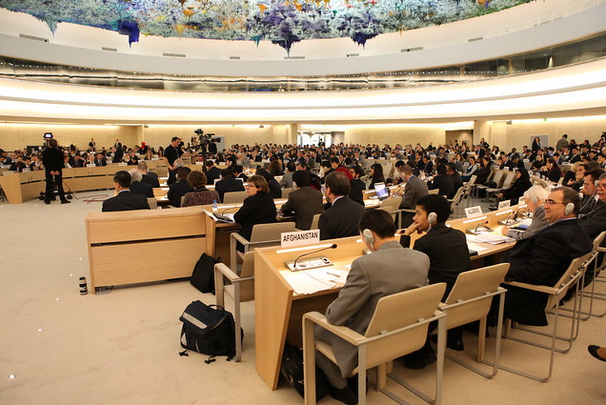
This guide aims to encourage civil society and community organisations, activists, and individuals to engage with the United Nations' (UN) Universal Periodic Review (UPR) mechanism on freedom of expression, safety of journalists, and access to information issues. The UPR is a state-driven process within the UN system involving the continuous assessment of the human rights records of all 193 UN Member States. The guide explains why it is important to focus on freedom of expression in the UPR, gives an overview of the UPR mechanism and an introduction to freedom of expression, and offers practical guidance on civil society engagement with the UPR.
The UPR process essentially involves human-rights-related research and assessments that are submitted by a number of stakeholders, including civil society. As explained in the guide, "The participation of civil society in the UPR process is key to filling in gaps that the other stakeholders' reports may have. Civil society participation ensures that the views of the people on the ground are taken into account. The UPR mechanism therefore is a unique opportunity for civil society to provide key information on human rights issues to an intergovernmental body."
The guidelines build upon: a joint Amnesty-United Nations Educational, Scientific and Cultural Organization (UNESCO) survey of more than 70 civil society respondents from different regions; a series of consultation webinars held between March and June 2022; and interviews with civil society organisations (CSOs) from different regions. The survey measured the level of engagement of civil society with the UPR, coordination between organisations, and planning for advocacy and follow-up; it also enquired about the key challenges and needs for non-governmental organisations (NGOs) to effectively contribute to the process.
The contents are as follows:
- The UPR: An Overview - describes the whole UPR process: its purpose, who is involved, and how it works.
- How Does the UPR Relate to Other Human Rights Mechanisms - looks at the how the UPR fits in with the UN human rights machinery.
- A Brief Introduction to Freedom of Expression - focuses on international and regional human rights standards on freedom of expression and access to information, the importance of this in relation to media freedom and the safety of journalists, and possible intimidation and reprisals faced by those supporting the freedom of expression.
- Practical Guidance: How to Engage During Different States of the UPR - explains what CSOs can do before the review, during the review and adoption stage, and after the review. It includes guidance on submissions, advocacy, National Consultations, and the monitoring of UPR implementation.
- Why it Matters - offers a final reminder of why civil society should get involved.
- Resources - provides a list of avenues for further information on the topics discussed.
To accompany this guide, UNESCO has also published "The Universal Periodic Review (UPR) and its Potential to Foster Freedom of Expression, Access to Information and Safety of Journalists: Factsheet on Smart Recommendations for Civil Society Organizations". This factsheet gives a brief introduction to CSOs, community groups, activists, and concerned individuals on how to formulate more useful recommendations to improve the protection of the right to freedom of expression, safety of journalists, and access to information. In particular, it focuses on the SMART methodology which stands for Specific, Measurable, Achievable, Relevant and Time-bound. Click here for this 9-page factsheet in PDF format.
UNESCO has published a series of similar guides for other stakeholders in its effort to increase the visibility of journalists and their work within the international human rights system, build a wider movement to access information, and push back against regressive trends that have stifled progress for freedom of expression. See Related Summaries below for other guides in this series.
UNESCO website on January 30 2024. Image credit: U.S. Mission Photo: Eric Bridiers via Flickr (CC BY-ND 2.0 Deed)
- Log in to post comments