










































Lifelines: The Quest for Global Health
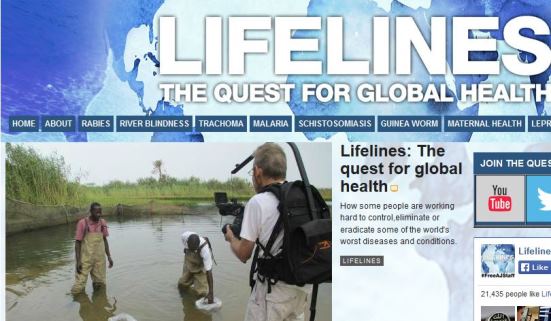
This series from Al Jazeera is a cross-platform television series and digital project. From the website: "...[I]ts purpose is to engage global audiences around solutions-based health stories, with particular reference to the diseases and conditions that blight the lives of millions of the world's [economically] poor." The television series focuses on work being done in Africa and Asia to control and eliminate disease. "The digital and social media project aims to engage online communities with this subject matter in ways that deepen understanding and knowledge."
The series, available in video online at the Al Jazeera Lifelines website, includes videos on specific diseases and health conditions, for example: guinea worm disease; river blindness - also known as onchocerciasis; leprosy; malaria; and others. The diseases covered in the films each have their own page where content, ranging from the main film, short web videos, features, galleries, and info graphics, is provided. There are “health heroes” profiled under each disease, and the Lifelines team is encouraging their audience to nominate their own health heroes. For nominations of health heroes candidates, email Al Jazeera at lifelines@aljazeera.net.
An example of how the site covers an area of health is the section on maternal and infant health. It includes the video: Between Life and Death: Why is Africa still the most dangerous place in the world for mothers and babies? This video is focused in Malawi, due to its high rate of maternal mortality and its work towards the 2015 global Millennium Development Goal (MDG) targets.
According to the website and video: In 2008, the government banned traditional birth attendants because it wanted women to favour hospital births. However, health outreach workers "now educate and help mothers in these areas by identifying them and giving them access to a 'secret mother', a person who can monitor their pregnancies and make sure they have as much information as possible before they give birth.
Health workers organise mothers to tend to gardens growing food to meet their nutritional needs. They also help pregnant women with transport, so that they reach hospitals to give birth, rather than being stranded in their villages." Non-governmental organisations (NGOs), like the community organisation featured: MaiKhanda, "encourage the men of the community to get involved, considering that they still hold most positions of leadership within the community." Click here for the entire series of videos on maternal health.
Partial funding comes from the Bill & Melinda Gates Foundation; however, Al Jazeera notes that it retains editorial decisionmaking for these and all of its productions.
Email from Julia Rhodes to The Communication Initiative on June 19 2014 and on July 7 2014.
- Log in to post comments