











































Implementation Approaches for Introducing and Overcoming Barriers to Hepatitis B Birth-Dose Vaccine in Sub-Saharan Africa
University of North Carolina at Chapel Hill (Boisson, Goel, Fried); Albert Einstein College of Medicine (Yotebieng); University of North Carolina School of Medicine (Parr, Thompson)
"Literature about the mother's role at the community level is strikingly scarce, and efforts to leverage community-level resources have been limited."
Despite the availability of the hepatitis B (HepB) vaccine since 1982, as of this writing, only 13 of 48 countries sub-Saharan Africa (SSA) countries administer birth-dose (BD) vaccination due to implementation challenges and a lack of HBV burden awareness. While researchers often discuss solutions at the policy and facility levels, this paper argues for an increased emphasis on community-level interventions, especially in rural contexts. This suggestion is based on a systematic literature review of published and gray literature, including 39 articles/reports published from January 2010 to August 2020.
The article describes barriers to the uptake of HepB-BD in SSA at the policy, facility, and community levels and proposes solutions that are relevant to stakeholders wishing to introduce HepB-BD. Namely:
- Policy level: Advocates, policymakers, and other stakeholders encounter the barriers of lack of political will and insufficient evidence. Vaccine supporters can foster political will by engaging relevant stakeholders, decision makers, and in-country advocacy groups across all healthcare systems and socioecological levels. Relevant literature also stresses the importance of leveraging other groups to secure political commitment for in-country HepB-BD uptake, such as professional societies, medical associations, and community and religious leaders. To translate political will into effective action, the researchers suggest developing site-specific consensus recommendations for HepB-BD implementation that draw upon research and literature, international guidelines, and feedback from diverse stakeholders, including people living with HBV. They propose two ingredients for building a strong recommendation: a well-constructed strategy based on local experience and the application of knowledge gleaned from implementation theory perspectives.
- Facility level: Lack of awareness of vaccine benefits, stigma, and gaps in knowledge among community health workers (CHWs), as well as variable vial size and concern for wastage, may hinder HepB-BD uptake. Research shows that sharing success stories demonstrating HepB-BD's effectiveness can educate and motivate facility staff and cultivate HepB-BD champions. Alleviating any fear or bias against vaccinating newborns and ensuring provider buy-in are critical for introducing HepB-BD and ensuring its sustainability. Among the other logistical issues explored here: A review that included SSA countries currently administering HepB-BD reported that the vaccine's documentation is suboptimal across the continent. The researchers suggest that the tracking system may be improved by standardising all HepB-BD-related immunisation reporting tools, such as immunisation cards, registers, and data management systems, to include HepB-BD-specific administration details.
- Community level: A high proportion of SSA infants are born at home and therefore do not have access to HepB-BD. Decision makers could consider community-level interventions focused on health behaviours. For instance, cultural barriers may impact the time taken to bring an infant to a facility after delivery. Additional targeted interventions include raising awareness within communities and building trust by leveraging existing civil society networks, improving understanding, and reminding caregivers of the importance of HepB-BD. For instance, a Nigerian study described an educational initiative for expectant mothers that provided information on HBV burden in-country and across SSA, vaccine benefits, and the timing of the HepB-BD vaccine. The study found that immunisation education and awareness successfully increased HepB-BD uptake. Information strategies should focus on the vaccine's safety and be delivered by CHWs, who are the liaison between communities and a health facility. Thus, strong communication ties between CHWs and health facilities are crucial to vaccine uptake. CHWs can advocate for HepB-BD by involving religious and community leaders and by engaging men and other family members to influence community norms and acceptance.
The researchers note that, "Although SSA countries acknowledge the need for buy-in for HepB-BD at the political and facility levels, health officials and researchers continuously understate the mother's role in HepB-BD implementation approaches...To achieve successful HepB-BD introduction in African settings, more attention must be paid both by policy makers and researchers to the mother's and the community's role in vaccine uptake."
They conclude by stressing the importance of maternal education and community engagement in future HepB-BD scale-up efforts in SSA. For example, community-based educational initiatives could entail gathering people together in person and/or using radio or social media campaigns to disseminate vaccination information to expectant mothers.
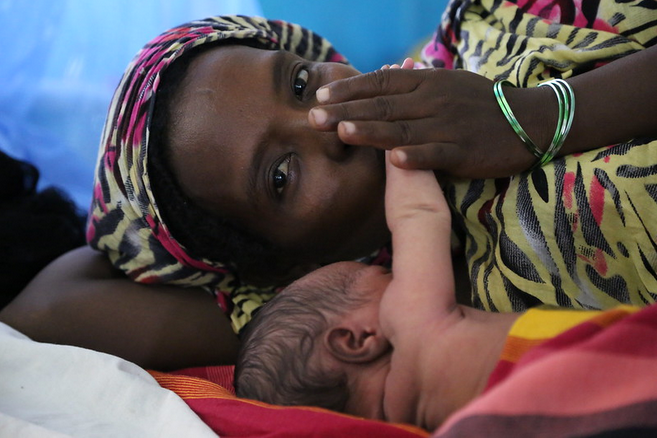
Global Health: Science and Practice January 2022, https://doi.org/10.9745/GHSP-D-21-00277. Image credit: ©UNICEF Ethiopia/ 2015/Tesfaye via Flickr (CC BY-NC-ND 2.0)
- Log in to post comments