










































eLearning Series on Evidence-based Malaria Social & Behavior Change Communication: From Theory to Program Evaluation
Image
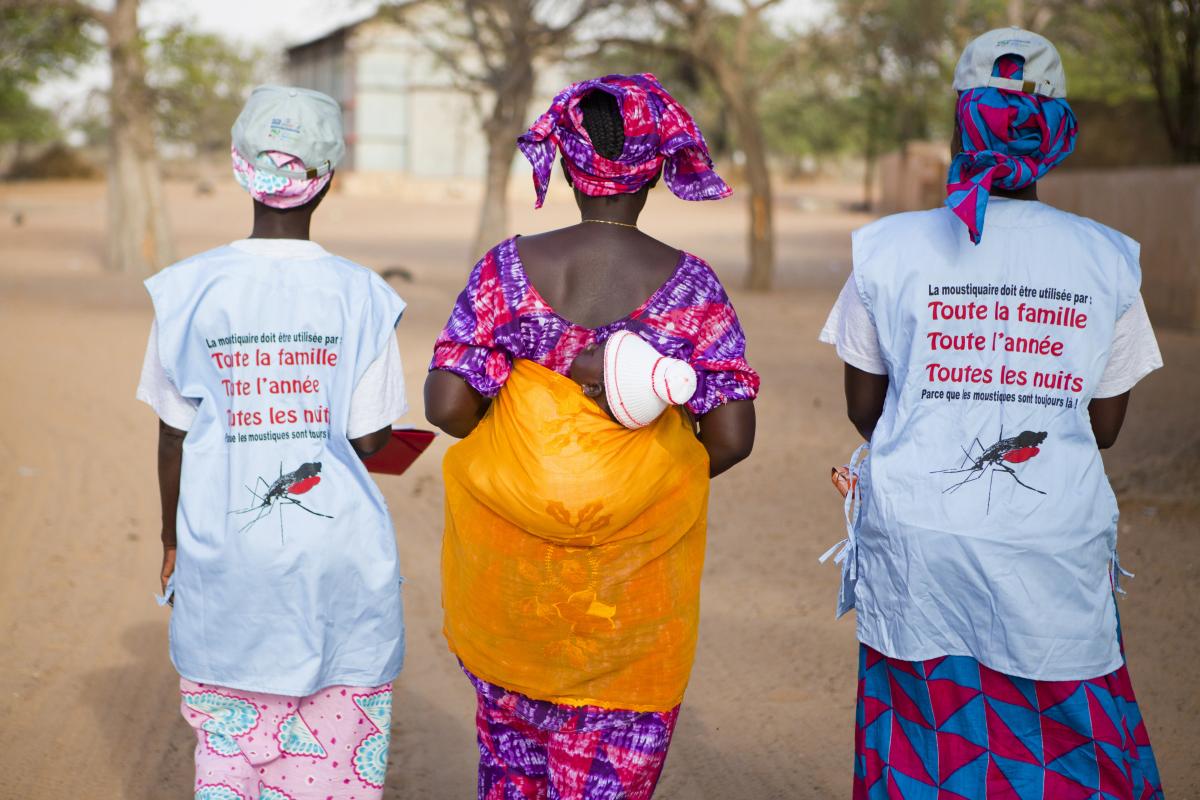
SummaryText
Offered by the NetWorks Project, this online training series is designed to strengthen capacity on how to use evidence and data to create strong social and behaviour change communication (SBCC) programmes for malaria prevention and control. The training series is intended for a wide audience, but primarily for those who work on malaria control and prevention programmes.
According to NetWorks, the presenters are leaders in the field of SBCC (all from the Center for Communication Programs Johns Hopkins Bloomberg School of Public Health), and the lectures cover both fundamental and advanced concepts, along with many examples from recent malaria programmes. "The training courses are given using slides together with audio. Once you begin a course, lecture slides and audio transcripts are also available to download in PDF format." A certificate is given for each module completed. As an online course, learners can move through the modules at their own pace.
Modules include:
Click here to view biographies of the trainers [PDF format].
NetWorks is a United States Agency for International Development (USAID)-funded project designed to prevent malaria by increasing access to long-lasting insecticidal nets (LLINs) and promoting consistent use of LLINs to prevent malaria. NetWorks is led by Johns Hopkins Bloomberg School of Public Health's Center for Communication Programs (JHU-CCP) in partnership with the Malaria Consortium, Catholic Relief Services, Mennonite Economic Development Association (MEDA), consultants from the London School of Hygiene and Tropical Medicine (LSHTM) and International Procurement Agency (IPA), and a wide range of in-country collaborating partners.
Click here for more information about the course in English.
According to NetWorks, the presenters are leaders in the field of SBCC (all from the Center for Communication Programs Johns Hopkins Bloomberg School of Public Health), and the lectures cover both fundamental and advanced concepts, along with many examples from recent malaria programmes. "The training courses are given using slides together with audio. Once you begin a course, lecture slides and audio transcripts are also available to download in PDF format." A certificate is given for each module completed. As an online course, learners can move through the modules at their own pace.
Modules include:
- Theory - Understand the importance of having a programme theory that describes how and why members of an intended audience will change in response to your programme (64 min). Lecture by Douglas Storey, Director for Communication Science & Research
- Formative Research - Learn about quantitative and qualitative methods to collect data and conduct formative research, including guidelines for conducting focus group discussions (40 min). Lecture by Michelle R. Kaufman, Research and Evaluation Officer
- Pretesting - Learn about the benefits of pre-testing for SBCC programmes and guidelines for conducting pre-testing (28 min). Lecture by Rupali J. Limaye, Senior Program Officer II
- Monitoring - Understand standard process indicators and approaches used for monitoring malaria SBCC activities (30 min). Lecture by Hannah Koenker, Senior Malaria Program Officer
- Evaluation - Understand standard approaches used for evaluating SBCC interventions and learn current state-of-the-art approaches for determining the causal attribution of SBCC programmes (54 min). Lecture by Marc Boulay, Deputy Director of Research and Evaluation
Click here to view biographies of the trainers [PDF format].
NetWorks is a United States Agency for International Development (USAID)-funded project designed to prevent malaria by increasing access to long-lasting insecticidal nets (LLINs) and promoting consistent use of LLINs to prevent malaria. NetWorks is led by Johns Hopkins Bloomberg School of Public Health's Center for Communication Programs (JHU-CCP) in partnership with the Malaria Consortium, Catholic Relief Services, Mennonite Economic Development Association (MEDA), consultants from the London School of Hygiene and Tropical Medicine (LSHTM) and International Procurement Agency (IPA), and a wide range of in-country collaborating partners.
Click here for more information about the course in English.
Languages
English and French
Source
NetWorks website on February 11 2015.
- Log in to post comments