










































Country Case Study: Bangladesh - Support to Media Where Media Freedoms and Rights Are Constrained
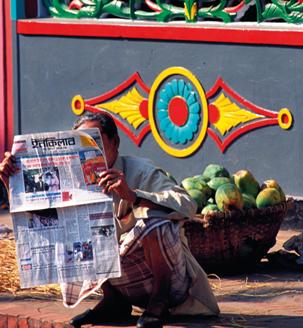
"At the national level [in Bangladesh], the media has become dominated by a few large corporations - often with primary interests in other commercial sectors. Brand new web-based initiatives, which go right down to the village level, are now being driven by a few energetic individuals and by donors."
This case study is part of a series of BBC Media Action research papers, including 5 case studies and a synthesis, discussing reasons why the media in each of the countries featured is constrained and how outside agencies and donors support free and independent media. Commissioned by Swedish International Development Cooperation Agency (SIDA), they are designed to describe the media landscape and media development (countries include Syria, South Sudan, Cambodia, Bangladesh, and Uganda) and set out best practice for donors to sustainably fund and support media internationally.
This document describes the current media market in Bangladesh, including 10 years of growth: a large range of reportedly profitable newspapers and satellite TV channels dominated by large corporations; new web-based initiatives going to the village level, driven by individuals and donors; and high mobile phone penetration with potential to stimulate public debate and generate change.
The author found a tradition of independent media and a Constitutional guarantee of media freedom, but, by contrast, intimidation and pressure from national and local administrative, commercial, and even criminal bodies, as well as self-censorship, are common at every level. Public policy discourse is often ignored at the national level as political personalities and their antagonisms are magnified. Local level media may be filling "the political vacuum." However, "[m]ost large donors ...see the media as one way to address the nation’s governance issues, and they give support to the sector in the belief that a strong and independent media will improve transparency and accountability. But there may be a disconnect between donor objectives in relation to freedom of the media as part of good governance, political leaders who may be sensitive to any criticism of their policy decisions, and thriving commercial media outlets that already provide some political commentary...."
"The growing national media market in Bangladesh does not necessarily need or want direct donor support. However, support at the local level - where media outlets lack both finance and influence - may be more necessary.
The main donor-funded media initiatives that support public dialogue in Bangladesh are:
- The training of journalists working in the national and local level media
- The creation of TV and/or radio programmes with specific public dialogue / good governance objectives
- The establishment of on- and off-line fora to support public dialogue from the village to the capital
- Support for associated human rights / anti-corruption organisations whose reports and statements are often picked up by the media
There are signs that the tradition of policy decisions being made by the administration without reference to the people, and then passed downwards for implementation, is starting to change. But some interviewed for this study are concerned that few decision-makers are really interested in policy dialogue with the public.
Donor support for such public dialogue via the media may have long-term goals but is hampered by short-term projects lasting only a few years. Changing the socio-political culture of a nation is difficult, and cannot be achieved by donors with short time-frames and short institutional memories."
Email from Aoife Allen to The Communication Initiative on September 4 2012 and BBC Media Action website, September 11 2012.
- Log in to post comments