











































Engaging Stigmatized Communities through Solutions Journalism: Residents of South Los Angeles Respond
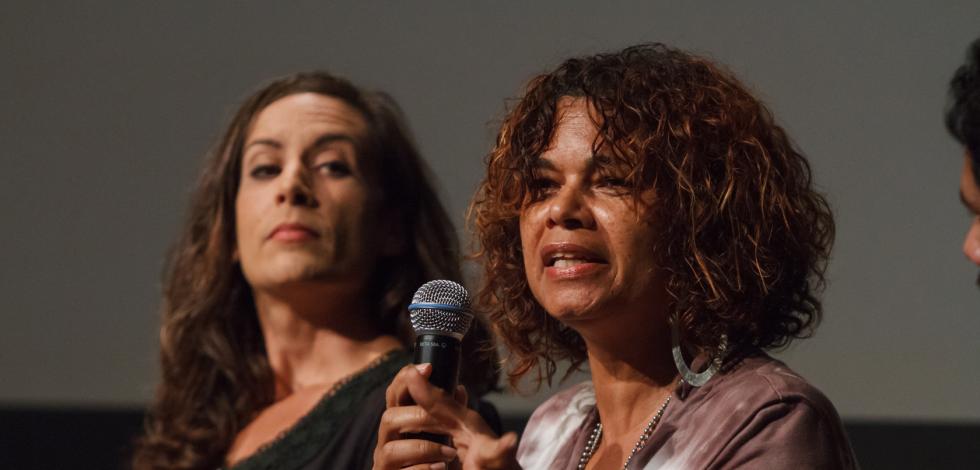
University of Southern California (Wenzel, Moreno, Son, Hawkins); California State University (Gerson)
"In local news the only thing they report on are bad things, only negative things...they are not showing us how to change the community." - South Los Angeles focus group discussion participant
Social scientists have argued that, by focusing on deficits and problems, media play a role in the stigmatisation of neighbourhoods with high levels of violence, crime, and poverty. This study looks at a research-driven media initiative that attempted to take an alternate approach to covering challenges facing the community of South Los Angeles (LA), California, United States (US). The article centres around how South LA residents who participated in follow-up focus groups responded to the "solutions journalism" format of this local media coverage. Ultimately, the study seeks to contribute a greater understanding of the implications of this type of journalism for sustaining a healthy local storytelling network.
The article first examines how various fields have approached the negative framing of stories, which has long been the media default. Among the explanations for why negativity has had a special salience for audiences is the "negativity bias" psychologists have identified. In short, people tend to devote more attention to processing negative information and are more likely to both think that it is true and to remember it. However, negative framing has been shown to be a risky strategy, for instance, leading to mixed results in political, humanitarian, or social change campaigns.
Thus, over the past several decades, journalism innovators and analysts have challenged traditional norms and practices by exploring more positive alternatives such as peace journalism, civic or public journalism, and various engaged and participatory journalism strategies. One specific approach is that advanced by the Solutions Journalism Network, established in 2013 to explore, through investigative reporting, systemic underlying reasons for social ills and critically examine efforts to address them. At the heart of solution journalism is an assumption that a solutions news frame will encourage greater audience engagement - moving people, who might otherwise be fatigued by negative news, from informed to engaged.
The article then turns to the role of local news within a community's communication infrastructure, looking at recent studies of local news audiences. According to communication infrastructure theory (CIT), strong communities have strong storytelling networks through which residents, local and ethnic media, and community organisations are connected to each other and share an understanding about what is happening in their community. This type of networking can, per CIT, foster a greater sense of collective efficacy and belonging. Residents' connection to storytelling networks depends on the "communication action context", which entails infrastructures and resources in the community that either facilitate or impede the free flow and exchange of community stories. For example, if the park around the local community centre is considered unsafe, residents may be reluctant to go there for a local theatre performance about community issues. Even once residents access a storytelling network, not all networks are equally helpful in contributing to a shared sense of community belonging. In some communities, the storytelling networks are ethnically bounded, or the content of the stories circulating is overwhelmingly negative.
In this context, the two primary research questions are: How do South LA residents interpret and make sense of media coverage of their communities? How do these residents respond to stories that use a solutions-oriented journalism format versus a traditional problem-orientated format? Members of a university research group, including some of the authors of this article, facilitated a series of workshops with local and ethnic media and community organisations. These workshops responded to challenges identified in preliminary conversations and questionnaires, followed later by two separate focus groups with participating organisation representatives and journalists. Both groups referenced communication barriers in the story "pitching" process. For this reason, workshops were designed to establish a shared language and greater understanding of their shared community interests. The workshops facilitated the production of a series of print and broadcast feature stories leading up to the 50th anniversary of the Watts Riots and ensured that these stories were solutions-oriented. This area and topic were selected as South LA's history of media stigmatisation was intertwined with its association with civil unrest - first in 1965 and later in 1992 following the Rodney King verdict.
A series of six focus group discussions were then held to understand how South LA residents responded to the stories that came out of this collaboration and how they would process the solutions journalism format more broadly. A total of 29 African-American and 19 Latino South LA adults (23 women, 25 men; age 21-59 years) who had lived in the area for a minimum of 2 years were recruited with the assistance of community organisations. Two versions of an article adapted from the Watts Revisited collaboration were edited to offer examples of either (a) a solutions-oriented story or (b) a non-solutions version of the same story. While both stories examined the issue of vacant lots and the lack of outdoor spaces for children to play in South LA, only the solutions version looked at efforts to transform vacant lots into parks.
As the researchers note, the cynicism of South LA residents is grounded in a particular history of media portrayals that depict the high-poverty area as being rife with violence, crime, and civil unrest. As focus group participants reflected on coverage of South LA, they did so within the context of this larger legacy. Referencing a range of news sources, including local and national television (English and Spanish language), local/ethnic, city-wide and regional newspapers (English and Spanish language), public affairs radio, and social media, many pointed to a disconnect between media portrayals of their area and their experiences. Participants spoke of the harm media could do, describing how the negative coverage stigmatised residents to outsiders. For several participants, there was a sense that negative coverage of South LA fits within a larger narrative of negative coverage of communities of colour in the US. Others lamented the lack of articulate community members representing them in the news. Given what they saw as problematic local media coverage, residents developed various strategies to find out what was happening in their communities. For many, interpersonal sources accessed both through face-to-face interaction and social media were considered the most reliable for learning about local information and verifying other sources.
Unlike their general perceptions of media coverage, most respondents expressed appreciation for the solutions-oriented story introduced in the focus group. Many said the article about abandoned lots and efforts to transform them into parks made them think about how they themselves could get involved with the issue. Some looked beyond the particular case offered to other possibilities for community action and collective efficacy. However, there was a concern that solutions-oriented stories might neglect a detailed exploration of the problem or imply there is no need to continue to press for action. Some suggested that the impact of solutions-oriented stories would be greater if stories were given follow-up coverage and there were more opportunities for community input throughout the process. Overall, while participants saw room for improvement, most suggested they would be more likely to read or watch solutions-oriented stories than traditional problem-oriented news. They also said they would be inclined to discuss solutions journalism stories with friends and families.
Furthermore, the researchers observed that "many participants expressed a greater sense of efficacy. At the end of each discussion session, participants asked us how they could learn more about the issues raised in these stories. Many wanted to get involved, and some conceptualized beyond self-efficacy to collective efficacy. However, as several noted, simply reading one story, or a 'drop in the bucket', may not be enough to tilt the balance of content circulating in a storytelling network. Furthermore, many remained skeptical of larger power dynamics that they feared would resist change."
Based on this experience, several recommendations for media are offered, including:
- If outlets pursuing local solutions journalism seek to engage communities, they should focus on strengthening storytelling networks' links between community organisations, local/ethnic media, and residents.
- Participants advised media to expand how they involved their audience in various stages of the story development and dissemination process, which would have the effect of strengthening CIT's storytelling link between residents and media. To this end, community foundations should invest in workshops training community members and organisers in how to communicate with journalists and journalists in how to effectively listen to communities.
- Even while looking for positive outcomes, reporters should take care to include thorough analysis of social problems as part of their coverage.
- Journalists seeking local sources in traditionally stigmatised communities should consider whom they choose to speak for that community, being careful not to uncritically reproduce negative stereotypes.
- To cultivate trust within underrepresented areas, media should seek to develop reporters who come from the communities they report on - or at minimum, enable reporters to embed themselves within communities in a way that allows them to be responsive to local sensitivities and concerns regarding representation.
Through an examination of limitations of the study, the researchers offer suggestions for future research. For instance, following up with participants 6 months after an initial study may allow exploration of the extent to which a negative versus a solutions valence will shape what is recalled. Also, future studies may also benefit from including a second control group, making a total of 3 types of stories: (i) solutions-oriented, (ii) a non-solutions problem-oriented or "bad news" story, and (iii) a "good news" story that highlights exceptional individuals doing positive things, usually without critical analysis or discussion of systemic change. This would allow an exploration of the hypothesis that readers of both "bad news" and "good news" stories are likely to become or remain disengaged due to a sense that there is "nothing to be done". Local television and internet sources could also be studied to assess the potential for local solutions journalism, as could the circulation and validation of stories within social networks.
In conclusion, the researchers concede that new schools of journalism, including solutions journalism, cannot offer a magic bullet to engaging residents either as media audiences or civic actors - particularly given the existing power structures and histories. However, they hold that local stories featuring community perspectives that take a critical look at responses to social problems offer an opportunity to strengthen connections between residents, media, and organisations - creating stronger community storytelling networks.
Journalism, Volume 19, Issue 5, Pages 649-667 - https://doi.org/10.1177%2F1464884917703125 - and YouTube via Intersections South LA, accessed on April 2 2019. Image credit: Watts Revisited via University of Southern California Annenberg
- Log in to post comments