










































Style Guide for Reporting on Indigenous People
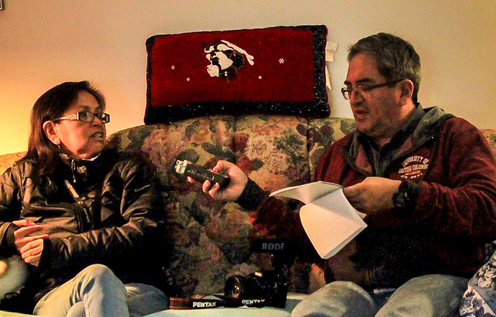
"Media plays a key role in educating the public on Indigenous communities. It could start with describing the communities in a fair, accurate and respectful way." - JHR Indigenous Reporters Program manager Lenny Carpenter
Produced in consultation with Indigenous journalists and scholars across Canada, this guide was developed by Journalists for Human Rights (JHR) to address gaps in the ways Canadian media describes and references Indigenous people in stories and reports. It includes descriptions on why Indigenous is preferred over Aboriginal, reasons to avoid use of "Canada's Indigenous people" and the like, proper descriptions of Métis and Inuit, and a section on Two Spirit people. The purpose is to prevent misrepresentation and mislabeling of Indigenous people in news stories across Canada.
JHR developed the guide in summer 2017, in part in response to news the Canadian Press (CP) was working on a new edition of its Stylebook. The CP Stylebook is a comprehensive reference work that is used by journalists across Canada, and it is required reading by post-secondary journalism programmes. The team at CP reached out to JHR for guidance on their Indigenous section, and the 18th edition of the CP Stylebook, released in autumn 2017, has adapted portions of the JHR style guide into its Indigenous Peoples section.
Joyce Hunter, contributor to the guide, says, "How the media portrays Indigenous people is crucial to building understanding among the collective Canadian consciousness, and so, we must commend and thank the Canadian Press for acknowledging that our identities should not be assigned to us collectively by an outside source and has worked with us to ensure the industry itself is coming to Indigenous peoples in a way that is communicative, open and done so in a spirit of reciprocation which helps to grow understanding among Canadians in a very real way."
JHR's Indigenous Reporters Program, established in 2014, is the group behind this guide. It seeks to build opportunities for Indigenous people to pursue careers in journalism, ultimately strengthening Indigenous voices in Canadian media, and to ensure that non-Indigenous journalists are trained in best practices for reporting on Indigenous peoples, cultures, and issues.
8
Press release, December 8 2017 - accessed on February 13 2018. Image credit: Discourse Media
- Log in to post comments