










































AcQual II Project
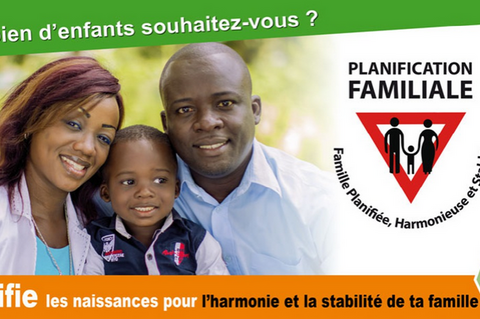
The AcQual II Project is a three-year (2014-2018) family planning project which seeks to increase access and quality of family planning services in the Democratic Republic on Congo (DRC), specifically in Kinshasa and Kongo Central. The project is led by Tulane University, in partnership with Johns Hopkins Center for Communication Programs (CCP) and local partners Association pour le Bien-Etre Familial (ABEF), SANRU (Santé Rurale), and Association Santé et Développement (ASD). The project works closely with the Ministry of Health, including the National Program for Reproductive Health (PNSR) and the National Program for Adolescent Health (PNSA) to expand the community-based distribution of contraceptive methods, improve the quality of sexual and reproductive health services, and conduct research on innovative strategies for contraceptive method distribution. CCP is responsible for creating demand for family planning methods and services, with a particular focus on youth and is using print materials, a telephone hotline, and a music contest to communicate with young people about family planning.
AcQual II is funded by the Bill & Melinda Gates Foundation, the David and Lucile Packard Foundation and an anonymous donor.
Using data from the 2013 DHS and PMA2020, CCP developed a demand creation strategy centred around the main reasons for non-use of family planning. The demand creation objectives are to:
- Increase knowledge of family planning service sites;
- Increase knowledge of methods, including management of side effects, and
- Increase spousal communication about family planning methods.
Additional objectives are to:
- increase client-provider communication/counseling about family planning advantages and methods, to welcome young clients to services; and
- increase client satisfaction with family planning services.
To achieve these objectives, CCP and its partners have implemented the following communication activities:
- 6 leaflets were produced and distributed on contraceptive methods (intrauterine device (IUD), implant, injectable, contraceptive pills, and emergency contraception) in French, Lingala, Kikongo, and Swahili. Roadside billboards were also produced with messages emphasising the benefits of a smaller family. Click here to view copies of the leaflets and billboards.
- The programme also launched a 24-hour family planning information phone service (1-5-5) with private phone company Vodacom. Within the first few months of launching the line, there were already over 340,000 callers.
- Family planning messages were also included on the popular national TV show, Libala ya Bosembo.
- In 2017, the project also organised a youth-focused song contest, Mongongo Ya Bilenge “Voice of Youth”), using inspiration from the popularity of shows like America’s Got Talent. The contest was designed to identify young singer/songwriters who can communicate with their peers about sexual and reproductive health and ultimately increase the intention among youth to adopt a modern contraceptive method. The contest was advertised on radio, TV and social media in collaboration with international music star Ferré Gola. Youth between the ages of 18-24 submitted their audition video or audio file to the organisers via WhatsApp. Out of over 200 submissions, seven finalists from Kinshasa and Kongo Central were selected by judges and invited to participate in a weeklong ‘maquis’ or camp to arrange their songs to music, where they were coached by well known lyricists and music producers from the DRC, including Pascal Poba, Alfred Nzimba and Zola Tempo. During the televised finale, each finalist performed his or her song with professional musicians and chorus. Audiences could follow the contest thorough the Mongongo Ya Bilenge Facebook page.
Family Planning, Youth
Context
“Young people in the DRC have been frustrated with a lack of access to family planning information. Social disapproval of premarital sexual activity and taboos about discussing sexuality with youth affect their knowledge of, and access to, sexual and reproductive health services, making them more vulnerable to contracting sexually transmitted diseases and unintended pregnancy. Research shows that youth are not always welcome in health centers and rely on pharmacists, street drug vendors and rumors to guide their reproductive health choices.
The prevalence of these attitudes in DRC among providers and parents means that young people do not have willing sources of information on reproductive health – and it may be having an impact on their behaviors. For example, among young women in DRC, the median age at first intercourse is 16 years (in Kongo Central) or 17 years (in Kinshasa), but the median age for first contraceptive use is 20. The gap between when youth begin having sex and when they start to use contraception is a critical area to be addressed. (Source PMA2020/Kinshasa 2016R-5; PMA2020/Kongo Central 2016 R-2).”
Tulane University, Johns Hopkins Center for Communication Programs (CCP), Association pour le Bien-Etre Familial (ABEF), SANRU (Santé Rurale), Association Santé et Développement (ASD), Ministry of Health, the National Program for Reproductive Health (PNSR), the National Program for Adolescent Health (PNSA), and funded by Bill & Melinda Gates Foundation and the David and Lucile Packard Foundation.
JHUCCP website and JHUCCP website on June 5 2017, and email received from Claudia Vondrasek on June 5 2017.
- Log in to post comments