










































Essential Principles for Contemporary Media and Communications Policymaking
Reuters Institute for the Study of Journalism (Picard); Annenberg School for Communication (Pickard)
"Our hope is that this report may serve as a vehicle to start a broader conversation about core policy principles. Policymakers, scholars, and concerned citizens may refer to it as they consider the underlying normative values that underpin a nation's media system and help define its central role within a democratic society."
This report from the Reuters Institute for the Study of Journalism proposes principles to guide contemporary media and communications policymaking in democratic countries seeking to improve the contributions those operations and systems make to society. It articulates statements of principles to inform the development of policy objectives and policy mechanisms and to provide consistency across varying issues, technologies, and actions by defining fundamental criteria that can be used to inform discussion and guide policy decisions. The purpose is to help policymakers and policy advocates think initially at a more principled level and then link policy objectives and tools to these normative foundations rather than merely seeking immediate problem solutions.
The policy rubrics and principles are listed here but are discussed individually in the report.
Meeting fundamental communication and content needs
- Promoting freedom of expression and other rights of communication.
- Addressing market failures in systems and infrastructures.
- Promoting production of public goods, public interest content, information, and entertainment.
- Facilitating citizen participation in debate of issues and developments affecting society.
Providing effective ability for public use of media and communications
- Providing universal access to infrastructures.
- Ensuring availability of affordable basic-use technology and levels of services.
- Supporting equity/social inclusion with services for people who have visual and hearing impairments or others with specific access needs.
- Providing interconnectivity and interoperability of all technologies and services through open architectures.
Promoting diversity/plurality in ownership of media and content availability
- Seeking diversity of providers and types of content.
- Preventing growth and abuse of monopolistic power in media and communications.
Affording protection for users and society
- Protecting children and vulnerable people from adult and disturbing content.
- Protecting personal privacy and data security of users from invasive corporate and state surveillance or misuse.
- Providing adequate consumer protections and enforcement mechanisms in media and communications.
- Protecting against incitement to disorder, commission of crimes, and racial hatred/violence.
Providing transparency and accountability
- Providing transparency and comparability in terms, pricing of services, and data collection.
- Providing transparency in media ownership.
- Providing information to ensure that consumers understand algorithms and other automated technological influences on content choice.
- Promoting media and communications accountability through legal and self-regulatory mechanisms.
Pursuing developmental and economic benefits
- Incentivising private investment in infrastructures, services, and innovation.
- Fostering economic competition among providers of media/communications products and services.
Pursuing equitable and effective policy outcomes
- Fostering meaningful public consultation and participation in the policy process.
- Employing multiple policy mechanisms and tools to achieve objectives.
The authors note that these principles "incorporate competing social demands, and policymakers should address them concurrently to determine how to obtain optimum social benefit. Balancing competing demands and making trade-offs should be done in a transparent decision-making process in which all stakeholders are able to effectively participate....Policy principles are inherently contentious, and the test of a healthy democratic society is to what extent such principles can be openly and publicly debated among diverse constituencies. The principles described in this report offer a reference point for discussion about the role of media in a democratic society, and the criteria by which media systems should be designed. Although many policy principles remain universal and commensurable over time and across countries, many others change with cultural and historical contexts. Thus, constant re-evaluations of these principles are necessary. As these reassessments of policy principles occur, it is of the upmost importance that all members of society take part in determining their definitions, delineations, and implementations. This report strives to help contribute to this process."
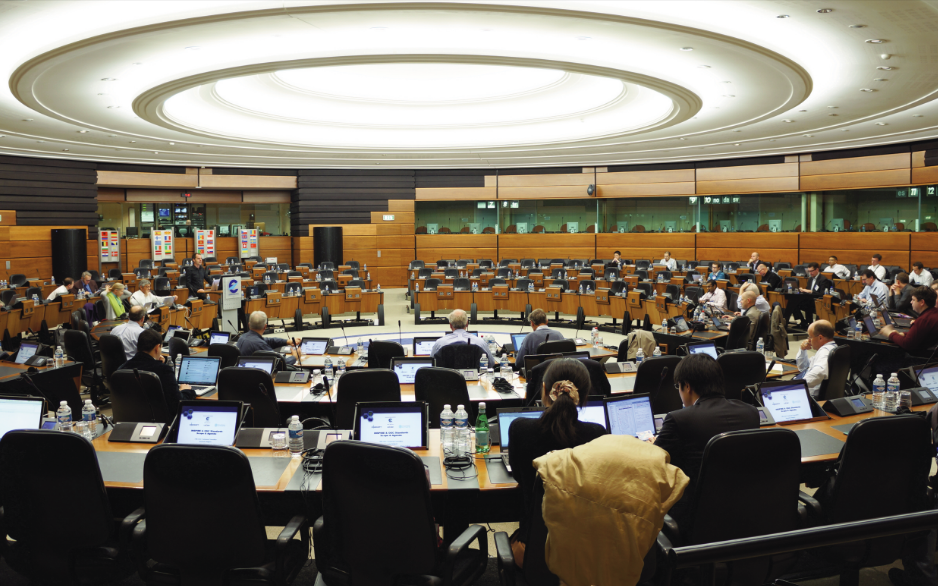
Reuters Institute for the Study of Journalism website, April 13 2017. Image credit: EUROCONTROL Meeting Room by Slayer
- Log in to post comments