











































'Hiigsiga Nolosha': How Has a Youth Radio Show Given Young Somalis Hope for Their Future?
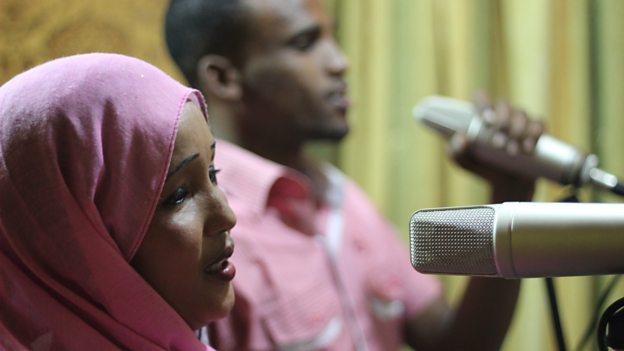
"The second phase of BBC Media Action’s Somalia Stability Fund funded ‘Youth and Media’ project has aimed to increase engagement of youth in discussion on the future of Somalia and to contribute to an audience-responsive media sector."
The BBC Media Action radio programme Hiigsiga Nolosha (meaning desire or aspirations for life) is designed for Somali youth as a discussion platform to prompt "dialogue and interaction across divides, create... understanding and acceptance between youth from different parts of the country, improve... how youth are viewed (by themselves and adults), give... young people hope and motivation for the future and help... them to believe they can positively contribute to their country." The project was created to improve capacity of local Somali partner radio stations to deliver audience-driven, and particularly youth-focused, media programming.
Hiigsiga Nolosha "has been broadcast via the BBC Somali Service and three partner community radio stations and included both a drama Maalmo Dhaama Maanta (A Better Life than Today) produced in BBC Media Action’s Somali Office and discussion segments produced by each partner radio station." Phase I formative research showed a need for programming in which youth could exchange "ideas and experiences and come up with solutions to the challenges they face. The impact evaluation at the end of Phase I found that BBC Media Action’s Hiigisiga Nolosha programme had given Somali youth an opportunity to interact and express their ideas, had helped to highlighted commonalities of young people, had positively shifted how young Somalis viewed themselves and contributed to youth empowerment." Phase II improvements suggested by the impact evaluation included: "...that the programme could exert wider influence on other related parties such as parents, that it should continue raising awareness of other societal issues, that it should increase levels of youth engagement in social media and that increasing commercial initiatives could help to make the partner stations more commercially viable."
A final qualitative impact evaluation was done for Phase II using focus groups of youth aged 15-24 and of adults and in-depth interviews of youth leaders, media experts, and staff of partner stations. Key findings include the following:
- "Hiigsiga Nolosha resonated highly with the target youth audience because it focussed on youth issues and the combination of drama and discussion helped to increase the impact of the programme and was new to many listeners
- Hiigsiga Nolosha provided young Somalis with a platform to discuss issues which they felt were relevant to them and prompted dialogue and debate across divides
- It enabled youth from different parts of the country to hear from each other and interact (via both discussion programmes and social media)
- This helped them to see the social and cultural commonalities and joint challenges that Somali youth face, and encouraged positive attitudes among young Somalis to each other
- The programme also helped youth to become more aware of the social and economic opportunities available to them and encouraged youth to make use of these opportunities
- Hiigsiga Nolosha positively changed perceptions of youth, both among youths and older people
- These factors motivated youth to take action to improve their situation, encouraged them to take control of their own lives, gave them hope and motivation for the future and helped them to believe that they can contribute positively to their country
- The project also improved the capacity of local Somali partner radio stations to deliver audience-driven, and particularly youth-focused media programming
- It improved the way in which partner stations conducted research on potential stories, gathered audience feedback on programmes and included audience voices in programmes
- It also improved the editorial, production and interviewing skills of station staff and the editorial processes at the partner stations
- The commercialisation training provided to partner radio stations improved their skills and planning in this area, and as a result they increased their income through sold advertising, air time and show sponsorship - helping to make stations more financially stable and sustainable
- The success of Hiigsiga Nolosha encouraged other media organisations to increase their youth orientated programming and audience interaction in programmes"
BBC Media Action website, August 4 2016.
- Log in to post comments