










































Thinking Outside the Separate Space: A Decision-Making Tool for Designing Youth-Friendly Services
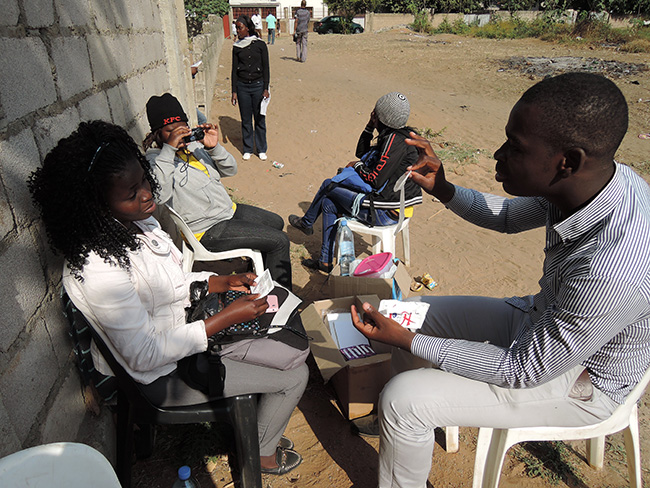
This tool, developed for the international sexual and reproductive health (SRH) community, seeks to advance services tailored to young people's needs by helping programme designers to select and adapt appropriate youth-friendly service (YFS) delivery models, considering: the country context, the intended population, the desired behavioural and health outcomes, the services offered, and the needs and objectives for scalability and sustainability.
The premise of the tool is that use of high-quality and comprehensive SRH services could prevent or mitigate poor health outcomes - e.g., low use of contraception, as well as early marriage and societal pressure to bear children soon after marriage, often leads to early childbearing and increased risk of unsafe abortion and maternal and infant mortality - but a wide range of barriers prevent young people from accessing these services. These barriers are structural (e.g., laws and policies requiring parental or partner consent), sociocultural (e.g., restrictive norms and stigma around adolescent and youth sexuality), and individual (e.g., young people's limited or incorrect knowledge of SRH, including myths and misconceptions around contraception). YFS (also called adolescent-friendly services) are designed to mitigate these barriers. YFS can increase young people's use of SRH services when they include: (i) training for health care providers on YFS provision and core competencies for delivering adolescent health services; (ii) improvements in facilities to increase access and quality of services for young people (e.g., increasing privacy), and (iii) community-based activities to cultivate an enabling environment and increase demand.
The most common YFS approach - using a separate space or clinic to ensure privacy coupled with recreational and other programmes to attract young people - has been implemented across a range of low- and middle-income country (LMIC) contexts. Yet, according to this publication, there needs to be a move away from a one-size-fits-all YFS model to a highly adapted and contextualised model of YFS that is appropriate to the systems of a country and the needs of its diverse adolescent and youth population. This tool is designed to guide programme designers through the decision-making process that is required to develop such an adapted YFS model. It includes:
- "Section 1: What are the different models of YFS?
- Section 2: Choosing a YFS model(s)
- Step 1: Determine desired health/behavioral outcomes and which sub-population of adolescents and youth the services should reach
- Step 2: Conduct an SRH landscape analysis
- Step 3: Determine what package of SRH services will be offered
- Step 4: Determine available resources
- Step 5: Determine desired level of coverage
- Step 6: Select one or more models for delivering YFS
- Model 1: Standalone clinic
- Model 2: Separate space for YFS
- Model 3: Mainstreamed YFS
- Model 4: Mobile outreach services
- Model 5: Community-based services
- Model 6: Drug shops and pharmacies
- Table 1: Summary of considerations and implication of different models of YFS
- Step 7: Plan for scale-up of the selected YFS Model(s)
- Section 3: Supportive elements of YFS
- Section 4: Additional recommendations to reach sub-populations of young people
- Conclusion
- References
- Annex 1: Guides, tools, and resources for the implementation of YFS
- Annex 2: Guiding questions to operationalize each step"
This resource is a product of the Evidence to Action Project (E2A), which is funded by the United States Agency for International Development (USAID) to address the RH needs of girls, women, and underserved communities around the world by increasing support, building evidence, and facilitating the scale-up of best practices that improve FP services. The project is led by Pathfinder International in partnership with the African Population and Health Research Center, ExpandNet, IntraHealth International, Management Sciences for Health, and PATH. The project was awarded in September 2011 and will end in September 2019.
English and Spanish
70
Evidence to Action (EA2) website, May 6 2016, and posting by Jennifer Parker to the IBP Knowledge Gateway, January 5 2017. Image credit: E2A
- Log in to post comments