











































Meaty issues on the radio
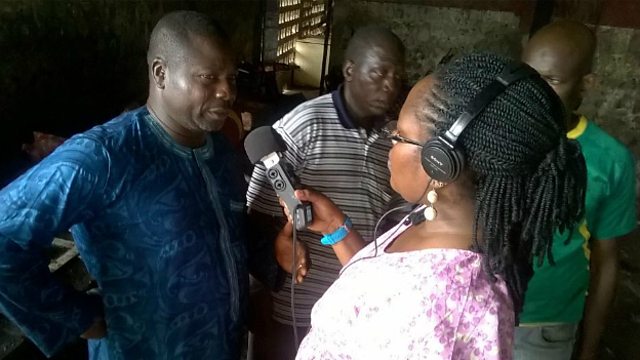
Author: Ehizogie Ohiani, April 8 2016 - A meal without meat is as good as no meal for most people in Benue State, North Central Nigeria. Considering its importance, one would expect that hygiene surrounding the preparation and sale of meat would be held in the same high esteem. This is not the case.
A murky mix of flies, blood, water, muddy walkways, sweaty bodies and smoke combine to make the abattoirs in the marketplaces of Benue State a perfect breeding ground for disease. Lack of adequate sanitation knowledge, lack of enforcement by market associations and insufficient supervision of animal slaughter by qualified veterinary officers conspire to create major health challenges for communities.
I was at Harvest FM, a local radio station in Benue State, to train producers. We were brainstorming ways we could use their popular early morning show “Good Morning Benue” to help serve the public interest. For the producers, an obvious choice was to discuss hygiene in abattoirs.
The programme explored a number of problems in the state’s local abattoirs: an absence of toilet and handwashing facilities and the practice of washing meat with untreated water sourced direct from the River Benue.
Identifying dirty meat
Listeners were invited to question the studio guest - a respected local veterinary doctor. One listener fielded a particularly challenging question:
“Good morning doctor, I’m a blind person,” he asked. “These diseases you people are talking about, how can…a visually impaired person identify infected meat for himself?”
“It’s not actually the duty of the consumer to recognise any disease” replied the doctor. “It is the veterinarian who is trained to recognise this disease right at the point of slaughter, even prior to slaughter… and make recommendation whether the animal should be slaughtered [or not]. And so long as enough of these veterinarians are not put there to perform that duty, the public stands a high risk of health hazard.”
Others used it as a chance to suggest ways of improving cleanliness in the abattoirs. One listener, Ike remarked, “The government should come and rebuild the abattoirs and there should be a net covering the building at the slaughtering house, so that it will prevent flies and other insects from getting there.”
The opportunity to speak out
Good Morning Benue hasn’t always featured its listeners as part of the show. As one of the presenters of the programme, Jeremiah Jime, said, “after we had been trained by BBC Media Action…we wanted to improve live interaction with our audience on topical issues [so we brought in] a phone line so we could receive calls and SMS from listeners on a mobile phone. And the response was massive. It was as if the listeners had been waiting for us to give them an opportunity to speak out. Producing that programme every week; we see it as our way of contributing to the health and safety of our own society”.
After hearing of the programme, the governor of Benue State visited local abattoirs to see the conditions for himself, promising to provide funds aimed at improving hygiene standards. It’s a powerful example of how radio stations can help tackle meaty issues of public interest, where existing procedures may not.
Click here to access this BBC Media Action blog and related links on their work in Nigeria.
Image credit: BBC Media Action
Contact:
BBC Media Action
BBC Media Centre, MC3A, 201 Wood Lane
London
W12 7TQ
United Kingdom (UK)
Phone: 44 (0) 20 8008 0001
Fax: 44 (0) 20 8008 5970
Media.action@bbc.co.uk
- Log in to post comments