










































Tea Cup Diaries: How a Radio Drama is Changing Attitudes in Myanmar
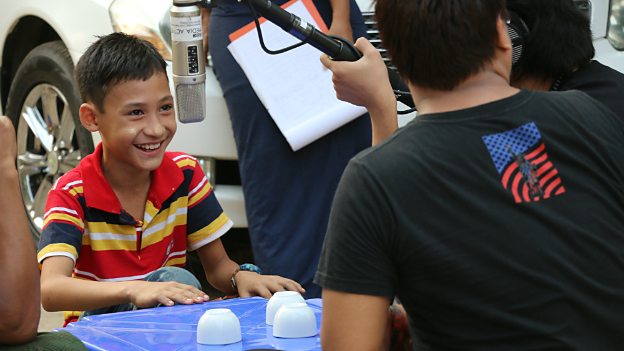
"BBC Media Action’s Tea Cup Diaries promotes understanding, openness and respect for people from different ethnic and religious backgrounds in Myanmar.Listeners reported improved knowledge of other ethnic and religious groups, and had a better understanding of how to resolve conflicts."
This research project sought to provide an understanding of audience engagement and to capture self-reported learning from viewing the radio drama Tea Cup Diaries launched in Myanmar in May 2015. The drama was created against a background of ongoing ethnic conflicts and religious tension, including a 2015 law penalising inter-religious couples. "Formative research prior to production revealed that people have limited and superficial interactions with those from different ethnic or religious backgrounds. Religion is perceived to be a greater barrier to social inclusion than ethnicity, and while most people would accept marriage between ethnicities with the same religion, they commonly reject inter-religious marriage." A qualitative evaluation of listeners was then conducted in September and October 2015, towards the end of the first series.
BBC Media Action, with funding from the United States Agency of International Development (USAID)’s Office of Transition Initiatives, created the 15-minute, 26-part drama, airing it on state broadcaster Myanmar Radio. "Set in a tea shop on the outskirts of Yangon, Tea Cup Diaries includes characters from different backgrounds, providing positive and realistic portrayals of minority groups living and working alongside characters from the majority Bamar Buddhist community." The project included 25 rural and urban listener groups intended to "deepen engagement with the show and promote discussion of social cohesion issues. Listener group members represent various ethnic and religious groups," reflecting the national audience.
For the evaluation, interviews were conducted with regular listeners in Yangon, Pakokku, and Pekon - Buddhist majority locations chosen "to explore how audience interpretations differed based on their exposure to other groups. Due to the challenge of recruiting regular home listeners, the majority of participants were members of listener groups."
Key findings include:
- "Strong listener engagement
The programme stands out as an authentic and realistic portrayal of Myanmar life. It particularly resonates with women and in rural areas.
- New understanding of others
Listeners reported learning new things about personal communication, ethnic and religious diversity, and gender roles. Rural listeners, who have limited exposure to other communities, gained the most insight.
Listeners said they learnt how to better resolve differences, by emulating qualities of the characters they admire, who use effective ways of addressing disagreements between family, friends and colleagues.
Audiences came to understand other ethnic lives (particularly Shan) and other religious practices. Christian characters were interesting to many listeners, countering their previous perceptions of the religion.
- Religion still a barrier to cohesion
Perceived differences between religions remained strong, and deep seated tensions between religious groups is the most difficult barrier to address. There was particularly strong feeling against Muslims and inter-religious marriage, which listeners did not welcome in the programme.
- Discussion is important for learning
Listener groups are key to translating listening into learning. While regular home listeners tend to talk about storylines and characters, listener group discussions help guide participants to talk about social cohesion themes featured in the drama."
The summary concludes that:
Audiences "came to know characters’ personalities, rather than defining them only by religion or ethnicity. The series helped normalise diversity and illustrated how people with different backgrounds can live and work alongside each other."
The evaluation showed that listeners to be "open to learning about others, but tensions remain in storylines addressing religious divisions. Challenging fundamental and deeply entrenched beliefs about religion is difficult, given the wealth of other sources emphasising the need for religious separation."
"Listener groups created a safe space for discussion, encouraging listeners to talk about diversity and learn from each other."
BBC Media Action website, April 14 2016.
- Log in to post comments