










































South Sudan: reaching out to mothers and babies amid conflict
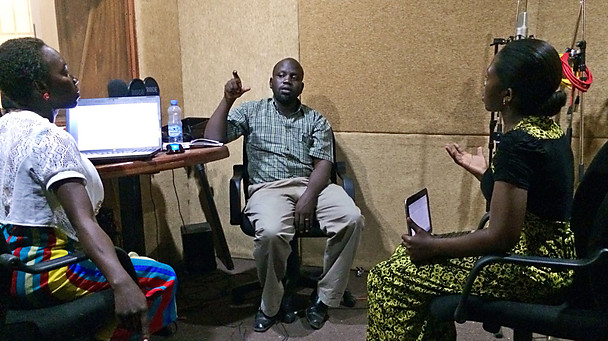
Author: Daniel Realkuy Awad Barnaba, June 11 2014 - When fighting broke out last December in South Sudan, members of our radio team were among the thousands who had to flee. After a few very difficult months, we’re all back in Juba and our health radio shows Our Tukul and Life In Lulu are back on air. But the conflict has left its mark on us all - and, what’s more, changed our programmes too.
Once most of our production team had managed the return to Juba - from Kenya, Uganda and other parts of South Sudan - the first thing to think about was how to make our programmes meet the changing needs of our audiences.
For example, we had to find effective ways of reaching the hundreds of thousands - mostly women and children - now living in the UN PoC (Protection of Civilians) camps.
How do you inform and entertain audiences experiencing such difficulties?
Music and drama
Recognising that people are desperate for high-quality entertainment as well as reliable information has been key.
As a result we committed to keeping our drama programme, Life In Lulu, on air - and adapted the storylines to reflect the conflict.
We now broadcast Life in Lulu in the same slot as our magazine show, Our Tukul, and each show clearly reinforces the health information contained within the other.
Plus we’ve commissioned songs to provide an easy and entertaining way for people to remember important health information.
Last year, we worked with South Sudanese artists like J2Guyz, Meer Matthew and CJ Oman to record songs about the impact of early marriage and how to stop the preventable deaths of babies.
This time around, we focused on three urgent issues facing both our audiences in the camps and those who managed to stay in their homes: diarrhoea, malaria and the importance of hand washing.
We spoke to J2Guyz and they composed music for the lyrics written by our team. (Listen to the songs on Sound Cloud).
New mistrust
Sadly, since the fighting started, gathering interviews for Our Tukul has become more difficult.
People tell us they have lost trust in the media in South Sudan. They think the media takes the side of the government and are scared their words will be misused.
One mother told us, “You media people, we tell you our views and if it’s against the government you don’t broadcast it. But if it fills your needs, you do.”
We now have to work harder to explain our programme focuses on health issues for mothers and their children - and that by telling their story, people can help others and change their lives.
Urgent need
What drives the Our Tukul team is that now more than ever we need to inform people about how best to keep mothers and babies healthy.
There are many people here who do not know what will happen to them tomorrow - people like a pregnant mother I met recently, who, together with her three children has no home in which to shelter from the present rainy season. She told me she doesn’t know what to do when her delivery time comes.
If we can give information which helps such a pregnant mother to plan - in even the smallest way - for tomorrow, we will have made a small difference.
Click here to access this BBC Media Action blog and related links on their work in South Sudan.
Image credit: BBC Media Action
Contact:
BBC Media Action
BBC Media Centre, MC3A, 201 Wood Lane
London
W12 7TQ
United Kingdom (UK)
Phone: 44 (0) 20 8008 0001
Fax: 44 (0) 20 8008 5970
Media.action@bbc.co.uk
- Log in to post comments