










































Lutheran Communion in Southern Africa (LUCSA) and Evangelical Lutheran Church in Zambia (ELCZ) Regional Malaria Program (LRMP)
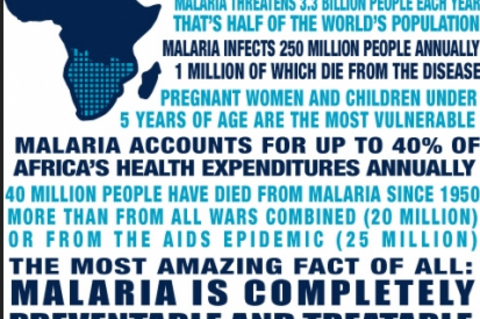
In collaboration with the Kashima and Chambi Rural Health Centres, the Lutheran Communion in Southern Africa (LUCSA) and Evangelical Lutheran Church in Zambia (ELCZa) have been working to improve delivery of health services and malaria prevention and control in North Western Zambia. The project includes working in and through churches to promote malaria prevention and behaviour change, as well as training church-based volunteers to administer rapid diagnostic testing, provide treatment, and advise those who need to go to a medical centre.
To promote the use of treated mosquito nets distributed by the Ministry of Health, the project included a behaviour change campaign. This included malaria sensitisation and awareness raising meetings hosted in congregations and communities around them. These were designed to ensure that people had knowledge of malaria, including symptoms and its effects, the benefits of sleeping under a mosquito net correctly, and the need to stop using the nets for purposes other than what they are meant for (organisers found nets were being misused for fishing and construction of fowl runs). Chitenge (wrap around cloths) were distributed carrying malaria messages, and information education and communication materials were distributed with messages about the advantage of sleeping under a mosquito net.
In addition, 50 church-based malaria Community Health Educators were trained in collaboration with the Ministry of Health. This training included building knowledge of malaria symptoms and diagnosis. Following this training, the newly trained Community Health Educators were able to ensure that community members are tested for malaria free of charge using Rapid Diagnostic Test Kits (RDTs), and were provided with the necessary treatment. The RDTs are provided through partnership with the Ministry of Health and the service is provided on a voluntary basis by the church members in Chambi where there are no health facilities.
The project also included conducting open clinics in Chambi in collaboration with the Ministry of Health Chavuma District Health Centre during which people were tested for malaria. Those who tested positive for malaria were given anti-malarials on the spot and therefore did not need to walk for 15km to get tested and be treated. According to ELCZa, this intervention contributed to a reduction in the incidence of malaria in Chambi. The most significant change could be said to have taken place in the attitude and behaviour of people, who unlike before are now demanding to be tested before treatment or before walking to the markets to obtain antimalarials by themselves.
Malaria
Kashima Rural Health Centre is a government facility in Mufumbwe District North Western Province of Zambia; its catchment area is approximate 13,000 people. Chambi area is about 20km west of Chavuma Boma in north western province where the nearest health centre is located. The area is separated from the rest of the land by the Zambezi River. For someone to reach this area one has to cross the Zambezi River in small canoes and then walk 15kms to the area since there is no bridge connecting the two areas or facilitate crossing by car. The area is water logged and gets flooded making it is impossible to reach with a vehicle. It is highly infested with mosquitoes which seem to be contributing to a high incidence of malaria.
According to ELCZa, before the intervention, people in Kashima area didn’t know the symptoms of malaria and associated them with witchcraft. This led them to seek the help of herbalists which complicated the malaria cases and led to deaths particularly among children under five. They also did not have access to malaria rapid diagnosis tests or trained health educators to treat, test, or give out medicines in the community. This meant that many people in these areas did not test before seeking anti-malarial medicines.
ELCZa mentions that a number of changes have been noted in the communities. For example, at Kashima East Health Centre in 2010, before the programme started, only 47 pregnant women are on record to have attended the antenatal care clinic and had taken at least two doses of the malaria drug, Fansider. However, in 2012, 217 women attended the antenatal clinic and 115 took three doses of Fansider, 82 took two doses, and 20 took at least one dose.
The Lutheran Communion in Southern Africa (LUCSA), Evangelical Lutheran Church in Zambia (ELCZa)
Health Care Improvement Project website and LUCSA website on April 30 2012.
- Log in to post comments