










































The Role of Law Enforcement Agents: Ensuring Safety of Journalists during Public Demonstrations and Elections
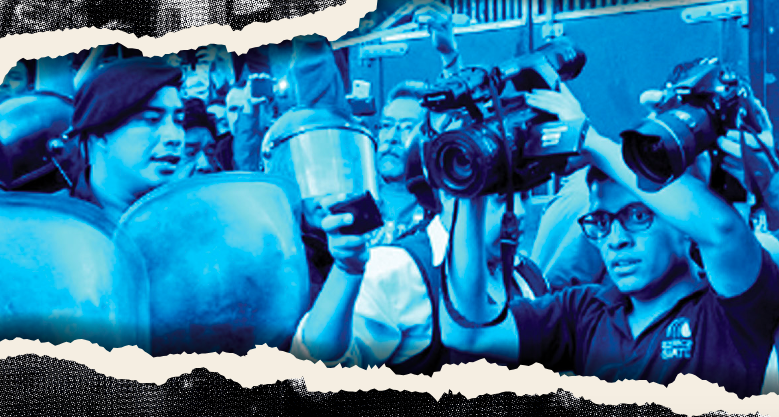
"Communication, trust and confidence between LEAs [law enforcement agents] and the press are key, so the importance of preparation cannot be understated."
This report examines the roles and responsibilities of journalists and law enforcement agents/agencies (LEAs) during public demonstrations and elections. It looks at current trends around the world in relation to journalists covering demonstrations in the context of elections and offers recommendations and guidelines to promote a better working relationship between journalists and LEAs. The report is published by the United Nations Educational, Scientific and Cultural Organization (UNESCO)'s International Programme for the Development of Communication (IPDC) and the Multi-Donor Programme (MDP) on Freedom of Expression and Safety of Journalists.
As explained in the report, "politically driven events such as rallies, marches, protests, sit-ins, which can happen during election periods or elections referendums, are the means by which the public can gather and lawfully express their views and are part of the democratic process." Journalists have a right to cover these protests as part of exercising their right to freedom of expression and keeping the public informed. LEAs have to balance protecting these fundamental human rights and supporting the participatory process whilst ensuring a safe and orderly environment within which they can be enjoyed. In doing so, it is also their duty to protect the media and allow them to do their job to the best of their ability. As stated in the report "The mission of LEAs and journalists is different, yet mutually reinforcing. LEAs are responsible for maintaining public order and protecting the rights of citizens, while journalists seek to provide accurate and reliable information to citizens."
However, the current reality is that relations between LEAs and media professionals are challenging and often confrontational, especially during tense public events such as elections and demonstrations. In relation to this, the report highlights the following trends:
- Attacks against journalists in connection with the coverage of protests, public demonstrations, and riots were registered by UNESCO in at least 101 countries from January 2015 to August 2021. Since 2015, at least 13 journalists have been killed in such contexts.
- A majority of the attacks have been committed by police and security forces. Police use of non-lethal ammunition, ranging from rubber bullets to pepper balls, has injured dozens of journalists, and many other journalists have been arrested, beaten, and in a few cases humiliated.
- The COVID-19 pandemic coincided with a rise in public demonstrations across the world, despite lockdowns and other government-imposed restrictions. In some of the worst cases, journalists have been physically assaulted by anti-vaccination protestors, government officials, and security forces or imprisoned for their coverage of state contracts issued under the pandemic.
- Attacks against journalists related to elections were registered by UNESCO in the context of at least 89 elections in 70 countries around the world from January 2019 to June 2022. 759 journalists and media professionals were attacked, 42% of whom were attacked by law enforcement agents.
- During elections and public demonstrations, government authorities worldwide have authorised internet shutdowns and disruptions, censorship of the media and critical voices, and digital surveillance of journalists - in the name of public order and national security.
- According to UNESCO's discussion paper "The Chilling: Global Trends in Online Violence Against Women Journalists" (see Related Summaries, below), intimidation and violence against women journalists online have increased. The surveyed women journalists responded that reporting on themes of "politics and elections" was the second most likely trigger for online harassment and abuse.
Part of the solution, according to the report, is to nurture relations and build trust between journalists and LEAs by creating a better understanding of each other's roles and responsibilities and by promoting a mutually reinforcing working relationship.
The following are some of the recommendations outlined in the report that could help achieve this:
- Cultivate a good and professional relationship between LEAs and media outlets most likely to cover public demonstrations. LEAs should meet with journalists and talk about their different roles so there is more understanding within the community about what local LEAs are doing to keep them safe.
- Facilitate the work of journalists, providing as much access as is possible to a public assembly and to any related policing operation. Identify press areas and/or a defined media perimeter that will give them a safe vantage point. Discuss these details in advance with journalists, and understand that they are not obliged to stay there. LEAs should respect journalists' safety and refrain from using any form of obstruction of, or force or pressure against, journalists.
- Protect the media and ensure a safe working environment by taking appropriate preventive, effective, and timely operational measures - including police protection from attacks by hostile groups. Allocate enough resources for the proper protection of the media during public assemblies.
- Identify those potential aspects of a public demonstration that are likely to feature in any media coverage, such as protestors who attach themselves to objects with lock-on devices. Train specialist teams to remove such protestors safely and respectfully and to deal with journalists effectively at the scene. By clearly explaining in advance the processes and at what point they will be used by LEAs to deal with such incidents, there will be no surprises on the day.
- Ensure that LEAs remain neutral during elections that they and demonstrate this neutrality through their communication, behaviour, and the arrangements they put in place through the election cycle: the various stages before, during, and after an election. Consideration should be given to the coverage needs and safety of members of the press in all operational planning.
- Devote particular attention to the specific threats and risks that women journalists face in the exercise of their work, and it is important to take a gender-sensitive approach when considering measures to address the safety of journalists, especially online. Gender diversity of LEAs working with journalists and around public assemblies and elections should be encouraged to enable this approach.
- Conduct regular training for senior LEA management in working with media organisations, notably during election periods, and for officers working on the ground during public assemblies, notably in facilitating safe media coverage.
- Conduct training with journalists in covering public assemblies. Journalists are always looking for new stories; let them know about the training, invite them to participate in talks, and do role-plays as part of any practical exercises. This approach will have the benefit of engendering mutual understanding of each other's jobs and will help LEAs get their message out about how they are keeping people safe and the good job they are doing.
- Facilitate LEAs' attendance at regular refresher training sessions and briefings so they are up to date with any legislation affecting journalists' rights and any particular issues that might threaten their safety, such as extremist groups or online trolling targeting individual journalists.
- Respect the media's professional equipment at all times. Confiscation or damaging of the tools of their trade, such as cameras or recording equipment, or recordings, is unlawful. Equally, putting a hand in front of a lens, seizing and damaging their tools of trade such as cameras or recording equipment, or tampering with them and erasing recordings is unlawful. If LEAs break or smash equipment deliberately, this action should be considered a criminal offence, and those responsible should be held accountable. With regard to the seizure of journalists' equipment, a clear due process of law should be followed, with a particular concern to protect the confidentiality of sources.
- Refrain from using any form of obstruction, force, or pressure against journalists. If the dispersal of public assemblies is in conformity with the law and necessary to maintain public order, journalists should be able to exercise their work freely during the dispersal operations without being required to leave the premises, as long as they position themselves in such a way that they cannot be confused with the demonstrators and do not obstruct the action of the police. It is their duty as media professionals to provide coverage, and they should be afforded the same privileges by the police as if the demonstration were sanctioned.
UNESCO website on October 10 2023. Image credit: UNESCO/Carlos Duarte
- Log in to post comments