

























Media development action with informed and engaged societies

After nearly 28 years, The Communication Initiative (The CI) Global is entering a new chapter. 

Following a period of transition, the global website has been transferred to the University of the Witwatersrand (Wits) in South Africa, where it will be administered by the Social and Behaviour Change Communication Division. Wits' commitment to social change and justice makes it a trusted steward for The CI's legacy and future. 

On the transfer, co-founder Victoria Martin expressed her pleasure to see this work continue under Wits' leadership, knowing that co-founder Warren Feek (1953–2024) would have felt deep pride in The CI Global's Africa-led direction. 

As Wits, we honour the team and partners who sustained The CI for decades and look forward building from that strong base. This includes co-founders Warren Feek (1953-2024) and Victoria Martin as well as La Iniciativa de Comunicación (CILA), which continues independently at lainiciativadecomunicacion.com with links to The CI Global site. We are also eager to forge new partnerships and entertain new ideas as we consider how best to contribute to social and behaviour change in our rapidly evolving environment.

If you are joining the International Social and Behaviour Change Communication (SBCC) Summit in Panama, please join Wits and CILA on Monday, 22 June, to share your thoughts and suggestion for the relaunch of the Communication Initiative. We will be in Pacifica 5 from 12-1:25 for the Refuel, Reflect, and Renew Lunch Series: The Communication Initiative: celebrating a driving force for Communication for Social Change and the way forward. We will reflect on the legacy of Warren Feek and family in creating the Communication Initiative, consider the contributions of CI over the years and then turn our attention towards the future in this dynamic session. 

If you are unable to join us in Panama, we still want to hear from you. Please contribute your thoughts by following this link: https://redcap.link/CommunicationInitiative2026 or reaching out to ci_surveys@commint.com

You can also follow the QR Code:

 https://redcap.link/CommunicationInitiative2026

Time to read
1 minute
Read so far

Dzimwe Community Radio - Malawi
0 comments
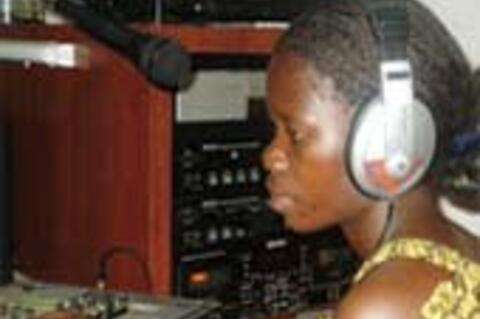
Supported by the United Nations Education, Scientific, and Cultural Organisation (UNESCO), Dzimwe Community Radio works to provide a platform to rural communities in Malawi to facilitate dialogue on development needs and issues. The radio station, which has been running since 1998, addresses issues such as health, safe motherhood, violence against women and girls, sustainable natural resources management, and income generation activities related to farming and fishing.
Communication Strategies

Dzimwe Community Radio’s coverage area includes almost the entire district of Mangochi and parts of Ntcheu, Dedza and Balaka districts. Its programmes are broadcast daily by volunteer staff which include 3 programme producers, 8 presenters and announcers, and various support staff. Programming includes music request shows, health and population issues, and community activities. The station helped form and works with 15 radio listening clubs. These clubs consist of small groups of villagers who come together to listen to programmes, comment on them, and record their own stories and observations for broadcast by the radio station.

According to the organisers, given that the majority of Dzimwe listeners depend largely on farming and/or fishing, agricultural programmes are an important part of programming. The programme Ulimi Wokhazikika (Sustainable Agriculture) is broadcast on Monday and Thursday and promotes sustainable smallholder farming, good agro-forestry practices, and food security through dramas, poems, documentaries, and interviews. Tisodze (Fisheries Conservation) is broadcast on Tuesday and Saturday and aims to conserve Malawi’s fresh water fishery by making the community aware of legal and illegal fishing practices. Zachilengedwe (Natural Resource Utilisation and Conservation) is a programme designed to encourage sustainable management of resources, including processing of indigenous fruit trees and other wild resources into valuable products. According to the organisers, the programme has assisted people to introduce guinea fowl rearing, goat rearing, beekeeping as well as baobab, tamarind, and jujube fruit tree juice processing.

Development Issues

Health, Agriculture, Sustainable Development

Key Points

UNESCO reports that about 87% Dzimwe listeners in Mangochi district cannot read and write and, therefore, depends on radio for news, education and entertainment.

Partners

United Nations Education, Scientific, and Cultural Organisation (UNESCO), Farm Radio International.

Sources

Letter from Janet Karim to The Communication Initiative in 2001 and Farm Radio International, Network News, Spring 2008 [PDF] website and UNESCO website on March 29 2009.

Teaser Image
http://portal.unesco.org/ci/en/files/24420/11774165013malawi170.jpg/malawi170.jpg