










































When Schools Shut: Gendered Impacts of COVID-19 School Closures
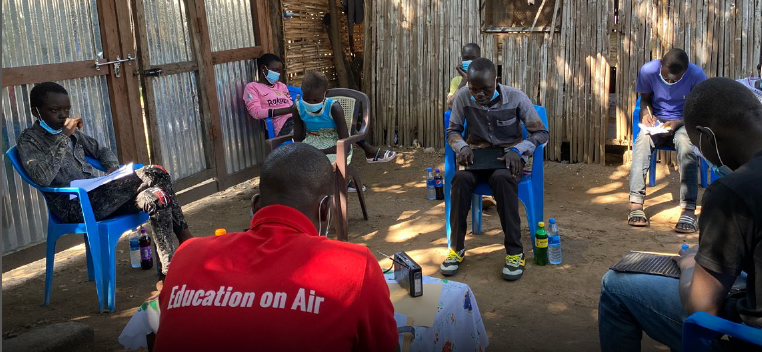
"We need participatory approaches that effectively listen to children's and young people's perspectives and gendered experiences, and ensure action to address the education, health and well-being needs that they voice." - Audrey Azoulay, Director-General of UNESCO
School closures to mitigate the spread of COVID-19 affected nearly 1.6 billion learners around the world. The adverse impacts include not only learning loss and school dropout but also threats to gender equality, with gender-specific effects on health, well-being, and protection. Released by the United Nations Educational, Scientific and Cultural Organization (UNESCO) on the occasion of the 2021 International Day of the Girl Child, this publication explores the ways gender norms, expectations, disparities, and restrictions linked to school closures have impacted learners, and it offers strategies to ensure education continuity and promote gender equality in schools going forward.
The study, which was funded by the Global Partnership for Education (GPE), includes a review of published research, a survey of more than 300 organisations working globally on gender equality in education, 22 key informant interviews, and in-depth data collection in local communities in Bangladesh, Côte d'Ivoire, Kenya, Mali, and Pakistan. Some of the questions that drove the research include: How have social norms and gendered expectations impacted learners' ability to study online and return to school? How have gaps in the provision of school-based health, nutrition, and protection services during school closures widened gendered risks and vulnerabilities? Have pre-existing gender inequalities deepened during this period, affecting education, health, and protection outcomes? And what policy and programme responses implemented by governments and their partners have been successful in furthering gender equality in and through education?
Citing some 90 countries, the study identifies areas where gendered impacts have been observed, including:
- Whether girls and boys were able to access, participate in, and benefit from remote learning partly depended on gender norms and expectations. Girls' increased time spent at home often carried a greater burden of domestic responsibilities, as documented in Bangladesh, Ecuador, Ethiopia, Niger, Pakistan, Sierra Leone, and other low- and middle-income countries (LMICs). Boys' participation was often limited by the need to earn an income: One-third of respondents in one survey across 55 countries indicated an increase in the prevalence of child labour related to COVID-19 school closures.
- Girls faced difficulties in engaging in digital remote learning modalities in many contexts because of limited access to internet-enabled devices, a lack of digital skills, and cultural norms restricting their use of technological devices. In countries with data, adolescent girls aged 15 to 19 were less likely than boys to have used the internet in the past 12 months, and fewer of them owned a mobile phone. Among learners surveyed in three districts in Pakistan, 44% of girls, compared to 93% of boys, reported owning a mobile phone. Girls who did not own mobile phones reported they relied on their relatives' devices, typically those belonging to their fathers.
- Limited data available to date about school return rates also show gender disparities. A study conducted in four counties in Kenya found that 16% of girls and 8% of boys aged 15 to 19 failed to re-enrol during the two months following school reopening in early 2021. Barriers to return include poverty, domestic and income-generating tasks, concerns about learning loss and falling behind, transitions to adulthood including marriage and pregnancy, and concerns about health and safety.
- Beyond education, school closures have impacted children's health, notably their mental health, well-being, and protection. Girls reported more stress, anxiety, and depression than boys in 15 countries across the world. Many learners lost access to comprehensive sexuality education and to sexual and reproductive health services during school closures. Boys seem to have been increasingly affected by violence in the community in crisis-affected settings, while tasks for the family outside of the home have increased girls' vulnerability to violence.
In reviewing responses undertaken to mitigate the gendered impacts of COVID-19-related school closures, the report finds, for example, that:
- Initial COVID-19 responses seem to have been developed with little attention to inclusiveness, raising the risk of increased marginalisation. Remote learning strategies in most countries failed to account for gender-based considerations and barriers that children face at home. Generally, multi-modal and low-tech and no-tech remote learning solutions were particularly important to be gender-responsive and to leave no one behind.
- Many countries supported campaigns such as #LearningNeverStops to promote return to school, particularly of girls. Ghana's plan recognises gender-related barriers to studying during school closures, while Rwanda supports pregnant girls and adolescent mothers to continue their education.
- In the area of health, well-being, and protection, support to address the adverse mental health effects of COVID-19 school closures emerged in the form of hotlines, home visits, online spaces, remote counselling, and programmes supporting social and emotional learning. Digital delivery of comprehensive sexuality education was used in a range of contexts together with radio, television, and other formats.
- Analysis showed that programmes that established strong ties before the onset of the pandemic were better able to maintain communication with learners and their families when schools were closed.
The study calls for a holistic, multi-stakeholder movement to tackle disengagement in education and low return-to-school rates in vulnerable communities by understanding and addressing gender disparities and inequalities in policies and programme delivery. Sample recommendations include, for example:
- Advance equal access to gender-responsive and inclusive remote learning:
- Ensure the provision of a range of remote learning options, including no-tech and low-tech solutions, that take into account gendered inequalities in digital access, skills, and online safety.
- Spearhead and support efforts to reach learners who are most at risk of being left behind - in particular, those marginalised by gender-based discrimination and inequality in combination with other factors of vulnerability, including through personalised outreach and face-to-face interaction.
- Design and develop gender-responsive educational resources and tools - in particular, digital resources - that engage population groups at high risk of dropout.
- Provide support and training to teachers to deliver high-quality, gender-responsive remote learning interventions, with particular attention to the needs of teachers with domestic and caregiving responsibilities.
- Prevent school dropout, and ensure the return to school - particularly of the most vulnerable:
- Collect and make publicly available data disaggregated by sex, age, and other relevant characteristics to monitor participation in remote learning, student re-enrolment and performance, including through collaboration with local communities.
- Work within local communities - in particular, with local women, youth, and family organisations - to raise awareness of the importance of participation in schooling among the hardest-to-reach populations.
- Provide accelerated education, learning, and bridging programmes for those who missed outon school or whose formal education was already interrupted prior to the COVID-19 pandemic.
- Safeguard the health and well-being of all learners and teachers:
- Develop the capacities of teachers and school administrators to better identify and address the gendered repercussions of school closures on the broader health and well-being of learners.
- Work with communities to develop appropriate psychosocial support programmes that take account of COVID-19 and possible future pandemics and build resilience and leadership.
- Participate in multi-stakeholder partnerships to ensure that gender-specific needs that are not being met directly by government programmes are addressed through other channels.
- Build community engagement to enhance children's and adolescents' safety, including by establishing safe, anonymous systems for reporting and referral through schools and/or education administration departments.
- Build resilient, equitable, and gender-responsive education systems:
- Develop gender-responsive school and education crisis mitigation plans, including for pandemics, that adopt a holistic, coordinated whole-of-school approach.
- Identify and scale up the implementation of evidence-based, promising programmes and policies that take into account gender norms that act as barriers to children's participation in remote learning and return to school, including through an intersectional approach. Document these programmes and policies.
- Include young people - in particular, girls and caregivers - in research, programme design, and decision-making, to better understand and respond to their lived experiences, programme priorities and perceptions of what is effective, and to ensure their leadership.
- Finance education that promotes inclusion and gender equality.
- Promote and ensure integrated, coordinated, and system-wide approaches - e.g., serve in advocacy, monitoring, and watchdog roles by holding governments accountable at every level to fulfil their commitments and responsibilities - in particular, to the most vulnerable girls.
Email from Justine Sass to The Communication Initiative on October 13 2021; and UNESCO press release, October 11 2021 - accessed on October 14 2021. Image credit: © UNESCO
- Log in to post comments