










































Wetin Dey
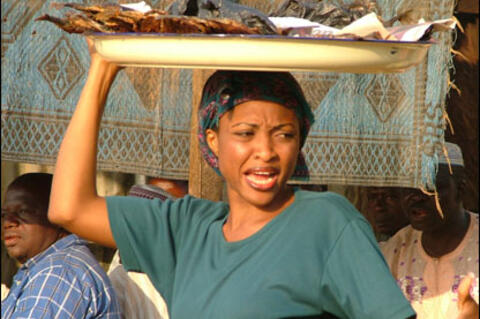
Wetin Dey is a multi-strand, multi-character weekly television drama. Set in peri-urban Nigeria, the drama is designed to focus on lower socio-economic groups, with an emphasis on the daily lives of ordinary Nigerians. While each Wetin Dey episode is designed with a message brief in mind, the drama is not necessarily always directive in determining what meanings viewers should take away. It expects that messages retained by the audience will vary according to their social realities. For example, some characters in Wetin Dey are shown to abstain from sex, while others use condoms.
In recognition that audiences are heterogeneous, the characters speak to the diversity of the intended audience, which varies by age, gender, ethnic affiliation, religion, first language, education, and sexual activity. For instance, Yetunde is a character from a lower socio-economic class whose mother dies of HIV/AIDS. Because of this, she faces frequent discrimination, and struggles to find work and care for her younger sisters. Aisha is a rich girl whose father wants her to marry the son of a senator, yet she already has a boyfriend, named Hakim. Bilkisu is a female sex worker, who "sells fish" as a cover. Chike is a mechanic who falls for Bilkisu and wants to keep her from prostitution. Bayo is a 17-year-old aspiring football player who has run away from home. Chris is a policeman who is diagnosed with HIV/AIDS. He is in a troubled marriage, and both he and his wife Stella are, at times, unfaithful to each other (Stella is having an affair with a married man - Aisha's father).
Formative research helped establish the general parameters and objectives of the campaign, providing insight into the knowledge, attitudes, behaviours, values, tastes, decision-making processes, information needs, and media consumption patterns and preferences of the intended audience. This formative research included a large qualitative study, which in turn informed a baseline quantitative study. In addition, prior to producing and launching the first series of Wetin Dey, the production team produced a pilot of the drama to be pre-tested with the intended audience and their parents in a qualitative study involving 20 focus group discussions across Nigeria. The purpose of this study was to guide the formation of dramatic concepts, and inform key production decisions. It helped to refine the drama in terms of tone, language, relevance, and appropriateness. The findings were also used by the writers in Nigeria to develop characters and plotlines. In fact, the majority of Wetin Dey episodes were pre-tested before they were broadcast. Pre-testing generally focused on the appeal of an episode, and provided a measure of audience reaction with respect to specific issues such as language, appropriateness, believability, and audience expectations. In addition, it attempted to identify which themes (from storylines or specific sub-plots) were clear to the audience, which themes are unclear, and whether the audience picked up any additional (unintended) themes.
The BBC WST trained a Nigerian team to produce Wetin Dey through workshops that focused on script-writing, editing, and production of reality TV programmes. Many of the international television/film makers and advertising directors who worked on the project are members of the African Diaspora. In addition to teaching technical production skills, training courses promoted increased and more accurate coverage of HIV and AIDS in all media, and aimed to counter the stigma and discrimination faced by people living with HIV and AIDS. The series was shot entirely on location in Nigeria.
HIV/AIDS, Youth.
National Population Commission figures (2002) indicate that approximately 25% of Nigeria's total population are 15-34 years old and nearly 51% are 14 years old or younger. Life expectancy is 46 years, and HIV/AIDS is the leading cause of death is. In the 15-49 age group, the HIV/AIDS rate is more than 1 in 20 (World Health Organization (WHO), 2006). The Joint United Nations Programme on HIV/AIDS (UNAIDS) estimated in 2006 that more than 2.5 million people in Nigeria over the age of 15 were living with HIV/AIDS.
Wetin Dey was created as part of a wider project - "Stop HIV" - funded between 2005 and early 2008 by the United Kingdom (UK) Department for International Development (DFID) to address HIV/AIDS and sexual and reproductive health among young Nigerians. The project, delivered in partnership with the Society for Family Health (SFH), was a mass media intervention that included a broad array of mutually reinforcing outputs on radio, television, and film - including Wetin Dey.
"Wetin Dey: Good Girls/Bad Girls in TV Drama in Nigeria", by Emily LeRoux-Rutledge, Linda Nwoke, Anna Godfrey, and Timothy Cooper, July 2009 - sent via email from Emily LeRoux-Rutledge to The Communication Initiative on October 1 2009; BBC WST website, accessed October 21 2009.
Comments

whatever happened to this
whatever happened to this show..do you know? I loved it,wouldnt mind purchasing it. Do you have any contacts or links please?
- Log in to post comments