











































Vaccine Hesitancy - A Potential Threat to the Achievements of Vaccination Programmes in Africa
Cochrane South Africa, South African Medical Research Council (Cooper, Sambala, Mchiza, Wiysonge); University of Cape Town (Cooper, Wiysonge); University of Erfurt (Betsch); Stellenbosch University (Wiysonge)
This commentary opens with the observation that a growing number of people in Africa are delaying or refusing recommended vaccines for themselves or their children, even when safe and effective vaccines are available. However, because most research on vaccine hesitancy has been conducted in high-income countries, not enough is known about the nature and causes of vaccine hesitancy in Africa. Of the few tools to measure vaccine hesitancy, none has been validated in Africa, and evidence-based interventions in the region to address it are limited. This commentary discusses these knowledge gaps and proposes a research and capacity building agenda to enhance and sustain public demand for vaccination in Africa.
As the authors explain, vaccination programmes in Africa have made serious strides since the launch of the Expanded Programme on Immunization in 1974. For example, Nigeria, the last wild poliovirus (WPV) endemic country in the region, has had no new cases since 2016. This fragile success was almost upended by the polio vaccine boycott in Nigeria in 2003-2004 which, driven by rumours and distrust, quintupled polio incidence in Nigeria between 2002 and 2006 and contributed to polio outbreaks across 3 continents. Clearly, "Vaccine hesitancy poses significant risks not only for the hesitant individual, but also the wider community."
The commentary delves into the knowledge gaps referenced above. For instance, the "5Cs", a vaccine hesitancy model proposed by the World Health Organization (WHO) and expanded by one of the commentary's authors, proposes drivers of vaccine hesitancy: confidence, complacency, convenience, risk calculation, and collective responsibility. Yet there is a lack of empirical data to test, adapt, and potentially apply this and other models to Africa. Similarly, the WHO has appealed to national governments to incorporate a plan to measure vaccine hesitancy into national vaccination programmes. Yet "The lack of validated and easy to use diagnostic tools in Africa is a major barrier to this."
The authors assert that "Filling these knowledge gaps necessitates building capacity in Africa for vaccine hesitancy research. More specifically, we need to develop capabilities for socio-behavioural insights and multidisciplinary research on vaccine hesitancy....Vaccine hesitancy is complex, shaped by multiple psychological, ideological and contextual factors. It is thus imperative to build skills that integrate knowledge and expertise from intellectual fields outside of the traditional scope of vaccination programmes and research, such as sociology, psychology, and education."
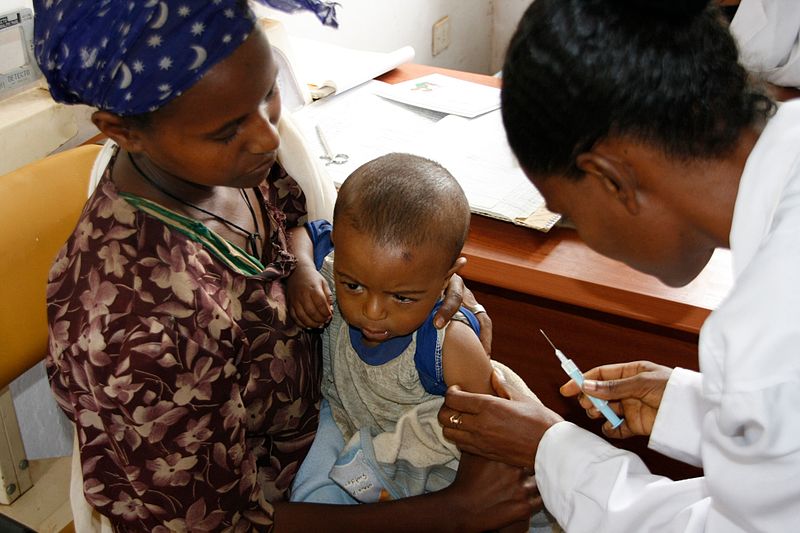
Human Vaccines & Immunotherapeutics 2018, Vol. 0, No. 0, 1-3 https://doi.org/10.1080/21645515.2018.1460987. Image credit: worldpolicy.org
- Log in to post comments